
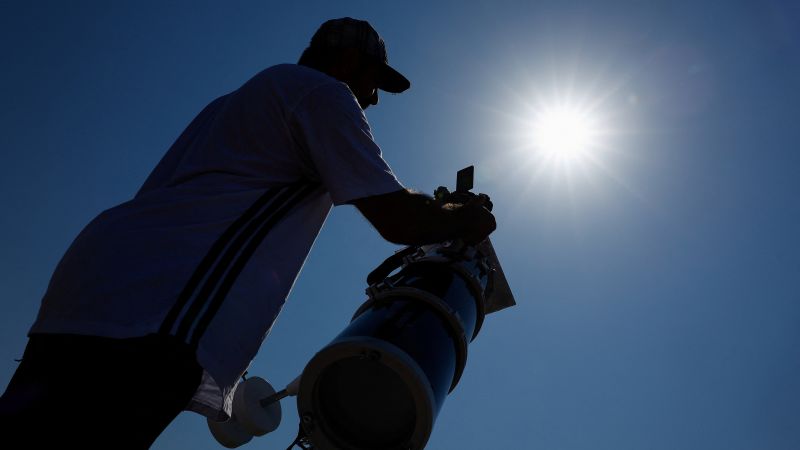
The bright light of the sun sounds like a flute. As it gets darker, a clarinet is heard. Then a slow, low clicking as the moon blocks the sun.
That symphony is how some people who are visually impaired will be able to experience today’s total solar eclipse in parts of Spain and Iceland, thanks to a device that converts light into audible tones in a process called sonification. The sounds change based on the intensity of the light, allowing people with blindness or low vision to follow the progress of the eclipse.
The idea for the LightSound device was born during the 2017 total eclipse in the United States. Since then, the demand and reach has only grown, underscoring the importance of the mission, said Allyson Bieryla, an astronomer at Harvard who runs the LightSound Project.
During the 2024 eclipse, about 1,000 LightSound devices were built and distributed, she said. Now, they are working with partners in the path of totality to go global.
In Spain, there will be more than 50 public viewing events across the country that will feature sonification through LightSound devices, according to the Institute of Space Sciences. Bieryla said community leaders who secured the ICE-CSIC funding were able to use their local knowledge to determine where they would be best placed.
National broadcaster RTVE is also providing audio-description channels for its television and radio broadcast of the eclipse, it said.
The LightSound team is working on improving the device even more for future eclipses, Bieryla said. Some of the new developments include adding tones for different wavelengths of light, allowing people to experience changes in color, she said, as well as adding vibrations.