
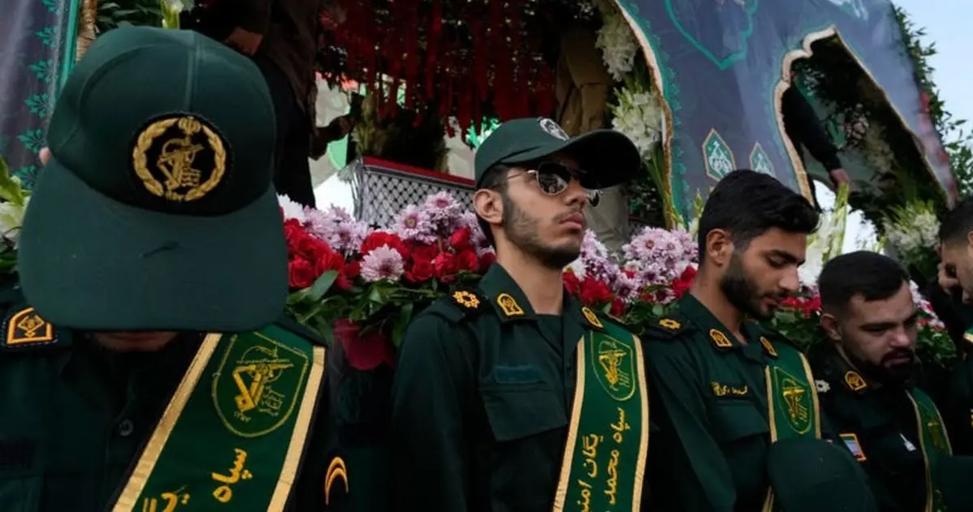
In his first military and security appointments, Mojtaba Khamenei, the new Supreme Leader of the Islamic Republic, named Mohsen Rezaei as his personal representative to the Supreme National Security Council (SNSC). Shortly after, through six separate decrees issued on the same day, he formally consolidated senior commanders into key leadership posts left vacant during the recent war. These predominantly familiar figures, who played decisive roles in military operations following February 28, have now officially stepped into their new command roles. While these appointments have drawn varied analyses across political and media circles, a fundamental question remains: Does this reshuffle signal a genuine transformation in Iran’s posture toward the United States, or is it merely a rotation of familiar faces into elevated posts?
Although the official wording of the decrees offers few explicit details, Mohammad Mokhber, advisor to the Supreme Leader, declared on August 13 that Iran’s new strategy in confronting adversaries is inherently offensive. This shift was first voiced publicly following the recent appointments by Mohammad Reza Naqdi, a senior Islamic Revolutionary Guard Corps (IRGC) commander who had previously faced espionage allegations in media outlets. Naqdi went so far as to announce Iran’s readiness to conduct military operations directly on enemy soil. Across two recent interviews, Naqdi worked to project a specific strategic image: Tehran will no longer wait to be attacked but is prepared to initiate battle itself.
The Islamic Republic appears to envision its future deterrence through a radically altered lens, opting for the doctrine that “the best defense is offense.” This comes as the military strategies of recent years faced severe stress, failing to generate viable deterrence and resulting in three separate wars being imposed on the country over the past year alone. Given the stark divide between promised deterrence and battlefield realities, the question arises whether this offensive posture will achieve its goals or invite further military conflict.
Viewing the United States as a Declining Power
The newly announced offensive posture is deeply rooted in how Iran’s military and political elite perceive the United States. Figures like university professor Foad Izadi contend that reaching a sustainable agreement with Washington is impossible, operating on the belief that the US remains intent on war. This stance forms the core of Tehran’s current strategic assessment: that Washington will offer no meaningful concessions and will fail to adhere to any accord.
Building upon this political framework, military commanders have put forward matching narratives. In two recent interviews, Mohammad Reza Naqdi portrayed the US as a formidable military superpower that is simultaneously undergoing irreversible decline. Speaking to IRINN (State TV News Network), Naqdi acknowledged America’s material superiority, noting that its defense budget is “roughly one hundred times the annual budget of Iran’s armed forces.” However, in a subsequent interview, he dismissed this material edge when contrasted with what he termed the “power of faith” and spiritual resolve: “The primary pillar of our strength compared to armed forces worldwide lies in spirituality and piety.”
According to Naqdi, the primary US objectives during the recent war were twofold: “First, the overthrow of the Islamic Republic, and second, the balkanization [territorial fragmentation] of Iran.” He claimed that alongside these primary goals, Washington pursued 12 secondary objectives ranging from seizing Kharg Island to launching a ground invasion and opening the Strait of Hormuz and failed at each turn. Naqdi presented these shifting operational focus areas as evidence of strategic confusion: “Every four, five, or six days, they introduced a new objective… yet they failed across all of them.” None of these assertions were accompanied by independent documentation or verified military evidence.
Naqdi further argued that despite these setbacks, the US has not abandoned its ultimate ambitions but has adapted its playbook: “The Americans have concluded that direct, civilizational warfare yields no favorable outcome; thus, they are attempting to achieve their aims through internal subversion, economic pressure, and proxy networks.” He explicitly linked this strategy to domestic affairs within Iran: “The enemy believes that by stoking internal division and economic hardship, it can trigger a repetition of the January events [protests].” This pattern of framing potential popular protests as foreign-designed plots has become a ubiquitous refrain among state officials, functioning as a preemptive measure to criminalize domestic dissent and equate protests with aiding external adversaries.
Despite these warnings, Naqdi simultaneously claimed that the US is trapped in a “strategic deadlock” and harbors little appetite for a fresh war, an assertion that stands in tension with his initial portrayal of a determined and plotting adversary. Furthermore, real-world dynamics, particularly recent official rhetoric from both Tehran and Washington demanding war reparations, indicate escalating regional tensions rather than a shift toward stabilization.
In an interview with PBS, Naqdi adopted a more political tone, describing the US decision-making apparatus as fundamentally corrupt: “Whoever spends more on campaign advertising and money wins the election and becomes Commander-in-Chief.” Without citing evidence, he alleged that the recent conflict served the personal financial interests of senior US officials, demanding that the US Congress investigate “the growth of assets held by Trump and his inner circle during the war.”
In contrast to these assertions, Naqdi framed Tehran’s operational doctrine as reliant on scaled, continuous arms manufacturing: “Today, our production rate of ballistic missiles exceeds our rate of fire.” Adopting a tone leaning closer to a threat than reassurance, he warned that if Iran were ever to run out of missiles, “that day would be far more dangerous for the US than today,” adding that “a force possessing the will to fight and defend its dignity is far more threatening to America.” Outlining a hypothetical scenario where missile inventories are depleted, he asserted: “The US maintains thousands of economic interests globally that can easily be targeted and destroyed. We must reach a level of deterrence where the enemy no longer dares to attack us.”
Operationalizing the Offensive Doctrine
When asked directly whether the Islamic Republic’s military, security, and defense doctrine is shifting from defensive to offensive, Naqdi responded: “Yes, this decision has been taken.” He clarified that operational readiness entails: “Whenever conditions dictate and orders are issued, we must possess the capacity to carry operations into enemy territory and execute missions far beyond our borders.”
He noted that this stance does not imply an immediate strike: “What is emphasized in the command decrees is operational readiness for such measures… not that an operation will occur tomorrow.” However, he defined the nature of prospective actions as follows: “Whenever called upon, the IRGC must be capable of executing smart, selective, and targeted offensive operations against the enemy at any point deemed necessary,” a phrasing that places ultimate execution authority squarely within a centralized command structure.
This doctrinal pivot is reflected in the appointment decree for Ahmad Vahidi as Commander-in-Chief of the IRGC, where, according to Naqdi, “explicit emphasis is placed on enhancing capabilities for maximum deterrence and smart readiness to execute offensive operations.”
Another structural element of this shift involves merging the General Staff of the Armed Forces with the Khatam-al Anbiya Central Headquarters. “This structural integration accelerates operational velocity and supports the execution of the offensive doctrine,” Naqdi stated. Charged with overseeing this merger is Ali Abdollahi, the former commander of the Khatam-al Anbiya Headquarters, who has now been appointed Chief of the General Staff. Clause three of his appointment decree mandates “completing the integration of the General Staff and the Khatam-al Anbiya Central Headquarters based on the directive of the Martyred Imam.” According to Fararu, this appointment effectively marks the return of the General Staff’s leadership to the IRGC hierarchy.
Rasoul Sanaei-Rad echoed these concepts through a historical lens. Referencing the loss of Iranian territories during the Qajar era, he attributed past territorial concessions to the weakness of former rulers, concluding: “Today, the Supreme Leader, through his decrees to military commanders, has once again called us toward strength. Beyond defensive power, we must cultivate offensive capability.” Framing this posture, he added: “Our fighters have their fingers on the trigger, and should the enemy commit a blunder, they will suffer a far greater defeat in any future war.”
A maritime component of this doctrine is evident in the appointment of Ali Ozmaei to lead the IRGC Navy. David Rigoulet-Roze, a researcher at the French Institute for Strategic Analysis, noted that Ozmaei “possesses deep operational familiarity with the Persian Gulf and the entrance to the Strait of Hormuz, a maritime theater the IRGC Navy has consistently utilized as both a military and diplomatic lever.” This assessment aligns with Naqdi’s statements during his PBS interview regarding maritime transit control: “Under wartime conditions, we reserve the legal right to inspect and control maritime traffic, and we view this as our unquestionable right.”
Rigoulet-Roze characterizes this alignment of command appointments as preparation for a “dispersed, multi-layered conflict,” a war reliant on ballistic missiles, uncrewed aerial vehicles (UAVs), cyber operations, and maritime pressure rather than conventional force-on-force engagements. The cyber dimension of this structure is reflected in the appointment of Mostafa Izadi as Deputy Commander-in-Chief of the IRGC. Having previously headed the “Cyber and New Threats Headquarters,” Izadi now effectively serves as the IRGC’s second-in-command, coinciding with Naqdi’s emphasis on “management grounded in technical and scientific expertise.”
This reorganized command array is paired with internal security measures led by Hossein Taeb. The former head of the IRGC Intelligence Organization, who previously commanded the Basij during the suppression of the 2009 post-election protests, has returned to lead the intelligence apparatus. His command decree stresses “strengthening the civilian intelligence network” and leveraging new technologies, pointing toward an effort to curb potential socioeconomic unrest at home while preparing for military contingencies abroad. Furthermore, Mohsen Rezaei’s appointment as the Supreme Leader’s representative to the SNSC brings a figure who consistently opposed diplomatic negotiations and ceasefire extensions during recent clashes with the US. His placement in this strategic body reinforces the overall shift toward a hardline doctrine.
This strategic transformation takes place while Mojtaba Khamenei has made no public appearances or delivered public addresses since assuming office. Nevertheless, addressing questions regarding decision-making cohesion, Naqdi stressed the absolute centralization of authority under the Supreme Leader to dispel doubts: “Above everyone stands the Leadership… whatever order is issued, all will obey.” Thus, the Islamic Republic advances toward an offensive military doctrine, leaving open the question of whether this strategic shift will produce genuine deterrence or drag the nation deeper into regional conflict.