
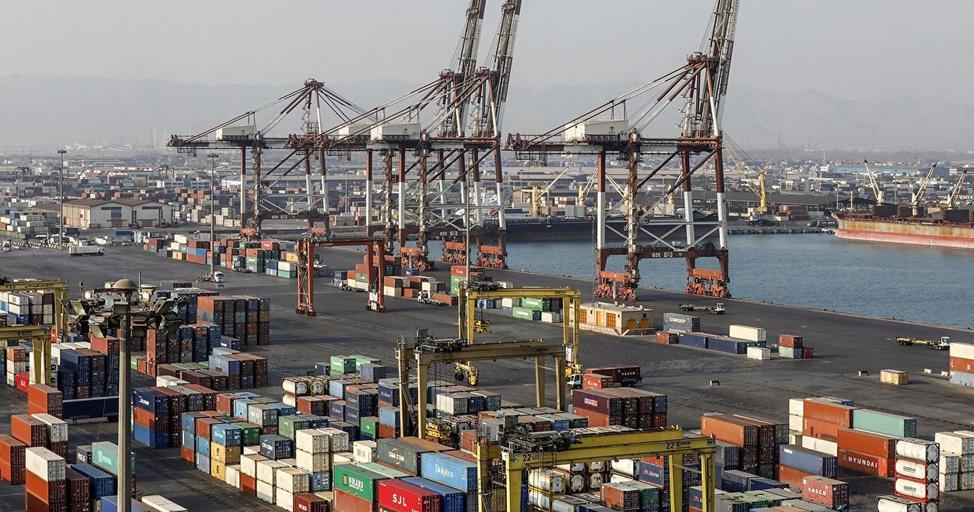
Iran’s non-oil trade value dropped by approximately 30 percent during the past four months (March to July), driven by armed conflict and severe disruptions to maritime transport routes.
Mohammad Sadeq Qannadzadeh, Deputy Head of Trade Services at the Trade Promotion Organization of Iran (TPOI), announced the downturn, stating that Iranian exports and imports decreased at roughly equal rates during this period. He cited the war and blocked maritime shipping corridors as the primary drivers behind the sharp decline in foreign trade.
While Qannadzadeh did not disclose exact figures for the four-month period, comparing his estimates against official customs data from the previous year highlights the scale of the contraction.
According to Islamic Republic of Iran Customs Administration (IRICA) data, Iran’s non-oil trade value stood at approximately $34.175 billion during the first four months of 2025. Of this total, $16.549 billion accounted for non-oil exports, while imports totaled $17.627 billion.
Applying the reported 30 percent contraction to last year’s baseline indicates that Iran’s non-oil trade volume shrank to approximately $24 billion during the first four months of the current year, a loss of roughly $10 billion compared to the same period in 2025.
Customs records show that Iran’s foreign trade was already suffering from a downward trajectory prior to the conflict. Non-oil trade value during the first four months of 2025 had dropped by 10 percent compared to 2024, with exports falling by 5.5 percent and imports contracting by more than 14 percent.
China, Iraq, the United Arab Emirates, and Turkey ranked as Iran’s top non-oil export destinations during the first four months of 2025, while the UAE, China, and Turkey served as the primary origins of Iranian imports.
The TPOI deputy head noted that following restrictions across southern maritime corridors, land-based transit routes are increasingly being utilized for freight transport.
However, shifting cargo to overland transit threatens to significantly drive up trade costs with Asian partners. Majid-Reza Hariri, President of the Iran-China Joint Chamber of Commerce, recently warned against ongoing US maritime restrictions against Tehran, noting that overland freight transit from China to Iran costs approximately four times more than maritime shipping for identical cargo.
This latest collapse in foreign trade unfolds as Iran remains heavily reliant on a small handful of key trading partners, with southern sea lines of communication serving an essential role in sustaining national import and export flows.