
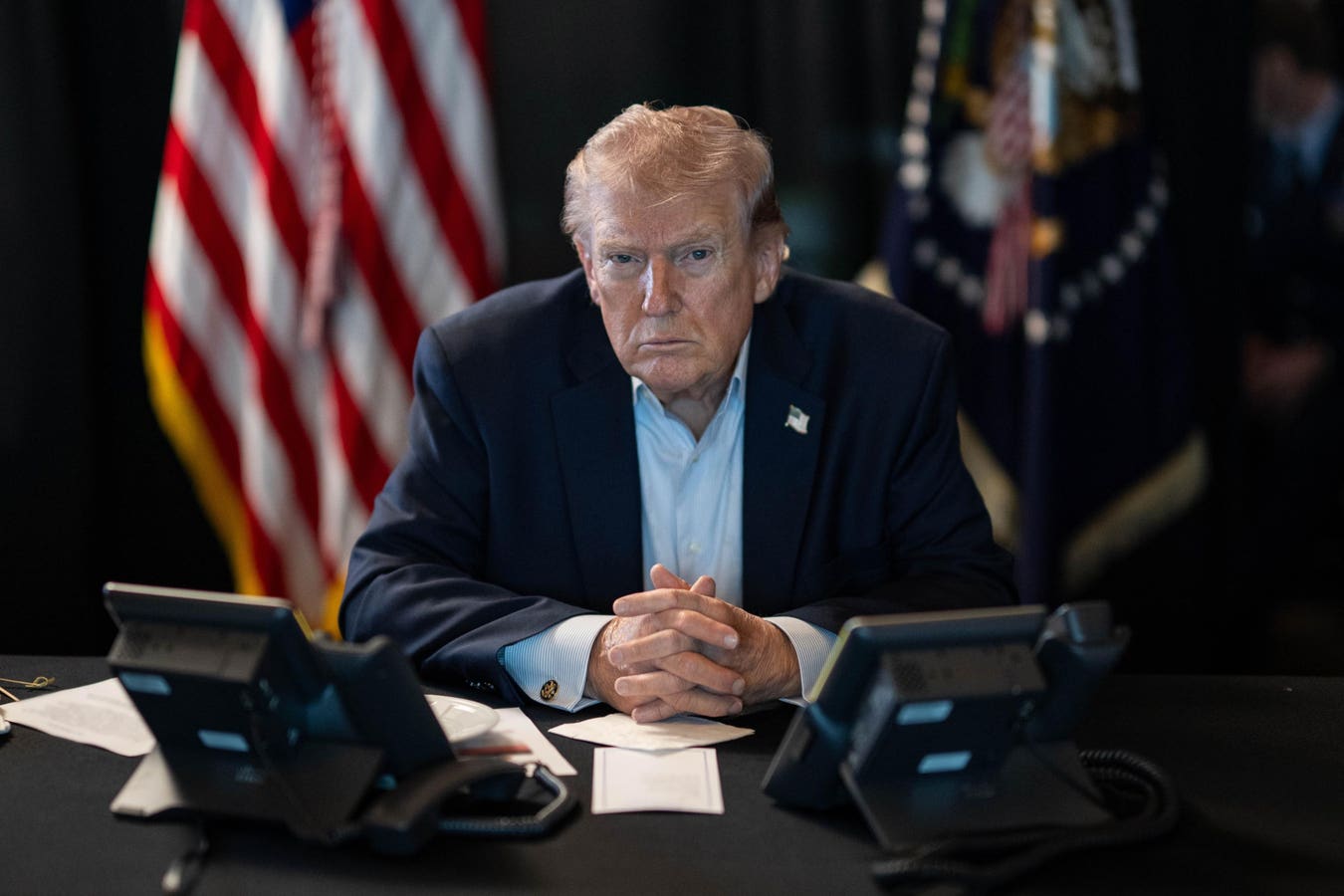
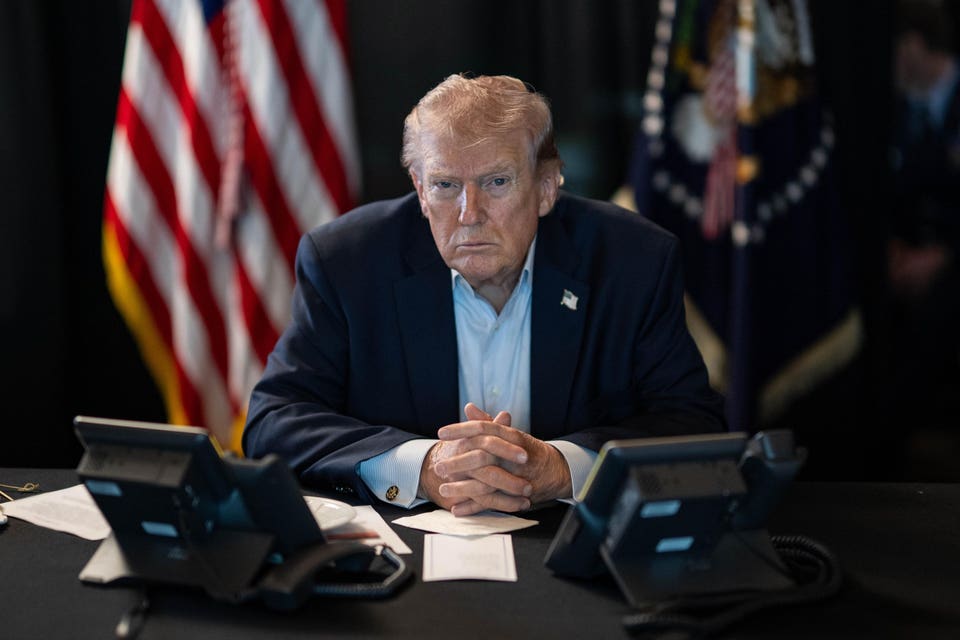
WASHINGTON DC, USA – MARCH 02: (——EDITORIAL USE ONLY â” MANDATORY CREDIT – ‘THE WHITE HOUSE’S X ACCOUNT / HANDOUT’ – NO MARKETING NO ADVERTISING CAMPAIGNS – DISTRIBUTED AS A SERVICE TO CLIENTS——) U.S. President Donald J. Trump sits at a table monitoring military operations during Operation Epic Fury against Iran, with U.S. flags visible behind him, in Washington, United States, on March 02, 2026. (Photo by The White House via X Account/Anadolu via Getty Images)
Anadolu via Getty Images
The S&P 500 touched 7,800 for the first time on Thursday, its second straight record close. The 60-day ceasefire that helped carry it there runs out this weekend, and the two governments holding it cannot agree on whether they are even talking. Pakistani mediators say an extension has been drafted and is waiting on President Trump’s signature. A senior Iranian official told Reuters there are no extension talks at all, because in Tehran’s view the agreement stopped existing weeks ago.
A market at record highs walking into that deadline looks like complacency, but the better description is a learned behavior. Traders have spent months getting paid to buy every hint from Trump that the war is ending, and Trump has spent those same months supplying the hints whenever the tape needed one. What that history says about the coming weekend is less comfortable than the record close suggests.
The Rally His Words Built
Stocks spent late July drifting lower, with semiconductors leading the selling. Then, over the first weekend of August, Trump called off what he described as “massive” strikes on Iran, saying he had reached the outline of a deal and that direct talks would begin Monday afternoon.
The market did exactly what it has been trained to do. On August 3 the S&P 500 rose 1.48%, the Nasdaq gained 2.1%, and the Dow closed at a record, with all three major indexes up more than 1%. West Texas crude fell 6.2% to $79.41, and cheaper oil pulled Treasury yields down with it. Stocks, oil, and bonds all moved in the same direction for one reason: investors decided the war might finally be ending.
One detail separates that Monday from an ordinary relief rally. The talks that repriced the entire US equity market did not, according to the other party, exist. Iran’s foreign ministry denied that any negotiations with Washington were taking place, even as Trump insisted they were under way and called the country’s leadership “unbelievably duplicitous” for saying otherwise. The rally held anyway. Stocks were pricing Washington’s version of events, and only Washington’s.
A Pattern With A Date Stamp
This is not the first time Trump’s words on Iran have differed from his actions.
In April, he said an extension of the truce was unlikely and that the Strait of Hormuz would remain blocked. The next day, he extended the ceasefire indefinitely at Pakistan’s request.
In early July, he took the opposite approach, declaring the ceasefire over as strikes resumed. Then came August: stocks were weakening, Trump called off planned strikes, suggested talks were underway, and the S&P 500 jumped 1.5%.
The pattern is hard to ignore.
Trump’s more dovish statements have come when stocks were under pressure, while his harder-line statements came when markets were stronger. Whether this is deliberate or simply timing is impossible to know, but Trump clearly understands how much his words can move stocks.
And investors have plenty of reason to chase those moves. In 2025, 79% of active large-cap funds underperformed the S&P 500, putting pressure on professional managers to keep up with a market making record highs.
That helps explain why Iran headlines can trigger such fast rallies. Managers chasing a rising market may buy first and ask questions later. The market reacts to news of potential peace faster than it reacts to denials that talks are even happening.
That makes Iran headlines especially powerful. Trump knows that markets will immediately price in the possibility of a deal, even when the details remain uncertain. The senior Iranian official’s message to Reuters this week was clear: there are no talks underway on extending the ceasefire.
That matters. The extension described by Pakistani mediators remains unsigned and, from Iran’s perspective, does not even exist.
Into The Weekend
The setup for the weekend is simple. With the S&P 500 at a record high, Trump has little reason to give markets another peace headline. The market is already strong, and taking a harder line gives him more leverage. But there is also a reason not to assume his current stance means the ceasefire will end: in April, he said an extension was unlikely and then extended it the next day.
That means investors should be careful about betting on either outcome. The war has been declared close to ending several times since spring, but the actual outcome has remained uncertain. The market keeps reacting to Trump’s words before there is proof that the situation on the ground has changed.
The economic effects are real. Cheaper oil, lower bond yields, and cooler inflation have all helped stocks. But none of those headlines changed what companies actually earn. Chasing stocks at record highs because Trump suggests the war may end is ultimately a bet on his next statement—not on corporate earnings.
And that is the biggest risk heading into the weekend. Trump’s words can move the market quickly, but they do not guarantee that the war is actually ending.