
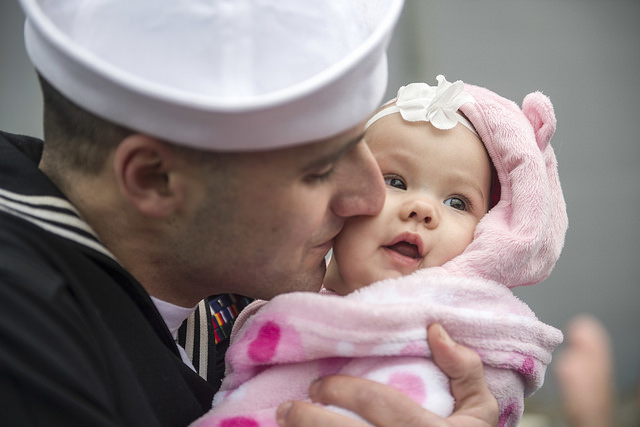
The Pentagon will reimburse eligible troops up to $10,000 a year to freeze and store eggs or sperm under a three-year fertility preservation pilot.

August 13, 2026 4:00 pm
2 min read
The federal government will reimburse troops who opt to freeze their eggs or sperm up to $10,000 per year under a pilot program that begins next month.
The three-year initiative will test the feasibility of helping to fund cryopreservation for certain service members facing combat deployments, hazardous orders or long separations that could affect their plans to have children. It begins Sept. 14, according to a notice published Thursday in the Federal Register.
Any active-duty service member who has received orders for duty in a country deemed hazardous, or who is likely to get those orders within the next four months, can qualify for the program. Those who are geographically separated from their spouse or partner for at least six months due to military orders are also eligible.
Reimbursement is capped at $10,000 per year for eggs and $500 per year for sperm, as required by the 2025 National Defense Authorization Act. The one-year clock begins the first time someone receives a service covered by the program, including retrieval, freezing, storage and shipping. Services rendered before the three-year window opens or after it closes are ineligible for reimbursement.
]]>
Troops can preserve their eggs or sperm through military medical treatment facilities with specialized reproductive health programs or through a civilian fertility clinic, including those outside the TRICARE network.
“Services provided at these [medical facilities] are generally first-come, first-serve, and individual locations may not be able to accommodate covered services in a timeline that aligns with the covered member’s pertinent orders,” the notice warns.
Troops must also have an advanced medical directive that specifies what should happen to their gametes after death, the notice says.
The Defense Health Agency will vet the program’s success based on participation rates; costs; administrative burdens; user experience; and impact on military readiness and retention.
The Pentagon has considered introducing fertility preservation programs for more than a decade, but fell short of securing funds to launch one.
“Active duty military service and deployment has the potential to compromise fertility through combat-related genitourinary injury, gonadotoxic exposures, and physical separation from a partner,” said a 2019 medical journal article. “It is important to stress the value of fertility preservation counseling in soldiers’ predeployment preparation and military family planning.”
]]>
Copyright
© 2026 Federal News Network. All rights reserved. This website is not intended for users located within the European Economic Area.