
1. Key TakeawaysChevron Down
How El Niño will impact how your fall feels this year
Who’s ready for pumpkin carving and dramatically throwing piles of multi-colored leaves into the air in slow motion? I know I am! But what about the weather? Will it be fall-ish and festive or summer 2.0?
Here is what you need to know according to the latest outlook from Atmospheric G2 and The Weather Company, covering the upcoming meteorological fall (September through November).
Key TakeawaysEl Niño is making itself known with warmer-than-average temperatures in the Northern Tier and wetter-than-average conditions in the Southern Plains.The Southern Plains will see a major temperature switch-up from above-average to below-average from September to October and November.September’s temperature outlook has been warmed up for the Southern Plains from previous outlooks.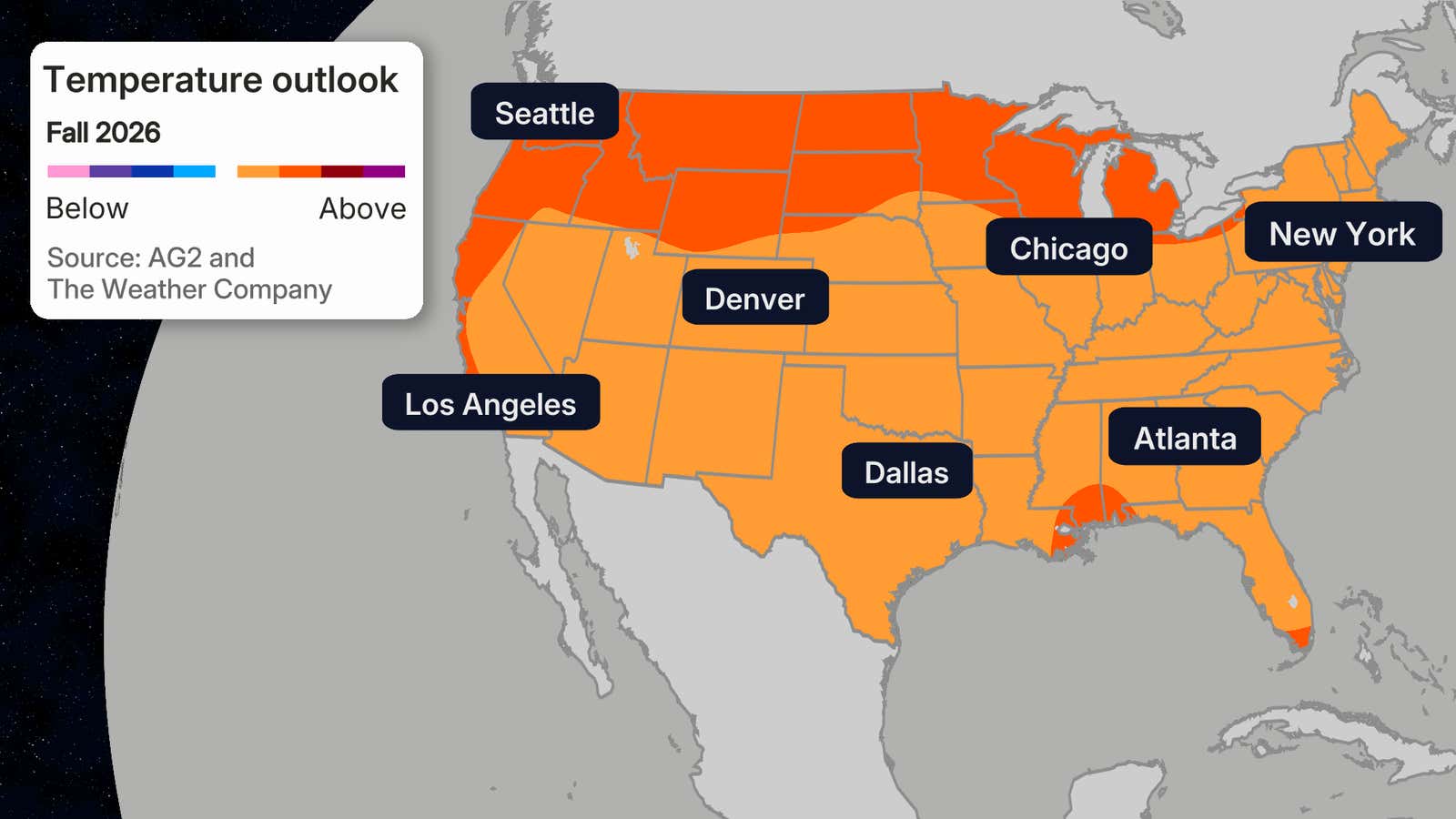
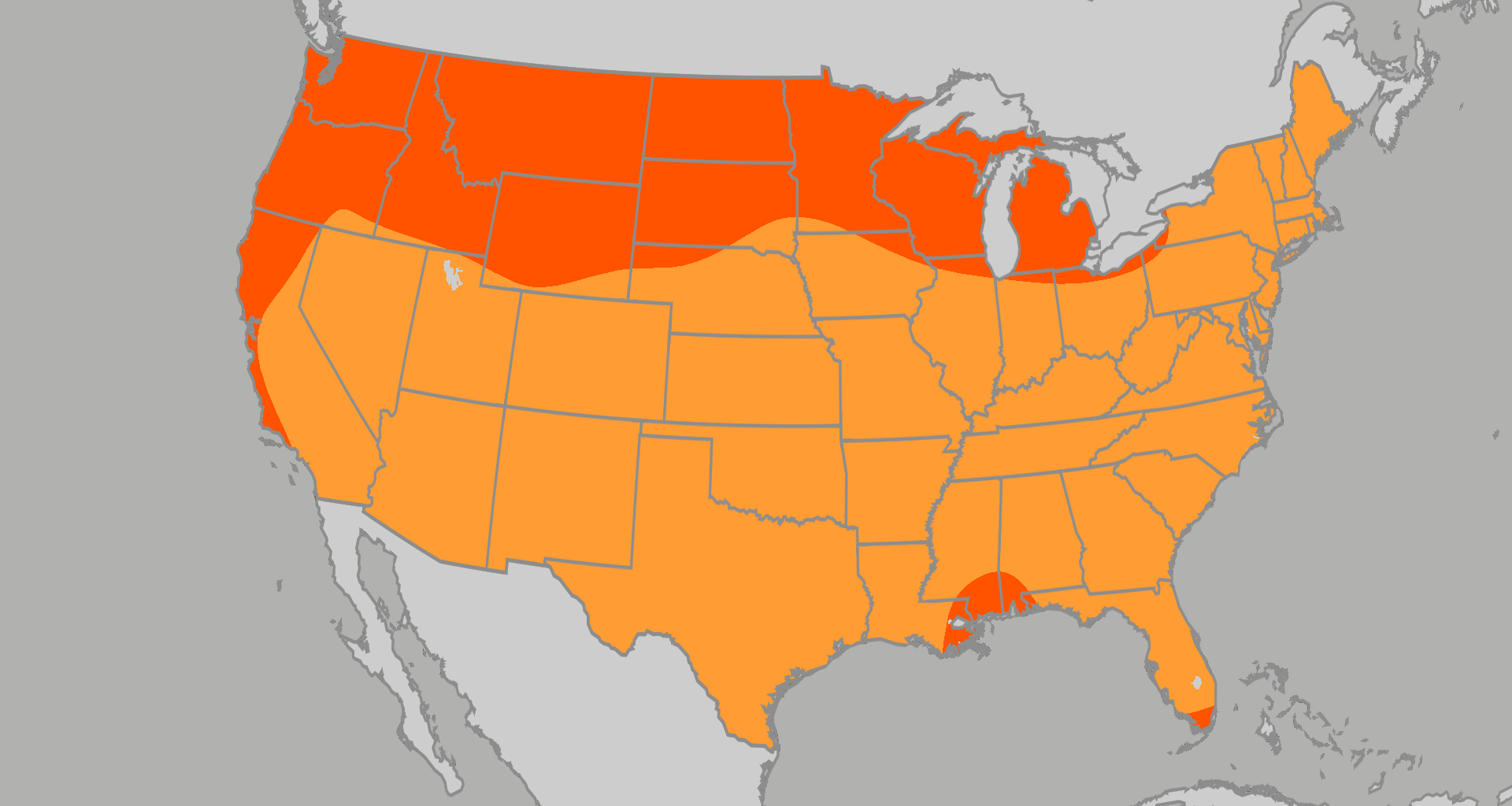
Fall (September through November) 2026 temperature outlook
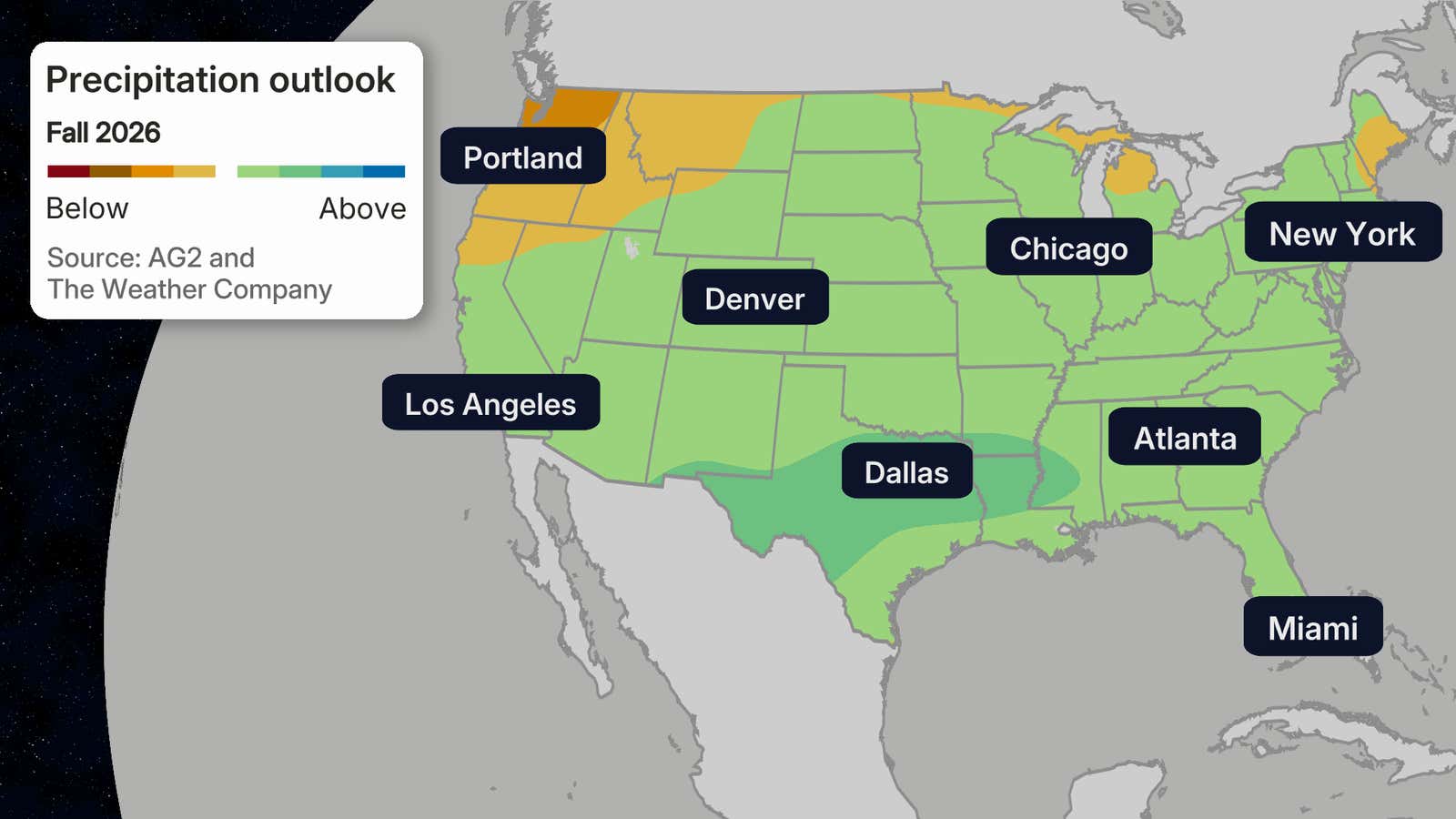
Fall (September through November) 2026 precipitation outlook
Monthly Details
The series of maps below shows the temperature outlooks each month from September through November.

Weather in your inbox
By signing up you agree to the Terms & Privacy Policy. Unsubscribe at any time.
You can see the development of an El-Niño-esque pattern with warmer-than-average conditions spreading across the Northern Tier and cooler air (relative to what’s normal for the region) further south, especially later in the year.
The biggest whiplash will be in the Southern Plains and Northeast, though they’re going in opposite directions. The Northeast gets a cool taste of fall before things head back above average, and the Southern Plains start hot and then get much more into sweater weather territory.
(MORE: Is a record super El Niño inevitable? What does it mean, if so?)
Get More of Our News on Google
Set The Weather Company as a ‘Preferred Source’ to get quicker access to the news you value.

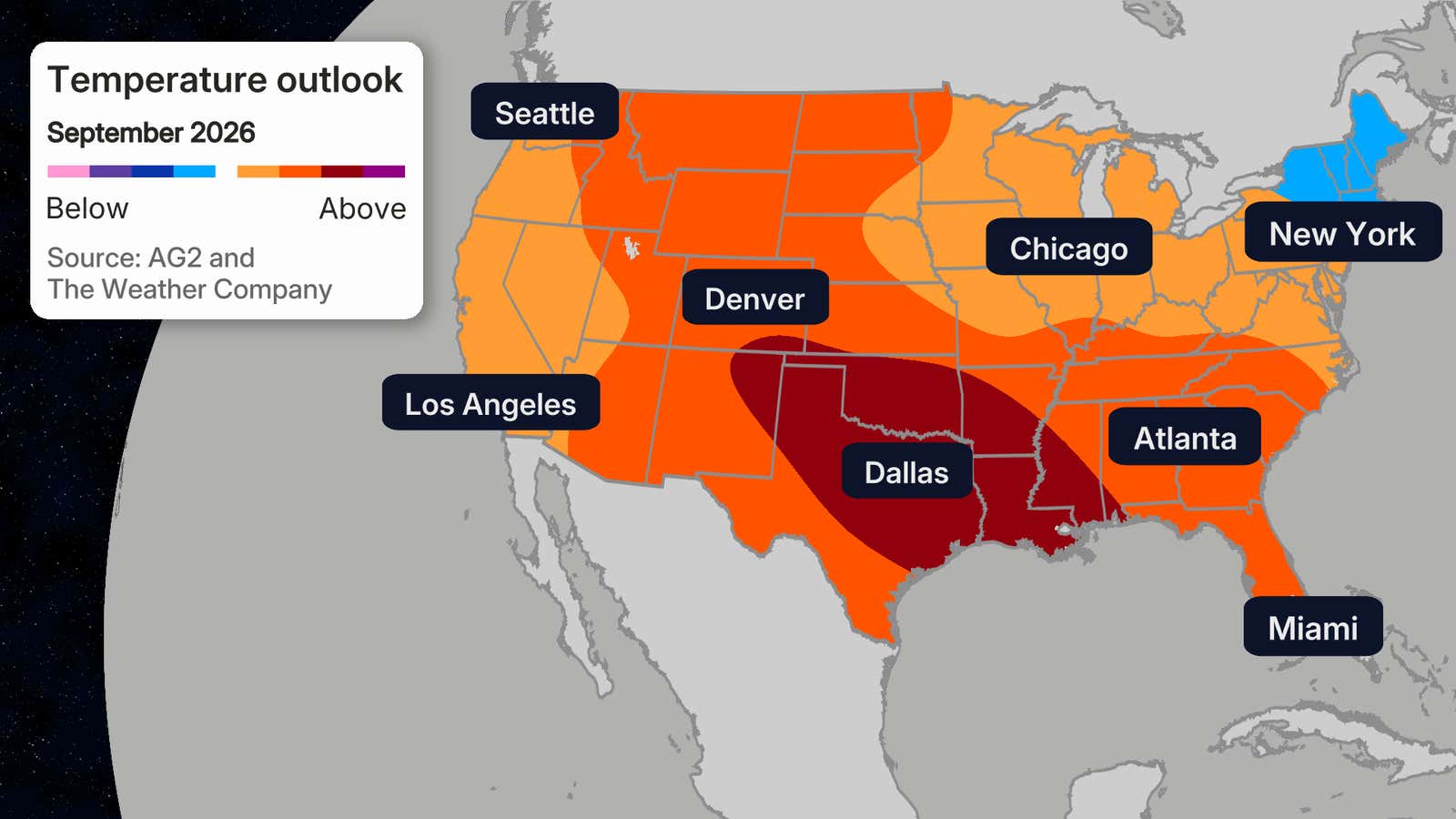
September 2026 temperature outlook
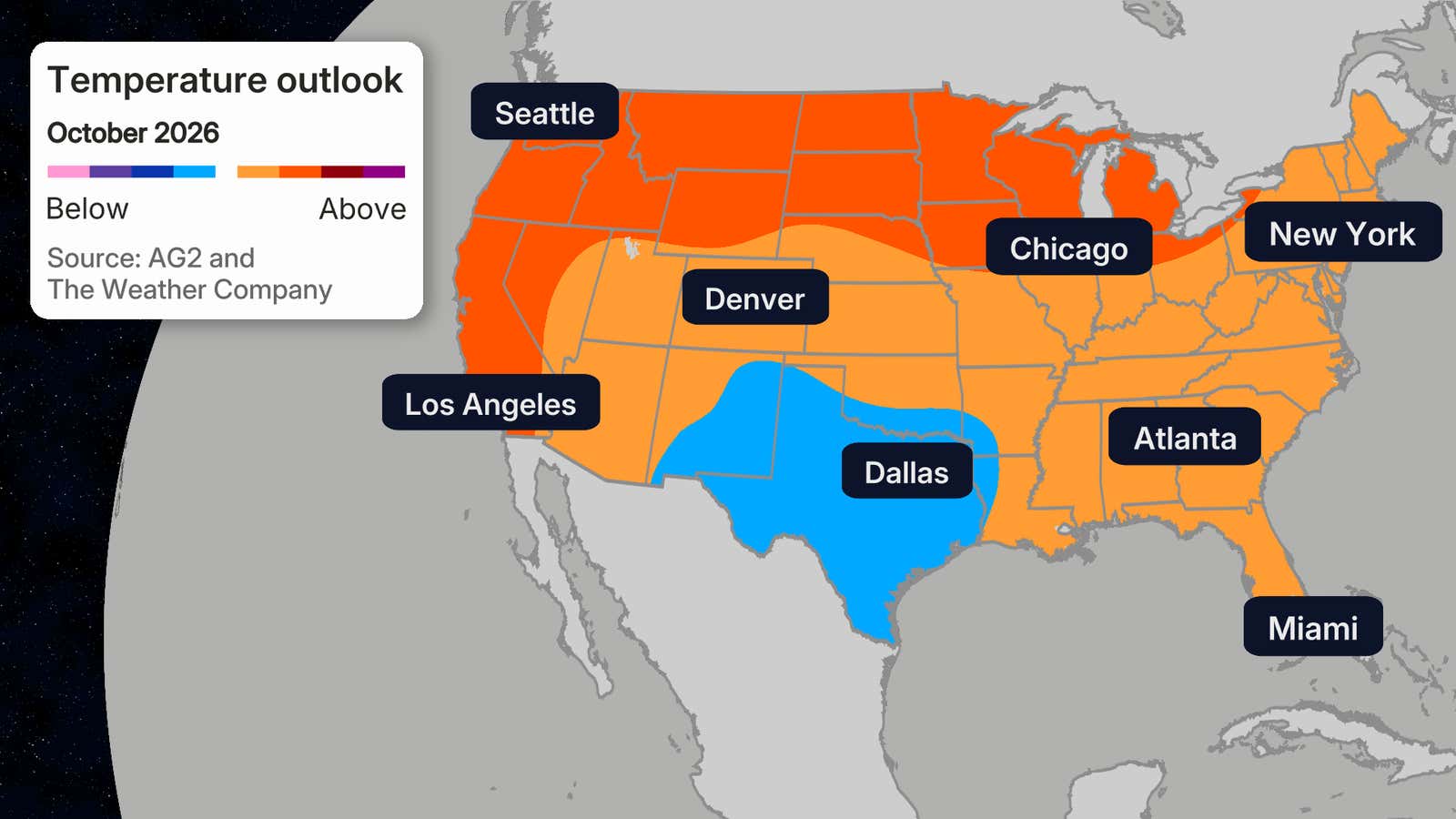
October 2026 temperature outlook
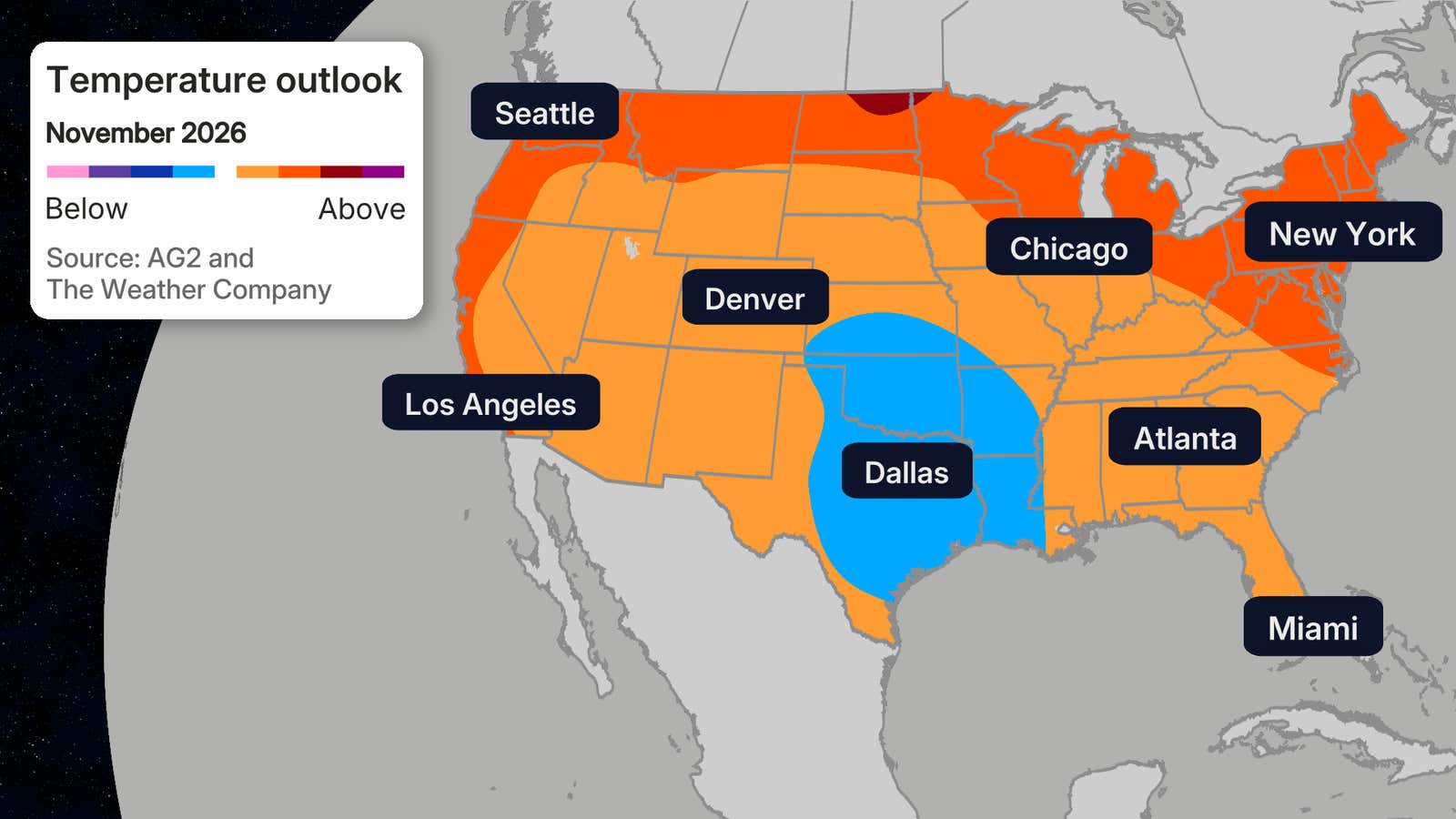
November 2026 temperature outlook
Sara Tonks is a content meteorologist with weather.com and has a bachelor’s and a master’s degree from Georgia Tech in Earth and Atmospheric Sciences, along with a master’s degree from Unity Environmental University in Marine Science.