
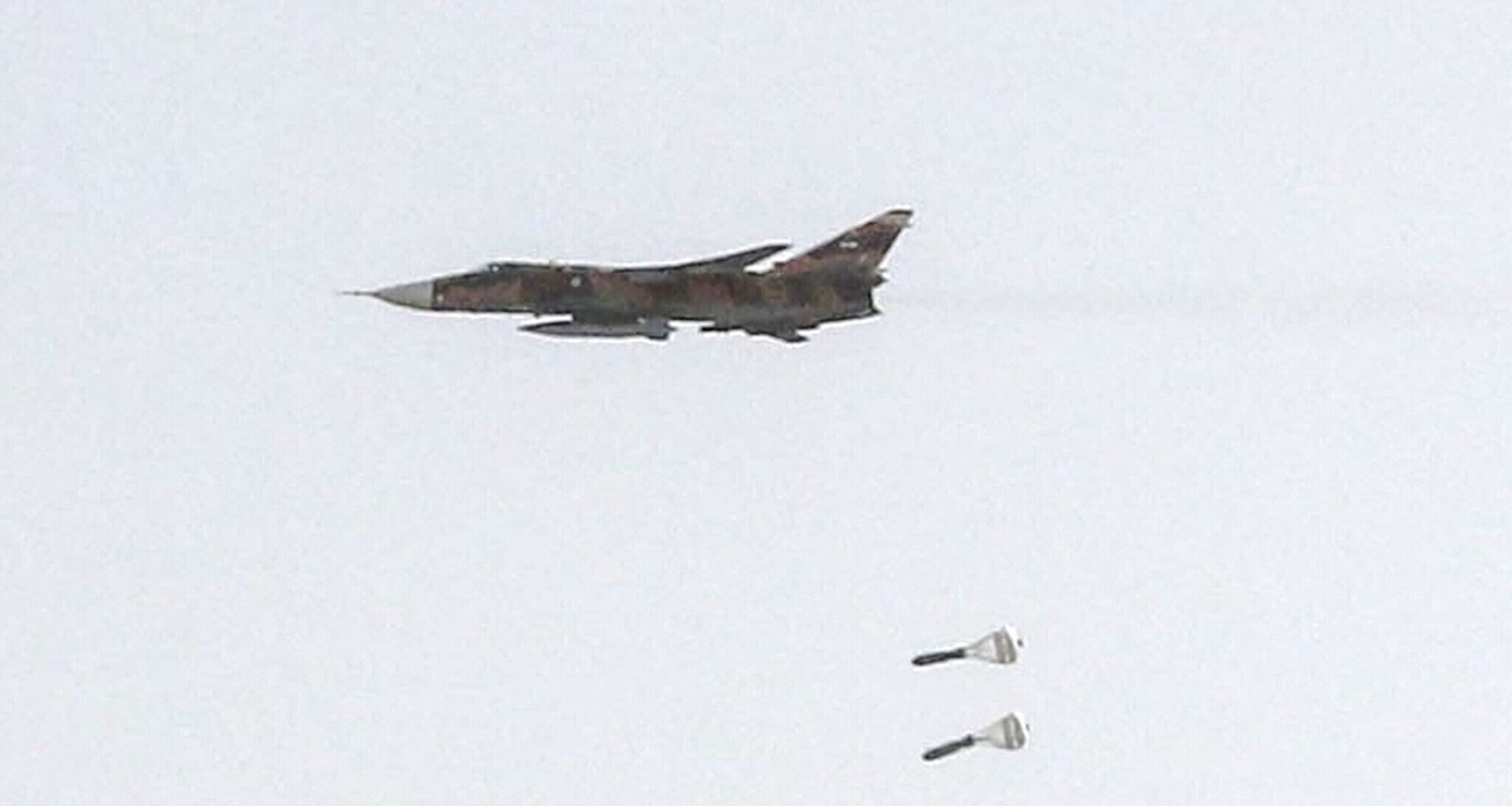
Iranian authorities on Saturday called for the release of three pilots they said were captured in Qatar amid the US-Israel war with Iran.
“Three Iranian pilots were captured alive by Qatari forces after their Su-24 fighter jets crashed during the war,” said General Mohammad Bagherzadeh of the Iranian armed forces, Fars news agency reported.
“Javad Salehi, Abdolmajid Dashtian, and Omran Behraveshian have been held by Qatari forces for six months,” he said in a letter addressed to the International Committee of the Red Cross.
In the letter, Bagherzadeh called for their release, saying the pilots had not been allowed to meet or contact their families.
Last month, Iran’s army said it had retrieved the body of Iranian pilot Majid Kazemi, who was killed during an attack on Al Udeid Air Base in Qatar in early March.
Get The Times of Israel’s Daily Edition
by email and never miss our top stories
By signing up, you agree to the terms
Iran had previously said the other pilots were missing but news of their alleged capture was not publicized at the time. Saturday’s announcement marked the first time in the war that Iran acknowledged a regional country is holding its fighters.
The Al Udeid base in Qatar includes forward components of US Central Command (CENTCOM), as well the command’s air forces and special operations forces.
It is the largest US base in the region.
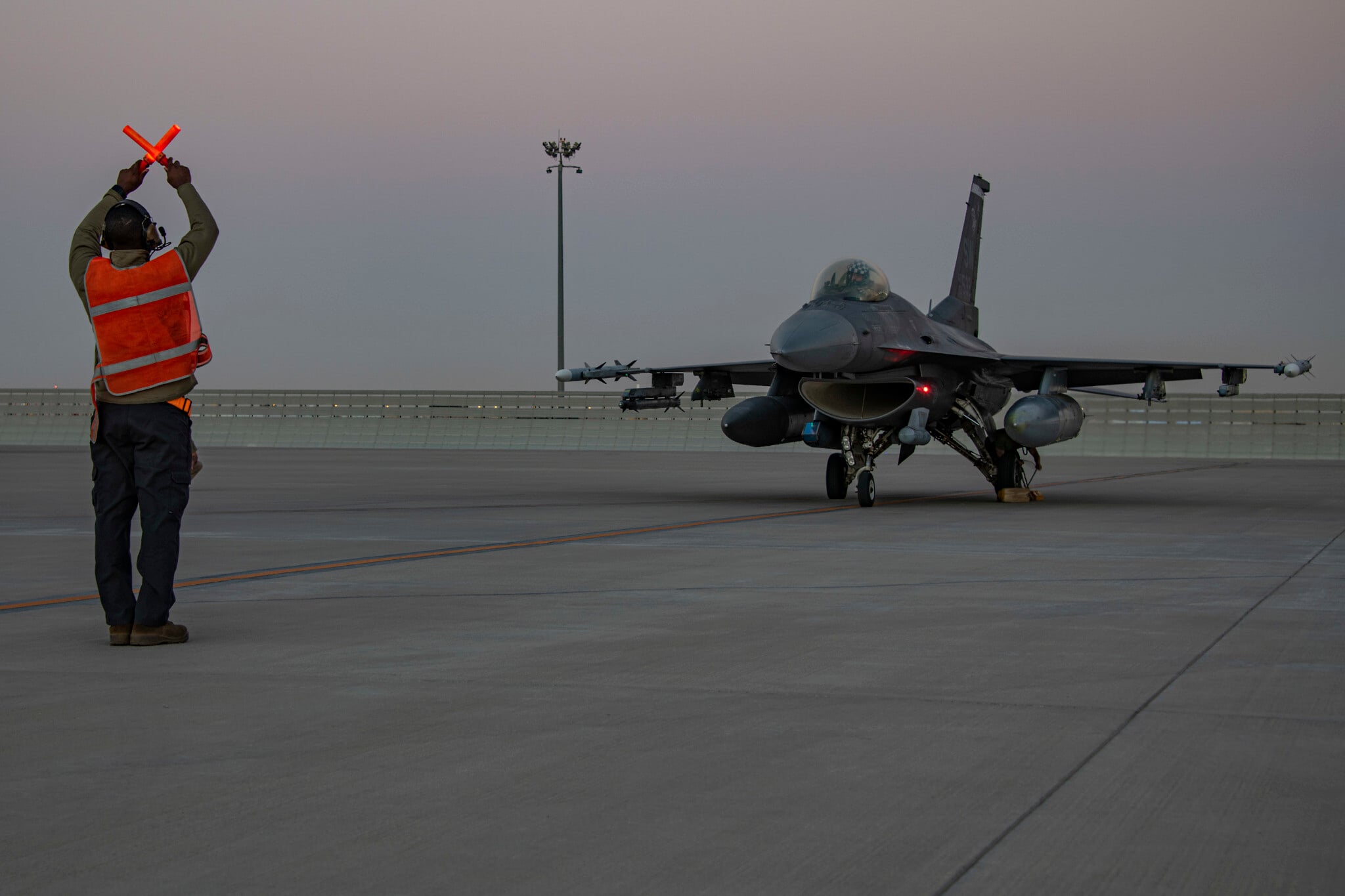
In this handout photo from the US Air Force, an airman guides an F-16 Fighting Falcon during training at Al-Udeid Air Base, Qatar, January 24, 2022. (US Air Force/Capt. Mahalia Frost, via AP)
Also Saturday, Iranian state media reported that flights at the port city of Bandar Abbas resumed on Saturday after repeated interruptions during the war.
Kazem Tavassoli, director general of airports in Hormozgan province, said “scheduled flights at Bandar Abbas International Airport on high-traffic domestic routes resumed today,” according to the IRNA state news agency.
The reopening comes “following limited flights in recent days,” Tavassoli said, adding that passengers can now buy tickets for the Tehran-Bandar Abbas, Mashhad-Bandar Abbas and Bandar Abbas-Isfahan routes, in both directions.
The airport “handled 35 to 40 domestic and international flights per day” before the war, Tavassoli said.
The airport has been repeatedly closed since the war began on February 28, when the United States and Israel launched strikes on Iran, which retaliated with attacks across the region.
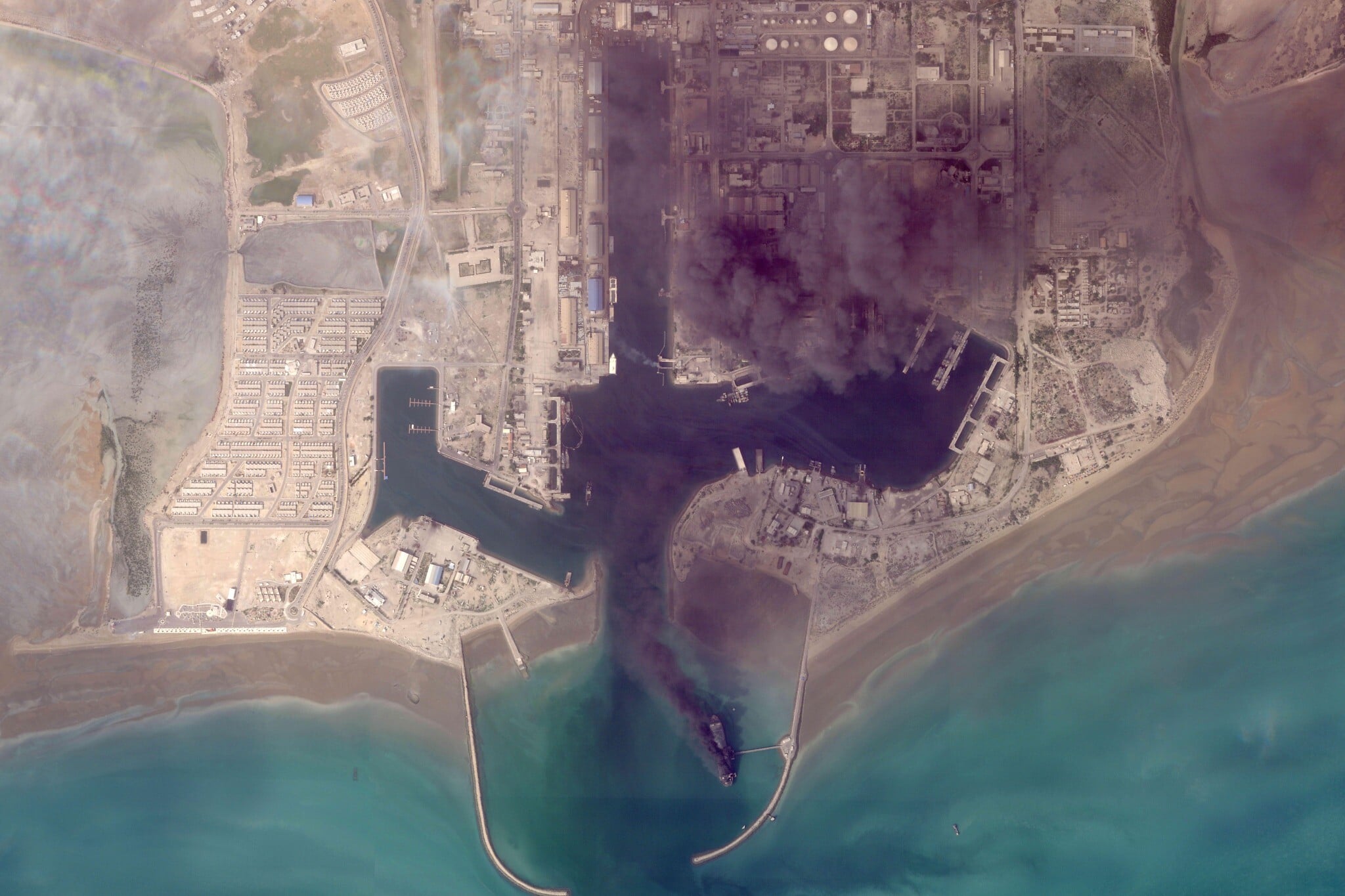
This satellite image from Planet Labs PBC shows fires burning on ships after a US military attack on a port in Bandar Abbas, Iran, March 2, 2026. (Planet Labs PBC via AP)
Diplomatic efforts led to an April ceasefire, ending nearly 40 days of fighting, before the signing of a framework for peace talks in June, which later collapsed.
Iran and the United States have since traded fire sporadically, with fighting mainly centered in southern Iran and around the strategic Strait of Hormuz.
A lull in fighting has been in place since late July, though Iranian strikes targeting shipping have continued, with the United Arab Emirates on Saturday blaming Iran for attacking a vessel belonging to state-owned oil giant ADNOC in the Hormuz strait.
Tehran has imposed an effective blockade of the strait, a vital shipping route for global energy supplies, carrying out strikes on commercial ships since the war began in February.
The Islamic Republic has said it wants to charge users for passage through the international waterway, which Washington fiercely opposes.
The UAE’s foreign ministry condemned what it called a “hostile Iranian attack that targeted a vessel affiliated with ADNOC,” the Abu Dhabi National Oil Company.
It added that “targeting commercial shipping and using the Strait of Hormuz as a tool of economic coercion or blackmail represents acts of piracy by Iran’s Revolutionary Guard Corps.”
ADNOC had earlier “confirmed that one of its vessels was attacked while transiting the Strait of Hormuz on the evening of Friday, August 14,” according to the official WAM news agency, but reported no injuries.
In its statement, ADNOC stressed the importance of protecting seafarers and safeguarding freedom of navigation and maritime security.
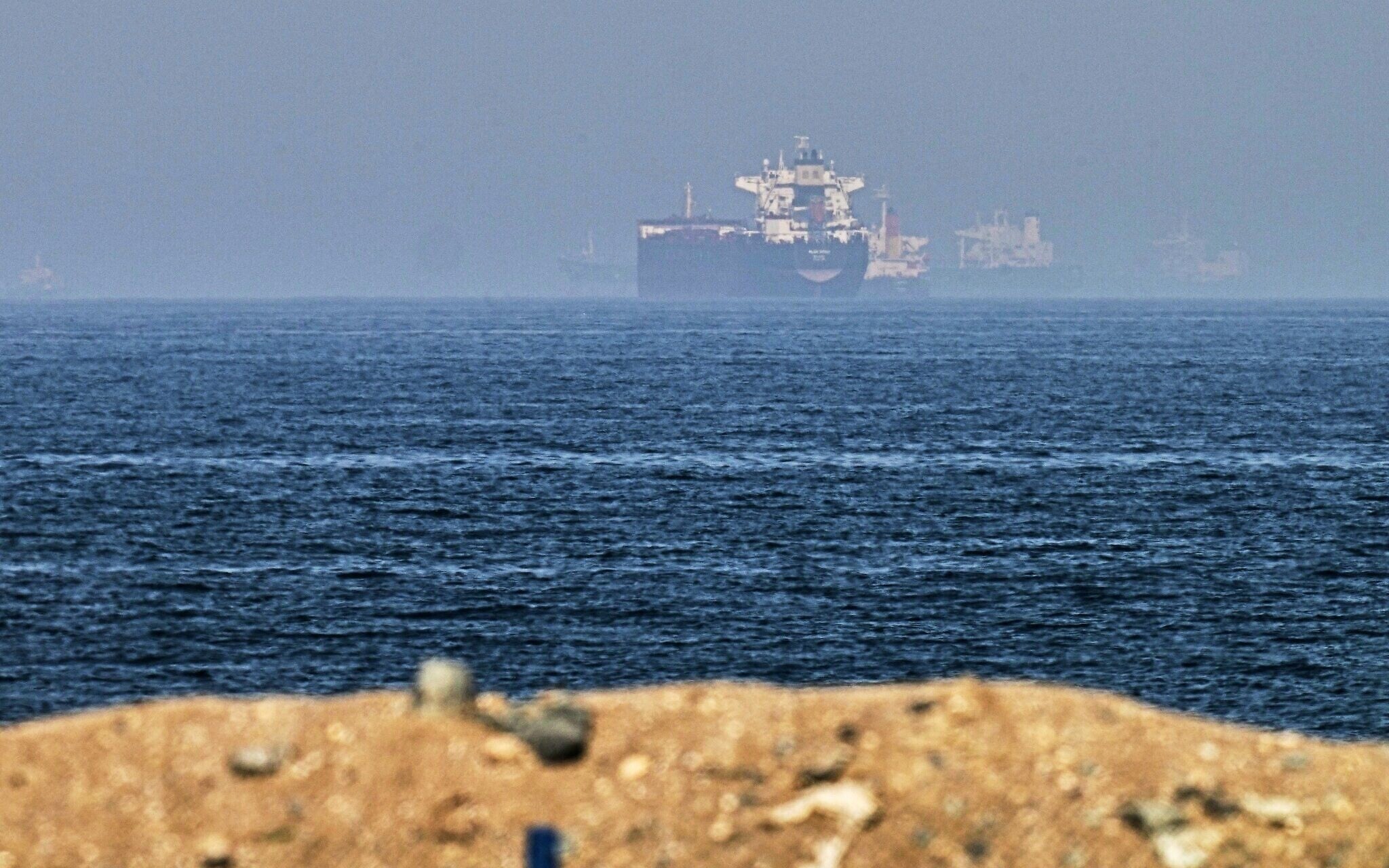
Cargo ships are seen at sea near the Strait of Hormuz, as viewed from a rocky shoreline near Khor Fakkan, United Arab Emirates, May 1, 2026. (AP Photo/Fatima Shbair)
After the attack, UAE presidential adviser Anwar Gargash said the Gulf state would defend its “rights to freedom of navigation” in the Strait of Hormuz.
“The repeated targeting of ADNOC tankers will not deter the UAE from pursuing a balanced and prudent policy based on the three pillars of deterrence, diplomacy, and adherence to international law,” he wrote in a post on X.
“We will exert every effort to strengthen a unified Gulf position, as it is a fundamental pillar for protecting the security of the region and the interests of its member states in this ongoing crisis.”
The announcement came a day after the UAE accused Iran of attacking two vessels linked to ADNOC as they passed through the strait.
The UAE foreign ministry condemned the attack and said no injuries had been reported.
Last week, ADNOC reported that three of its tankers had been attacked in the waterway, while the Emirati foreign ministry separately announced an attack on another ADNOC tanker a day later.
Yemen port halts operations amid repeated Houthi attacks
On the opposite side of the Arabian Peninsula, the director of Yemen’s Mocha port announced the suspension of commercial and maritime operations after being hit by more than 25 missiles in Houthi attacks over recent days.
The attacks killed seven people and caused an estimated $16 million in losses, the director told a news conference.
Mocha is a Red Sea port near the Bab el-Mandab strait, a strategic chokepoint connecting the Red Sea with the Gulf of Aden and a key route for international shipping. The port is controlled by forces aligned with Yemen’s internationally recognized government. It has a smaller cargo capacity than Yemen’s main ports of Aden and Hodeidah.
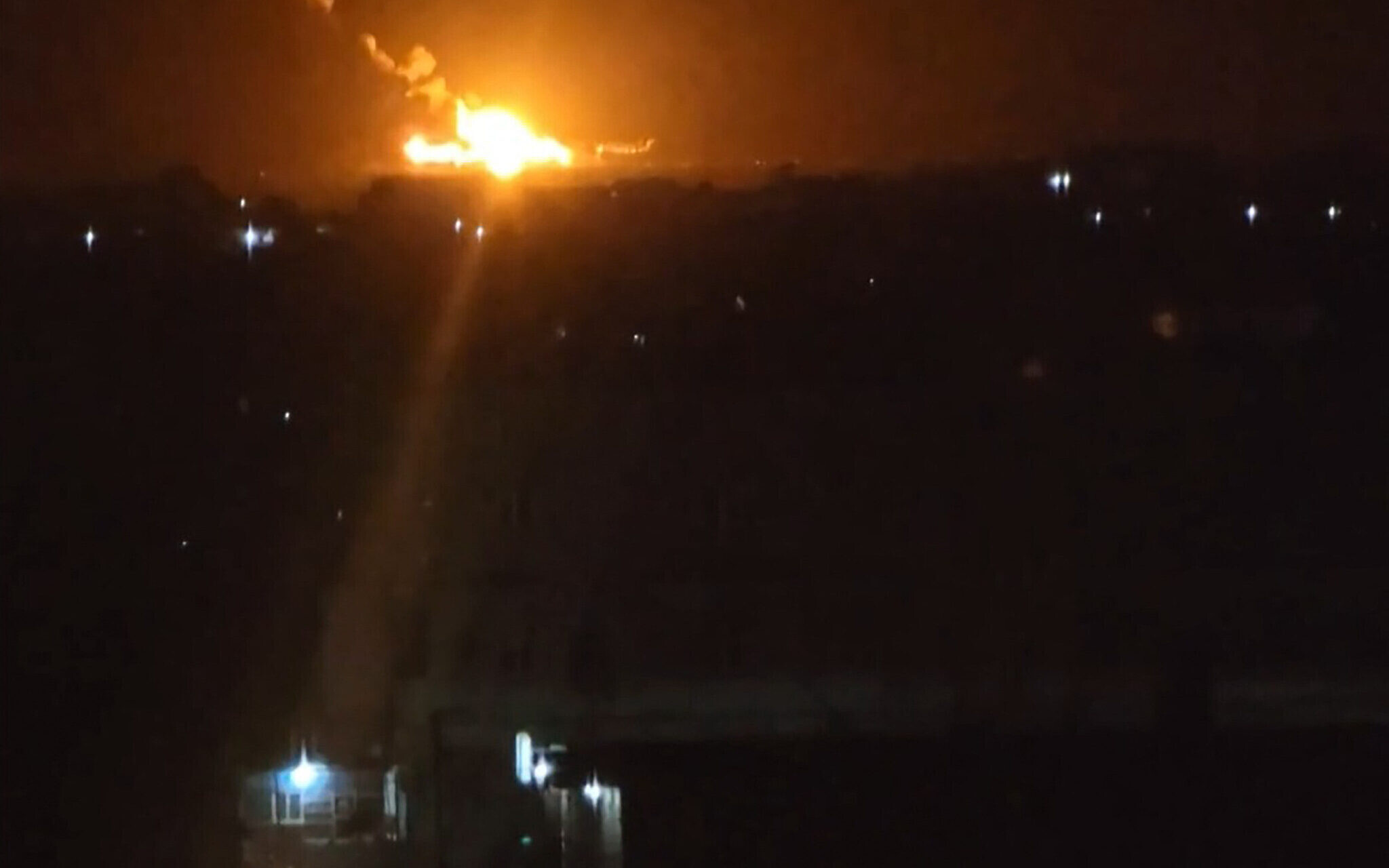
This frame grab taken from AFPTV video footage on August 15, 2026, shows the moment of a Houthi attack on Yemen’s Mocha port sparking an explosion and fire at the facility on August 14, 2026. (AFPTV/AFP)
Yemen’s government said on Friday the Houthis fired six ballistic missiles at Mocha that day, killing at least four civilians and targeting civilian, economic and maritime facilities.
The Houthis said they targeted a military build-up of weapons and warships belonging to Saudi-backed forces in Mocha.
The escalation comes amid the heightened regional tensions between the United States and Iran and has raised concerns about a return to large-scale conflict in Yemen.
Major fighting in Yemen had largely subsided following a UN-brokered truce in 2022, but efforts to reach a lasting political settlement have stalled.
Help us report truthfully on social media

As a multimedia journalist, my job is to take the quality, fact-based journalism produced by The Times of Israel newsroom and make it accessible across every platform — from Instagram posts to podcasts to short-form videos.
This is how many, especially young people, consume news these days. But misinformation is rampant on social media. Our team at ToI produces accurate, responsible short-form reporting on Israel and the Jewish world.
If you believe in the importance of factual social media journalism, please consider joining our reader support group, The Times of Israel Community. Your financial support is essential to sustain responsible multimedia reporting.
— Gabriella Jacobs, multimedia journalist