
Editor’s Note: Updated at 3:40 a.m. Aug. 16, 2026
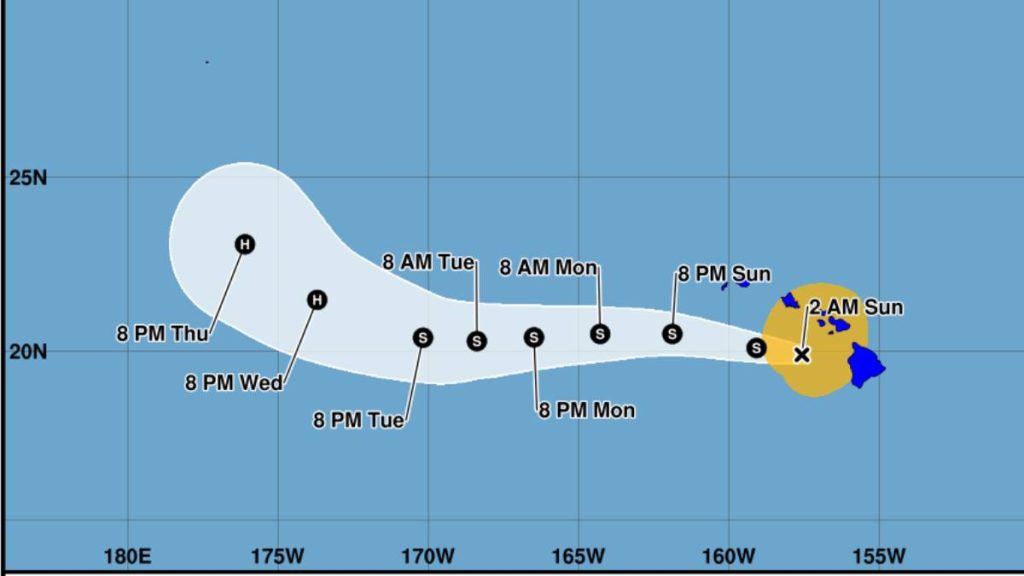
Lala was downgraded to a tropical storm with sustained winds of 70 mph after passing the Big Island and is continuing in a northwest direction at 15 mph, according to the 2 a.m. Sunday update from the National Hurricane Center.
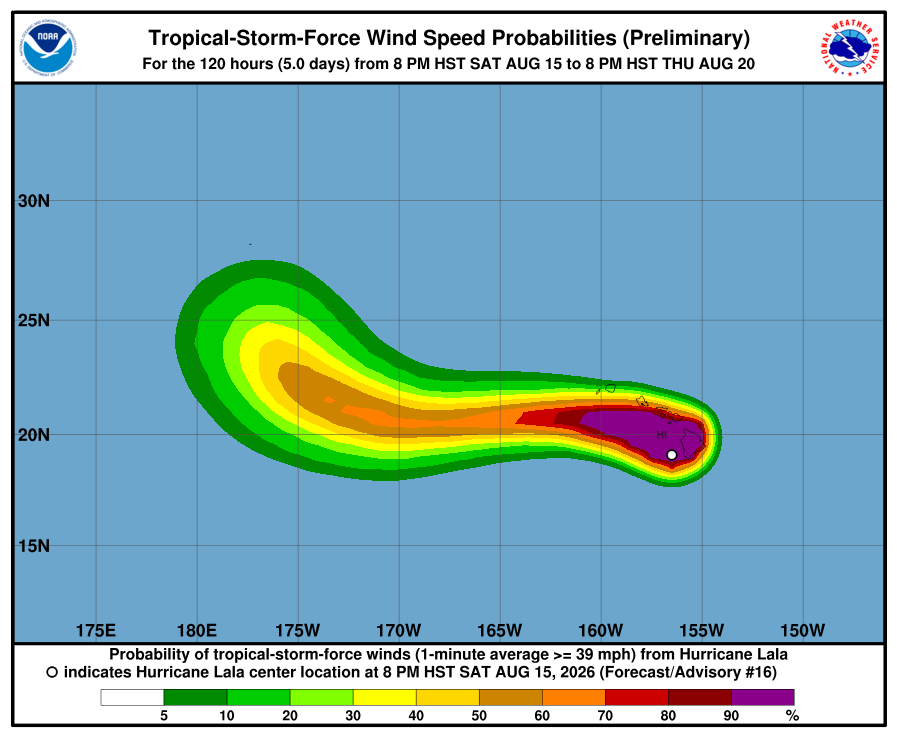
The storm has moved 105 miles past Kailua-Kona of the Big Island in a west-northwest direction, but its effects are still being felt with damaging winds and heavy rain. Tropical-storm-force winds extend outward up to 175 miles from the center.
Flash flood warning
Flash flooding is still a threat. The National Weather Service has extended a flash flood warning for the Big Island until 7 a.m. Sunday.
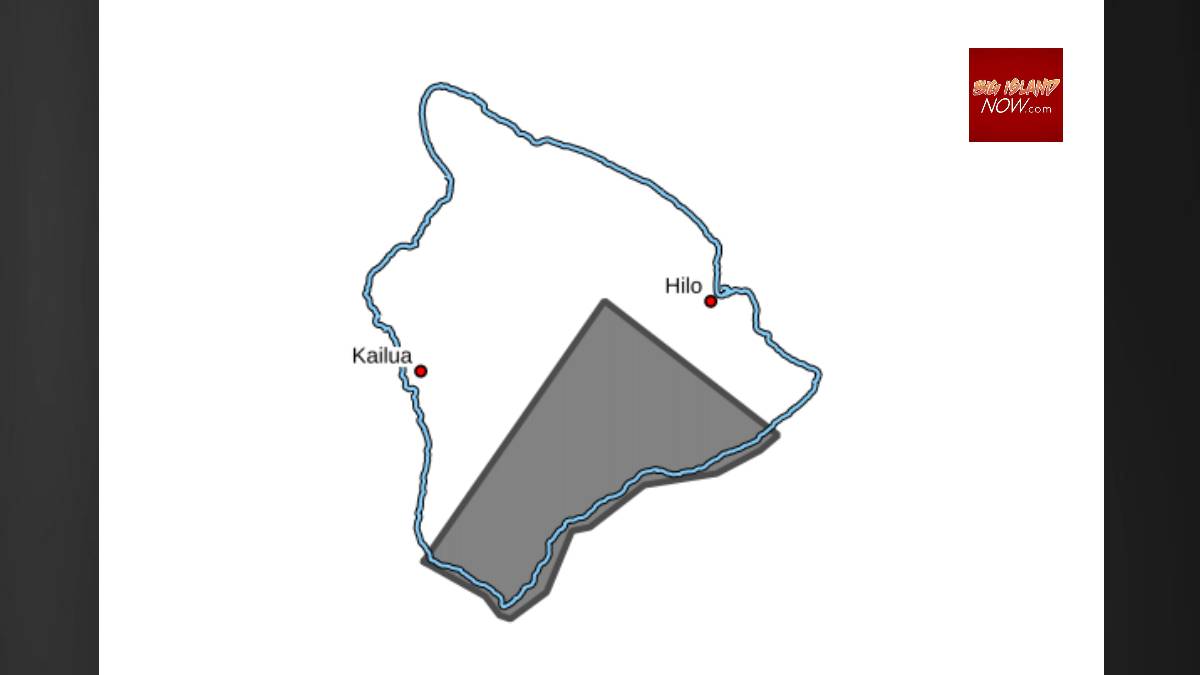 The dark portion of the map of the Big Island is the locations where flash flooding is possible until 7 a.m. Sunday. (Map: National Weather Service)
Local law enforcement reported two homes swept away due to intense rainfall over Nāʻālehu earlier in the night.
Rain rates have decreased over the area since then, but scattered heavy rain showers are still impacting the area with rain rates of up to 1.5 inches per hour.
Flash flood impacts are still ongoing with numerous road closures across Kaʻū District. Additional bands of moderate to locally heavy rain will be possible over the next few
hours.
Some locations that will experience flash flooding include Hilo, Hawaiian Paradise Park, Kapaʻau, Honokaʻa, Volcano, Glenwood, Mountain View, Hawaiʻi Volcanoes National Park, Wood Valley, Hawaiian Acres and Keaʻau.
Tropical storm warning
A tropical storm warning now is in effect for the Big Island and all other counties in the state. Damaging winds and heavy rain have been affecting Maui, and conditions are forecast to deteriorate across O‘ahu on Sunday morning and Kaua‘i County later in the day.
Lala is forecast to make a gradual westward turn with an increase in forward speed Sunday. Then Lala is expected to continue a westward motion through Tuesday.
The core of the storm is forecast to remain south of the smaller main Hawaiian
Islands and the easternmost Northwestern Hawaiian Islands during the next couple of days.
A gradual weakening trend is forecast Sunday and Monday. Some restrengthening is possible by midweek.
Rainfall between 10 to 17 inches has been observed over the last 15 hours for the eastern portion of the Big Island. Lala is expected to produce additional rainfall totals of 5 to 10 inches across the Big Island and Maui County and 4 to 6 inches across the remainder of the island chain.
For what you need to know about Lala on the Big Island about power outages, road closures and more, click here.
High surf advisory
The island also is under a high surf advisory for east-facing shores until 2 p.m. Sunday with waves of 10 to 14 feet. Storm surge of up to 3 feet also is possible.
Large surf peaked Saturday night over the eastern end of the state as Lala approached and passed just south of the Big Island. Surf for the east-facing shores of Oʻahu and Kauaʻi is peaking at advisory levels Saturday morning. Surf will gradually decline below advisory levels along all east facing shores by early afternoon.
The combination of a dangerous storm surge and the tide will cause normally dry areas near the coast to be flooded by rising waters moving inland from the shoreline. The deepest water will occur along the immediate coast, where the surge will be accompanied by large and dangerous waves.
This heavy surf could cause localized coastal flooding and significant beach erosion.
Many people on Hawaiʻi Island remember Hurricane Iselle that struck 12 years ago this month in about the same area Lala now is impacting as it passes to the south or makes landfall.
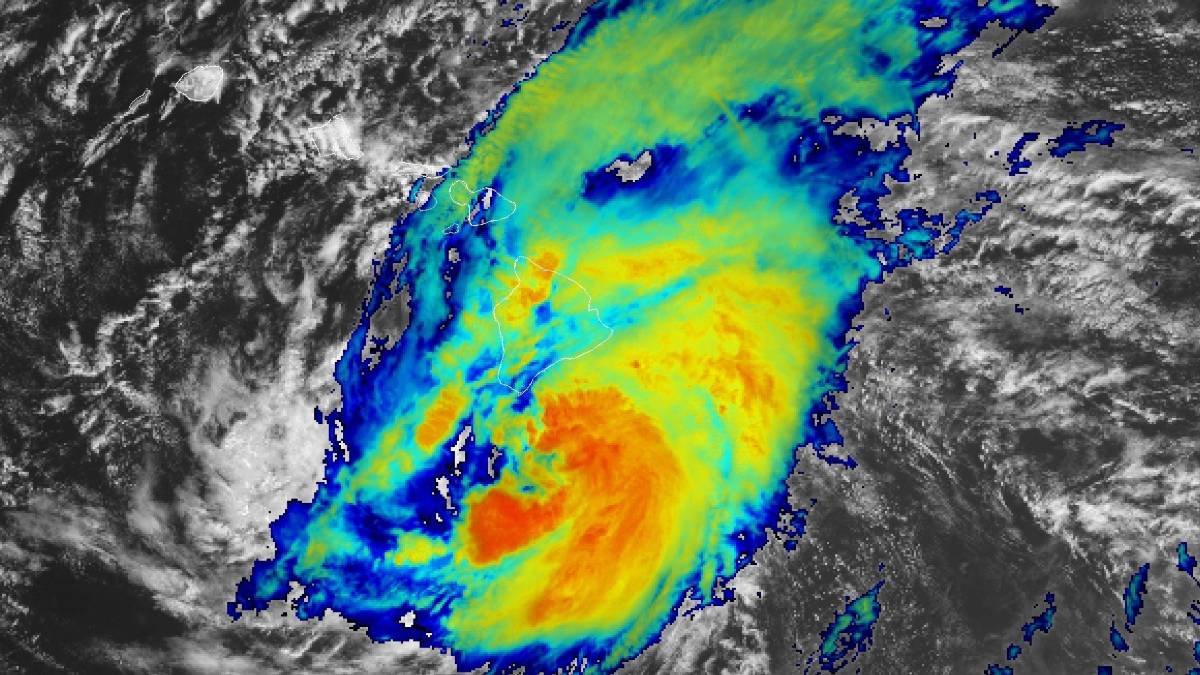 Satellite image for the late Saturday morning update.
Iselle was the last time a tropical storm made landfall on the island, and it did so not long after weakening to a tropical storm, with winds of nearly 56 mph.
Because of the spring severe weather this year, including the kona lows in March, some people on the Big Island have already lost their water sources, with some roofs destabilized. There might even still be large caverns that were formed under places, especially in the southern part of the island.
Hawai’i County Mayor Kimo Alameda, who attended the press briefing online, said the island hasn’t had a direct hit from a hurricane since 1871 — 155 years ago.
Visit the National Weather Service Honolulu forecast office website to find storm information specific to your area, such as possible inland advisories, watches and warnings along with being able to monitor your local forecast.