
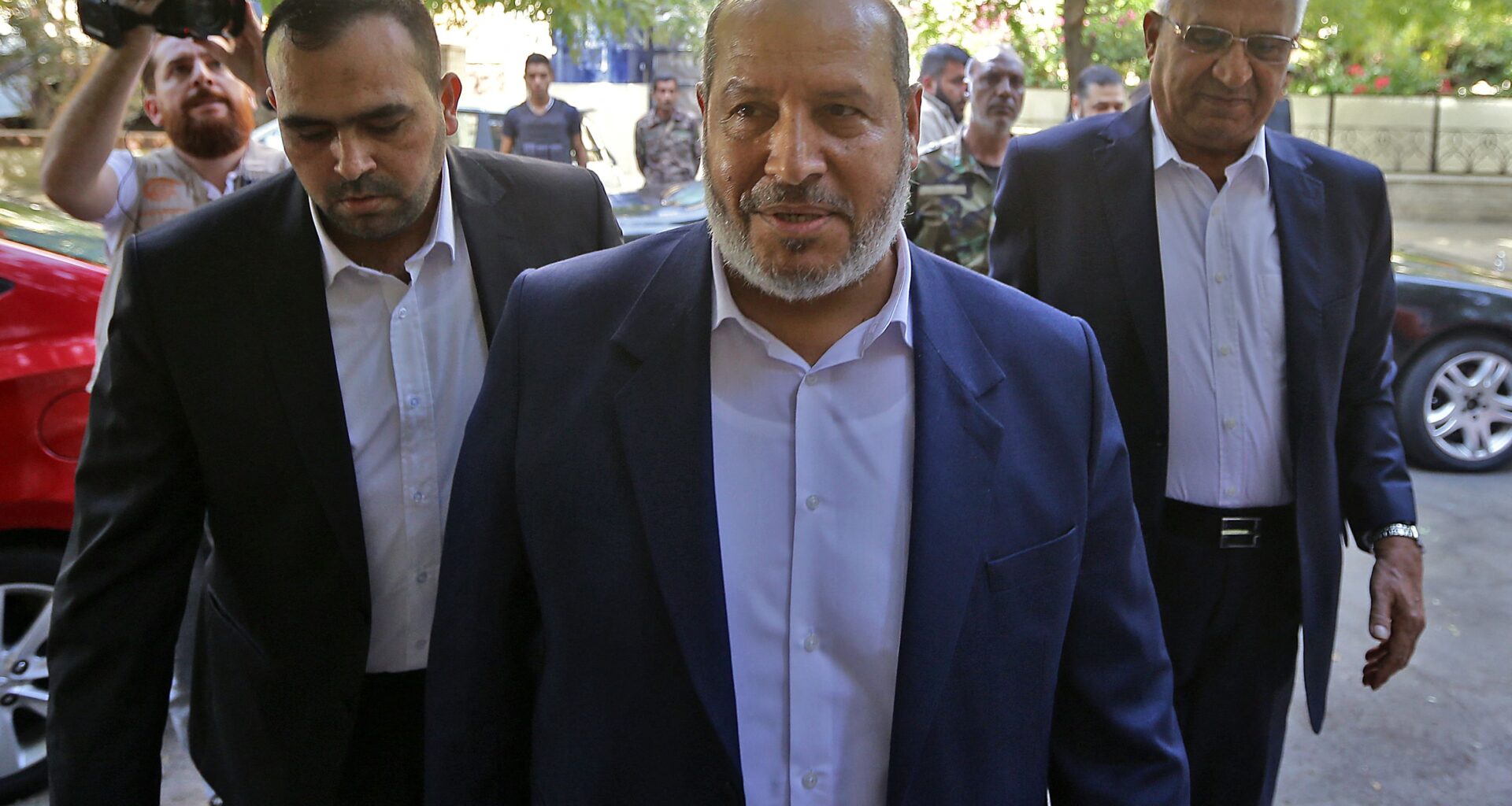
Hamas’s top political leader, Khalil al-Hayya, traveled to Cairo for talks with Egyptian officials Sunday morning in his first visit to the country since taking over the group’s leadership in late July, a trip that came just days ahead of Jared Kushner’s planned visit to Israel to salvage President Trump’s stalled Gaza disarmament plan. Hamas sources told wire services that al-Hayya was expected to meet Egyptian intelligence chief Hassan Rashad, positioning the Cairo talks as a preparatory step before Kushner and Board of Peace envoy Nickolay Mladenov arrive in the region.
Kushner, President Trump’s son-in-law and senior aide, will travel to Israel next week to meet with Prime Minister Benjamin Netanyahu and push for progress on the disarmament plan, a Board of Peace official confirmed, before continuing on to Cairo to meet Egyptian and other regional mediators as well as representatives of the Palestinian technocratic committee being assembled to govern Gaza under board supervision. The trip’s exact date had not been finalized as of the weekend, though officials familiar with the plans said it would take place in the coming week. “What is critical is that we both agree on the desired outcome and are finding ways to accelerate progress,” the Board of Peace official said.
The visit comes roughly two weeks after Netanyahu formally rejected the 15-point disarmament roadmap that Mladenov unveiled on July 31, telling his government that Israeli forces “will not carry out any withdrawal until Hamas is genuinely disarmed.” Behind the scenes, however, the White House has taken a more measured view of Netanyahu’s public posture. A senior U.S. official told Axios that the administration views Netanyahu’s rejection as driven primarily by Israel’s domestic political calendar ahead of October elections rather than a firm policy declaration, adding that Washington has “no problem with it as long as he continues to do what we ask — especially regarding restraining attacks in Gaza.” Netanyahu spoke by phone with Kushner after his public rejection and, according to a person familiar with the conversation, promised to give the plan “a chance” despite his stated skepticism, and pledged to curb attacks on Gaza while the disarmament process is discussed. Following those conversations, the Israeli military pulled back to the Yellow Line, the boundary it was supposed to maintain under the October 2025 ceasefire, from positions it had expanded into during previous weeks.
The gap between Netanyahu’s public statements and his private commitments reflects the political bind the Israeli prime minister faces heading into the fall election. His hard-right coalition partners, including Finance Minister Bezalel Smotrich and National Security Minister Itamar Ben Gvir, have been vocal opponents of any arrangement that would see Israel withdraw from Gaza before Hamas is fully disarmed, and Netanyahu’s rejection of the Board of Peace plan was widely read in Jerusalem as an effort to shore up that flank. At the same time, a public rupture with the Trump administration, which has invested significant political capital in the Board of Peace framework, carries its own risks for a leader who depends on American military and diplomatic backing. “The United States and Israel agree on the end state, which is a demilitarised Hamas,” the Board of Peace official said.
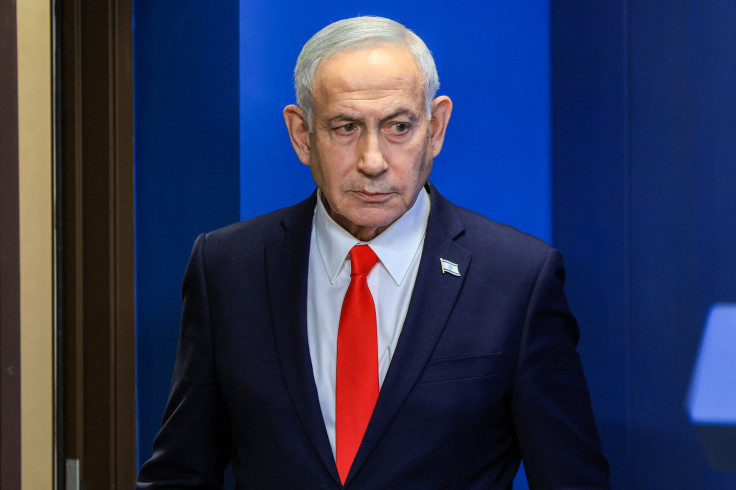
Israeli Prime Minister Benjamin Netanyahu gives a news conference in Jerusalem on June 15, 2026. Netanyahu has rejected the Board of Peace’s 15-point Gaza disarmament roadmap, setting up the talks Kushner is expected to hold with him in the coming week.
The disarmament roadmap at the center of the dispute was announced by Trump as a “historic agreement” on July 31, after months of negotiations produced what Mladenov described as Hamas’s agreement to hand over its weapons to the National Committee for the Administration of Gaza, the Palestinian technocratic body being assembled under board supervision to govern the enclave. The 15-point document calls for disarmament to proceed in a “gradual, sequential, and time-bound manner” over roughly eight months, with decommissioned weapons held by the NCAG rather than transferred to Israel or destroyed outright. Hamas accepted the plan and has maintained that it remains committed to it, describing its acceptance as contingent on Israel fulfilling its own obligations under the original October ceasefire. Netanyahu’s office said the version made public “does not reflect Israel’s positions,” objecting specifically to sequencing that would have Israel halt airstrikes and allow more aid into Gaza before Hamas moved to decommission its weapons.
Mladenov himself has since complicated matters by walking back part of the original announcement. After the initial roadmap indicated Israeli forces would begin withdrawing from parts of Gaza as disarmament proceeded, Mladenov subsequently clarified that the IDF would not need to pull back beyond the Yellow Line until Hamas’s decommissioning was complete, a revision that brought the board’s stated position closer to Israel’s demand for full disarmament before any withdrawal while leaving Hamas less certain about what it had actually agreed to. Hamas political bureau member Bassem Naim told AFP that the group was still awaiting a clear, official response from Mladenov and the mediators, calling on Washington to apply pressure on Netanyahu. “We continue to await pressure from the mediators and the US side on Netanyahu and his government to compel him to abide by the roadmap,” Naim said.
The diplomatic maneuvering has unfolded against a backdrop of continued Israeli military operations that have steadily eroded the ceasefire’s practical meaning since it took effect in October 2025. Israeli fire killed two Palestinians and wounded 14 others Saturday after the military carried out air strikes, artillery shelling and demolitions in different parts of the Strip, according to Gaza’s Ministry of Health. That followed the killing days earlier of Colonel Jamal Abu Kamil, 43, the head of Gaza City’s civil police force, in a strike on al-Rashid Street southwest of Gaza City that fired three missiles at his vehicle and injured two others; Gaza’s Interior Ministry described Abu Kamil as having “committed to his police duties and having no connection to other activities” and called the killing a dangerous escalation, while the Israeli military said it targeted him to “remove a threat,” claiming without providing evidence that he was a Hamas commander involved in the October 7, 2023 attacks. The IDF separately confirmed a strike in Khan Yunis that killed Hudhaifa Khaled Suleiman Qawari, identified as a Hamas company commander, in what appeared to be the first targeted assassination in Gaza since Israel’s political leadership instructed the military last week not to carry out such strikes without the IDF chief of staff’s approval, a directive introduced under U.S. pressure.
Since the October 2025 ceasefire took effect, Israeli operations have killed more than 1,250 Palestinians, according to Palestinian official sources, with the overall death toll since October 2023 now exceeding 73,300. Israel disputes the post-ceasefire figures. Egypt, Qatar and Turkey, which mediated the disarmament deal, have issued a joint statement condemning Israeli targeting of civilians and healthcare facilities as a “flagrant violation of international law.”
Adding a further complication to the diplomatic picture, Israeli Defense Minister Israel Katz said this week that troops would remain not only in Gaza’s security zones but in occupied positions across Lebanon and Syria as well, declaring a continued Israeli military presence on what he described as all three fronts. The statement, coming just as Kushner and Mladenov prepare to press Netanyahu on a Gaza withdrawal timeline, underscores the broader regional posture Israel’s government has adopted even as it negotiates the narrower question of Hamas’s disarmament.
The broader humanitarian picture in Gaza remains dire. Israel has controlled more than 60% of the Strip’s territory since expanding its presence beyond the Yellow Line, up from the 53% it held at the time of the October ceasefire. Aid organizations and UN agencies have continued to document severe shortages of food, medicine and shelter, as well as ongoing displacement of Palestinian civilians caught between Israeli military zones and areas where reconstruction has not begun. The NCAG, which is supposed to take over Gaza’s day-to-day governance and eventually oversee reconstruction, remains on standby, unable to deploy without Israeli agreement on the framework governing its operations.
Washington’s challenge in the coming days is whether Kushner and Mladenov can present Netanyahu with a formulation that satisfies his domestic political audience while keeping Hamas committed to a process that, from Gaza’s perspective, has so far asked for significant concessions in exchange for Israeli obligations that have gone only partially fulfilled. Al-Hayya’s decision to make Cairo his first foreign stop as Hamas’s leader suggests the group intends to lean on Egyptian mediation as the disarmament talks enter their next phase, even as Katz’s comments on Lebanon and Syria signal that Israel’s government sees the broader regional confrontation, not just Gaza, as unfinished business. Whether Kushner’s visit produces a workable compromise, or simply buys another few weeks before the framework frays further, will depend largely on what Netanyahu is prepared to commit to in private that he has so far been unwilling to say in public.
Editors’ note: This is a developing story tied to ongoing regional diplomacy and will be updated as Kushner’s visit date is confirmed and further details emerge.
Originally published on HNGN