
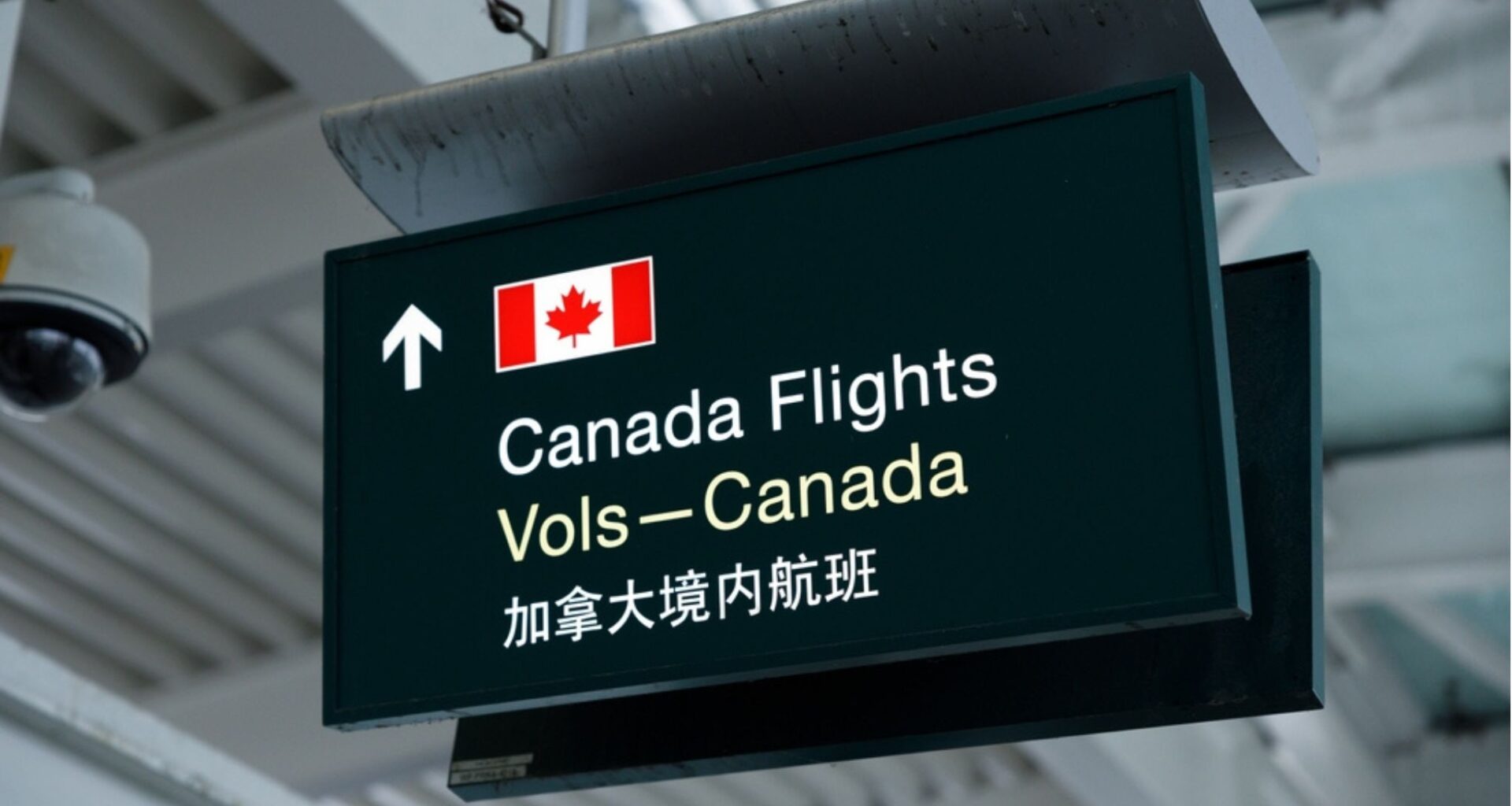
Canadians who are boycotting travel to the United States amid the trade war might be struggling to support local travel because of high domestic flight costs.
In a recent Reddit post, Canadians expressed their frustration at the high cost of domestic flights, with many saying it’s cheaper to fly to destinations in Europe and the Caribbean than a five-hour flight across Canada.
A new report from public policy think tank MEI suggests that the federal government has a big hand in these exorbitant airfare prices.
According to the organization, the high cost of domestic air travel is largely due to the high taxes and fees Ottawa imposes on the airline industry.
“Reducing the cost of air travel is entirely within Ottawa’s control, because it is Ottawa that has driven prices up in the first place,” stated Samantha Dagres, communications manager at the MEI, in the report. “The government refuses to tackle these exorbitant fees, preferring to scapegoat the industry.”
MEI says the government charges a variety of taxes and fees on airports, which make up a significant portion of passengers’ tickets on key routes.
The report cited the Air Travellers Security Charge (ATSC) as an example. According to the Canada Revenue Agency (CRA), this fee is a security charge paid by flyers for flights within and outside the continental zone, which is Canada, the U.S. (except Hawaii), or the Islands of St. Pierre and Miquelon. A $9.94 fee is added to tickets for flights within Canada, with a maximum rate of $19.87. The ATSC for international flights is $34.42 max.
In comparison, the equivalent charge in the U.S. is capped at US$11.20 (around C$15.46).
MEI says Canadian travellers also indirectly pay the rent on airport lands through the Airport Improvement Fees (AIF) that are charged on every ticket.
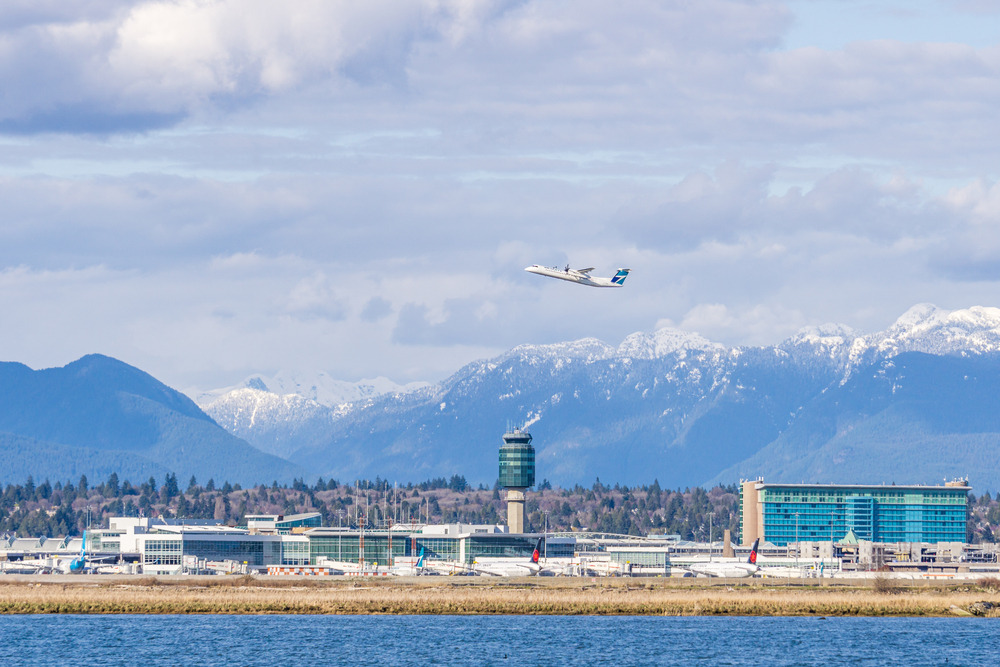
Vancouver International Airport with the Coast Mountains in the background. (Oleg Mayorov/Shutterstock)
Airports in Canada are operated by private, non-profit organizations. The land they sit on is owned by the federal government, which collects rent.
“These government-imposed costs are passed on to airlines and, ultimately, to passengers,” reads the report.
Canadian airports like Toronto Pearson, Vancouver International Airport (YVR), and Calgary International Airport (YYC) have FAQ pages explaining the AIF.
YVR raised its AIG in January 2020 from $20 to $25 to maintain the airport’s infrastructure.
“Vancouver Airport Authority is a community-based, not-for-profit organization and receives zero funding from the government to operate,” reads the site.
YYC says the AIF added to flyers’ tickets is used to pay for improvements and expansions of the airport. It notes that while it pays rent to the government, the AIF is not sent to any level of government.
In 2024, airport authorities paid a record $494.8 million in rent to Ottawa, an increase of $75.6 million in a single year. In 2014, these fees totalled $294.4 million. That represents a 68 per cent increase in just ten years.
The report says airport rent represents between one quarter (in Calgary) and one third (in Vancouver) of the revenues major airports get from AIF.
It gave the example of a round-trip flight between Montreal and Toronto. According to MEI, passengers pay $77 in airport improvement fees, of which $25 — nearly one-third — is used to cover the rent payments airports make to the government.
Fotinia/Shutterstock
“On a $190.04 flight between the two cities, the government’s share of fees, along with the sales taxes, amounts to $68.04, or roughly 35.8 per cent of the final ticket price,” reads the report.
Here are examples of other popular Canadian airline routes from the report:
On a $266.46 round-trip between Vancouver and Montreal: $72.54 in taxes and fees, or 27 per cent of the ticket price
On a $118.36 round-trip between Toronto and Calgary: $51.03 in taxes and fees, or 43 per cent of the ticket price
On a $183.06 round-trip between Vancouver and Toronto: $51.52 in taxes, or 28 per cent of the ticket price
“Ottawa has the power to make air travel affordable once more, since it remains the main contributor to its unaffordability,” added Dagres. “Using airports as cash cows instead of treating them as critical infrastructure hurts Canadians who depend on reliable air service to move around the country.”
Daily Hive has reached out to Transport Canada for a response and will update the story when they reply.
This report comes amid the tumultuous Air Canada flight attendants’ strike. The airline cancelled nearly 300 flights on Friday in anticipation of the strike.