
Vanishing Hands: Chronicling the dying crafts
With the story of Meena Bazar’s last mashaq wala, this series on Delhi’s vanishing trades concludes. From deed writers to embroiderers and water carriers, each fading profession reminds us that a city’s true history lies not only in its monuments, but in the quiet persistence of ordinary people who keep its daily life flowing.
At the entrance of the Hara Bahre Sahab Dargah, just beyond the bustle of Meena Bazar Gate No. 2, an old stone well stands quietly, weathered but unyielding. Its circular rim, darkened with age and rope-burn, holds memories of a city that once depended not on taps or tankers, but on men who carried water in stitched leather bags — the mashaq — across Delhi’s lanes, gardens, and shrines.
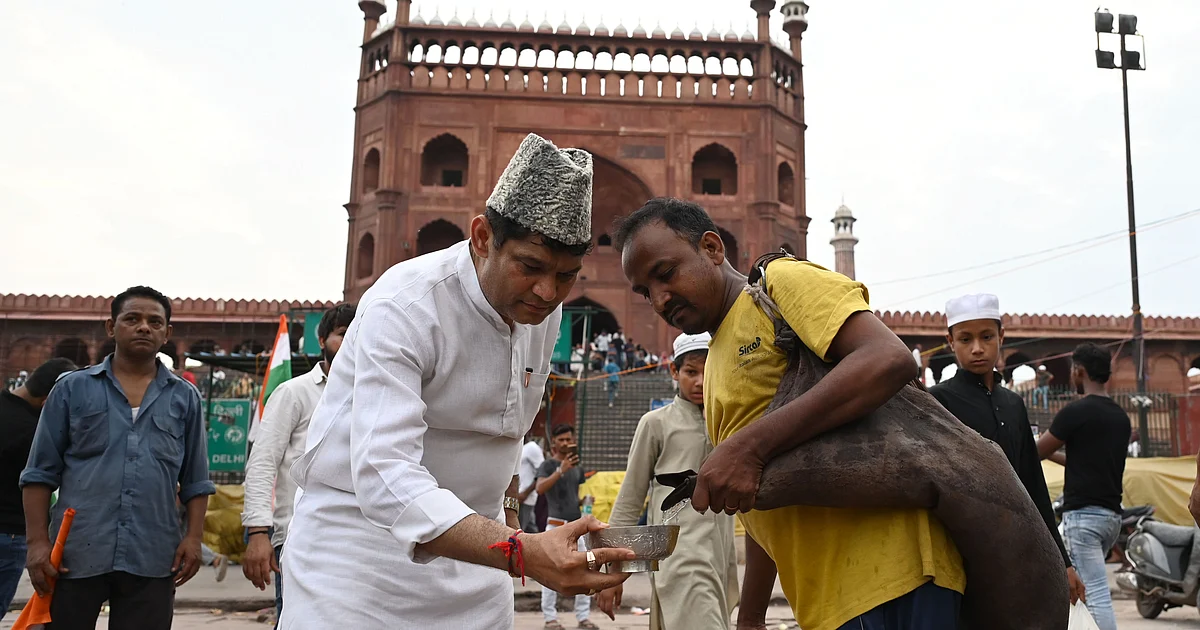
One of the last to continue this forgotten tradition is 35-year-old Mohammad Laique from Bijrola in Uttar Pradesh’s Amroha district. With practiced ease, he leans over the pulley, gripping the thick rope with calloused hands. As the bucket descends into the cool depths, the splash of water echoes upward. He hauls it back steadily, the crank creaking, water spilling over the rim, soaking his shirt and feet.
Carefully, he tips the bucket into a goatskin bag, the mashaq stitched by hand. This is the signature tool of his trade, once ubiquitous in Mughal Delhi, now nearly extinct. These traditional water carriers, known as “Bhishtis” or “Saqqe”, played a vital role in public life, especially during religious gatherings like the Friday prayers at Jama Masjid.
Once filled, Laique scoops water with a brass katora — a bowl passed down through generations — and offers it to pilgrims pausing at the dargah or heading to the mosque nearby.