
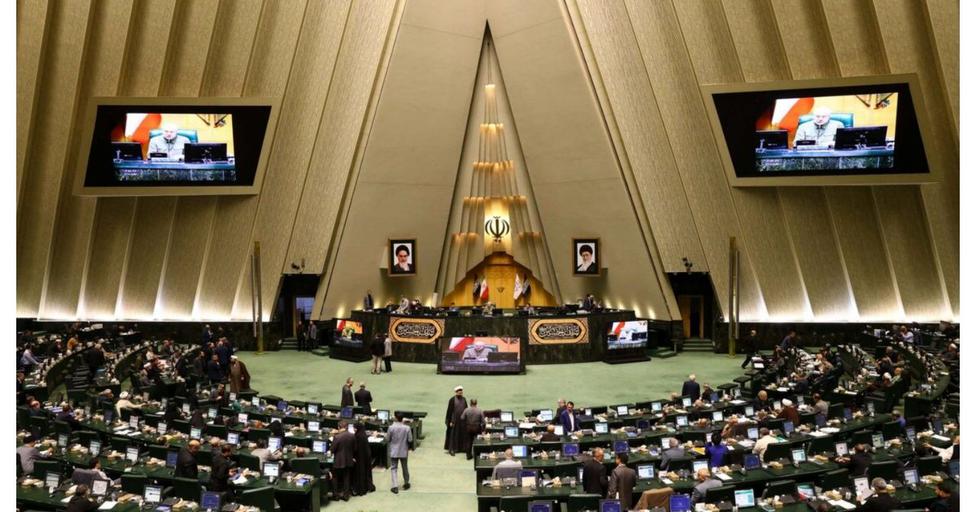
On Sunday, members of the Iranian Parliament approved the general framework of a bill titled “Countering the Influence of Foreign Intelligence Services, Governments, and Entities.” According to critics, the plan severely restricts international communications for Iranian citizens, academics, media outlets, civil society organizations, and cultural activists.
In a notable reaction, Nour News, a media outlet affiliated with the Supreme National Security Council (SNSC), issued a warning regarding the consequences of the bill. It cautioned that rather than neutralizing foreign intelligence threats, the legislation could weaken social capital and inadvertently create fertile ground for further infiltration.
While acknowledging the necessity of countering foreign intelligence threats, Nour News noted that the Islamic Republic already possesses numerous laws addressing national security, emphasizing that the primary issue lies in weak execution rather than a lack of legal frameworks. The outlet urged lawmakers to avoid hasty decisions before the final vote and allow experts and stakeholders to weigh in on its various dimensions.
Furthermore, Nour News warned against restricting the activities of press organizations, political parties, and citizens, noting that heavy criminal penalties for political and media activists could severely curtail “legitimate freedoms.”
Mohsen Borhani, a jurist and university professor, voiced strong criticism of the bill in an interview with the Etemad newspaper, pointing out ambiguous language and an overly broad scope. He warned that implementing the measure would severely impede Iran’s academic, cultural, and media engagements abroad.
Highlighting Article 5 of the bill, Borhani stated that the Ministry of Intelligence would be tasked with compiling an annual list of authorized foreign governments, universities, institutes, and organizations. Academics would then be strictly confined to interacting with entities on this list. Non-compliant interactions could carry prison sentences ranging from six months to two years.
Borhani also raised alarms about Article 8, warning that its wording could be interpreted as requiring official permits even for routine citizen visits to foreign embassies for visa applications.
Regarding media restrictions, Borhani noted that Article 6 prohibits any interviews or dialogues with outlets funded by the United States or Israel, while mandating government approval for communications with all other foreign media. He argued that such sweeping restrictions could prevent even pro-sovereignty voices from participating in international media spaces.
Ambiguity in defining criminal offenses represents another key area of concern. Borhani pointed to Article 1, noting that phrases like “tarnishing public trust” or “damaging national unity” are open to broad interpretation. The article prescribes sentences ranging from one to 30 years in prison, creating a significant risk of arbitrary enforcement.
Borhani further warned of the consequences for non-governmental organizations (NGOs), artistic and cultural activities, and educational workshops, stating that restrictions on civil society’s international links and regulations on artistic productions would impose severe barriers.
Concurrently, Nour News criticized the timing of the bill, arguing that instead of introducing new constraints on media and society, Parliament should focus on pressing economic issues and public livelihoods.
Referencing the Supreme Leader’s May 27 address marking the anniversary of Parliament’s inauguration, the outlet stressed that parliamentary measures should directly address public needs and foster hope for the future.
Citing the wartime conditions of recent months, Nour News urged lawmakers to postpone the final approval of the bill to allow for comprehensive expert review. It emphasized that a law intended to counter foreign infiltration must not erode social capital, restrict scientific and cultural exchanges, or widen the gap between the government and society.
Javad Emam, spokesperson for the Reform Front of Iran, also responded to the approval of the bill’s general framework, warning against ambiguous legislation and the expanding categorization of criminal offenses.
In a note, Emam stressed that “national security cannot endure without freedom, and freedom without security is unsustainable,” adding that legislation must strike a balance between the two rather than sacrificing one in the name of the other.
While calling the defense against espionage and organized foreign infiltration a necessity for national security, Emam cautioned that an overly broad definition of “influence” blurs the line between espionage and communication, security actions and civil activity, and intelligence cooperation and global dialogue.
The Reform Front spokesperson emphasized that scientific communication, cultural dialogue, media activity, domestic policy critique, and social engagement do not in themselves constitute foreign influence. He warned that “an undefined concept of influence could one day target internal critics rather than adversaries.”
Emam concluded that genuine counter-influence cannot be achieved by closing society’s windows to the world, but rather requires strengthening national institutions, enhancing public trust, ensuring transparency, upholding the rule of law, and empowering civil society.