
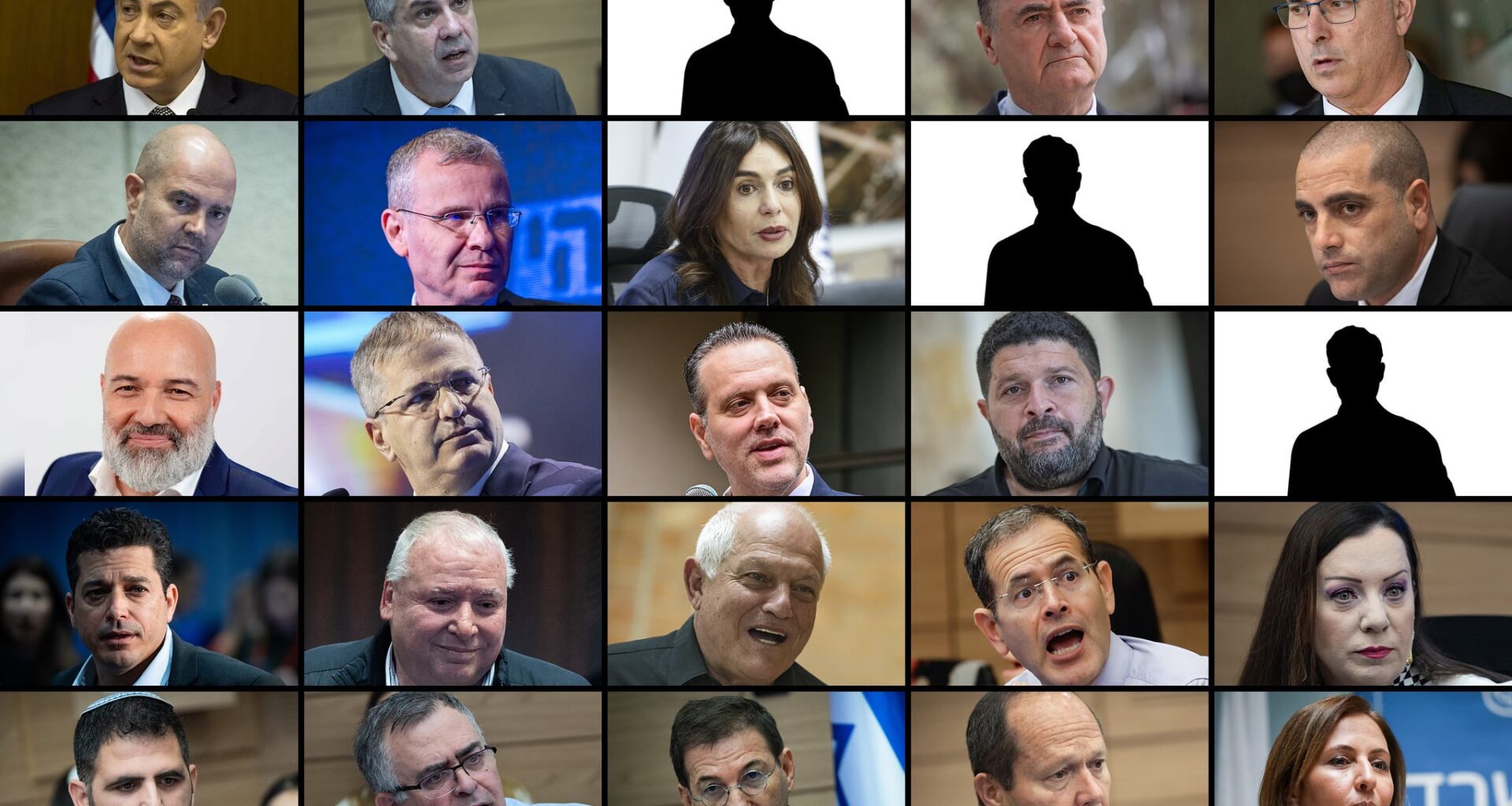
Energy Minister Eli Cohen won first place in the Likud party primary, according to final results published Tuesday morning, with 100% of the vote counted.
Cohen was followed by Knesset Speaker Amir Ohana, Justice Minister Yariv Levin, Transportation Minister Miri Regev and coalition whip Ofir Katz.
In a statement, Likud said Prime Minister Benjamin Netanyahu was “very satisfied” with the results and declared it would achieve a “big victory” in the October 27 election.
“This is the only way to prevent a leftist government of [Yashar party leader Gadi] Eisenkot, [Democrats party leader] Yair Golan, [Yisrael Beytenu leader Avigdor] Liberman, and the Arab parties,” it asserted.
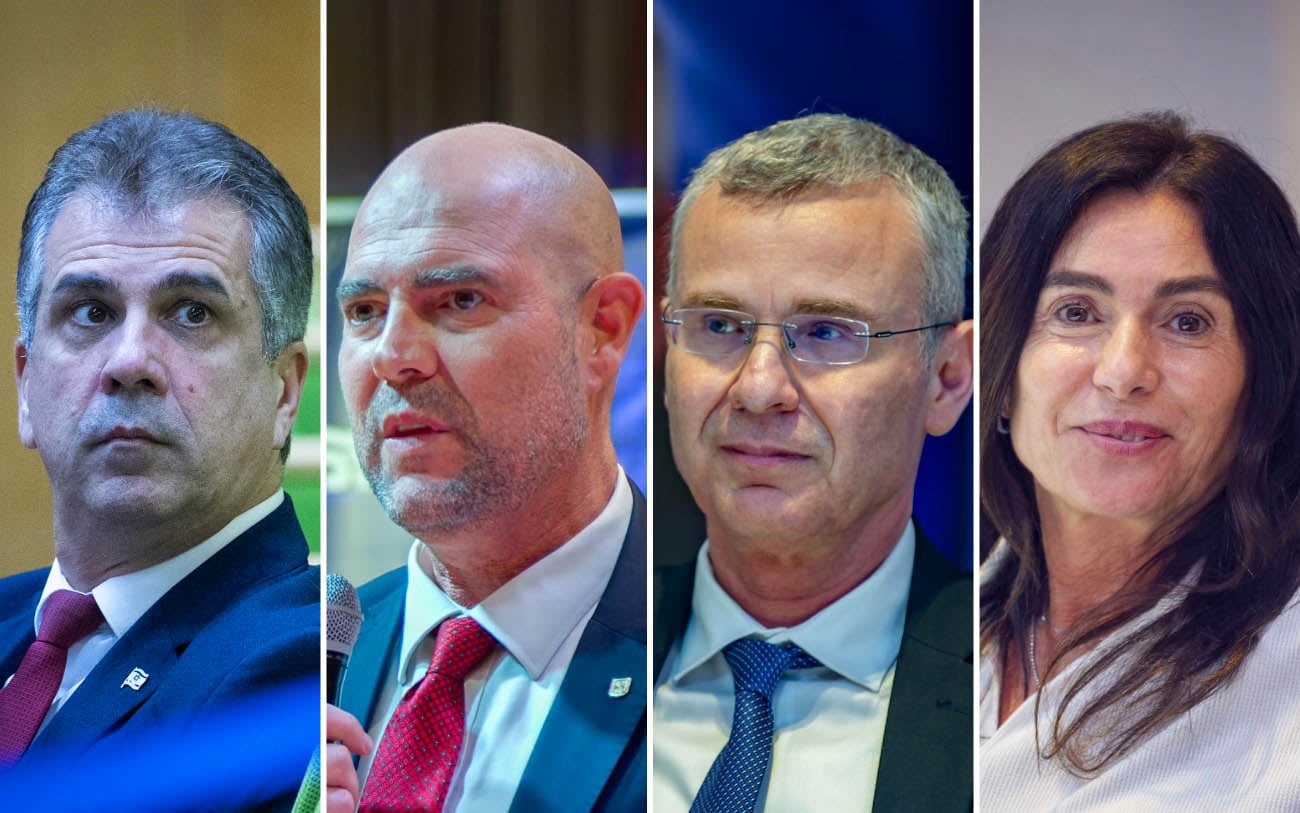
Left to right: Energy Minister Eli Cohen, Knesset Speaker Amir Ohana, Justice Minister Yariv Levin and Transportation Minister Miri Regev, top performers in the August 17, 2026, Likud party primary. (Yonatan Sindel, Sharon Leibel/Flash90)
Gadi Eisenkot, the opposition Yashar party leader who has emerged as Netanyahu’s main election rival, denounced Likud following the announcement of the primary results, declaring that “no festive message or ‘victory’ parties will hide the fact that the Likud list for the 26th Knesset is, in practice, the October 7 list” — a reference to the Hamas invasion and massacre in southern Israel on October 7, 2023.
Get The Times of Israel’s Daily Edition
by email and never miss our top stories
By signing up, you agree to the terms
“These are exactly the same people who shamelessly divided Israeli society, who blindly led Israel to the worst disaster since the founding of the state” and who, “instead of taking responsibility, clung to their seats at all costs and added insult to injury by enabling mass draft evasion during wartime,” Eisenkot posted on X, arguing that the current Likud slate’s members “don’t know how to lead Israel to victory,” cannot unite the country and “are not worthy” of leadership.
Eisenkot’s Yashar, a new party unveiled in September that is slightly ahead of Likud in recent polls, is not holding a primary. Eisenkot is selecting its Knesset slate.
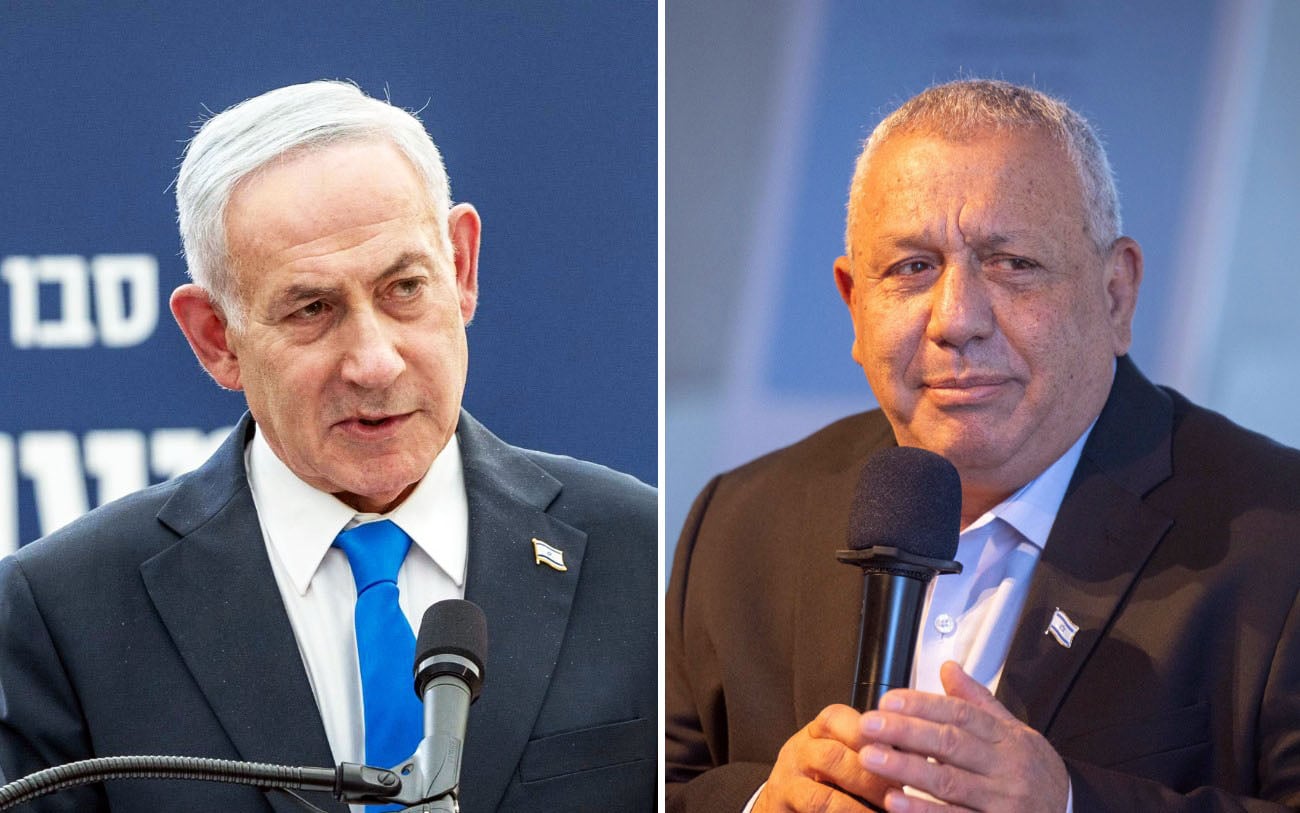
Left to right: Prime Minister Benjamin Netanyahu attends a state ceremony on Mount Herzl, in Jerusalem, August 05, 2026. (Chaim Goldberg/FLASH90); Head of the Yashar party Gadi Eisenkott attends a conference at the Peres center in Tel Aviv. July 12, 2026. (Miriam Alster/FLASH90)
The primary results will be used to form Likud’s Knesset slate, alongside politicians Netanyahu himself is selecting in reserved places.
Our combo photo shows the near-final top 25 on Likud’s Knesset slate, with silhouettes showing slots reserved for Netanyahu’s yet-to-be-named personal choices.
Based on the results, outgoing ministers Ze’ev Elkin, May Golan, Idit Silman and Avi Dichter are likely to be out of a job come October, along with MKs Hanoch Milwidsky, Keti Shitrit, Ariel Kallner, Amit Halevi, Avichai Boaron and Nissim Vaturi.
After ballots from all 501 polling stations across the country were counted, the primary results were as follows:
1. Eli Cohen
2. Amir Ohana
3. Yariv Levin
4. Miri Regev
5. Ofir Katz
6. Yoav Kisch
7. Miki Zohar
8. Almog Cohen
9. Amichai Chikli
10. David Amsalem
11. Moshe Saada
12. Tally Gotliv
13. Shlomo Karhi
14. David Bitan
15. Boaz Bismuth
16. Nir Barkat
17. Ze’ev Elkin
18. Gila Gamliel
Given that Netanyahu’s Likud party has consistently been polling in the low 20s, and given that roughly one-third of the first 30 slots on the Likud slate are reserved for candidates handpicked by the premier, almost all of those who did not finish in the primary’s top 16 in the primary are not expected to make it into the next Knesset. However, outgoing Innovation Minister Gamliel is set to be placed at 25 on the final slate because Likud regulations mandate that at least five women are placed within the top 40 of the list, at slots 10, 20, 25, 34 and 40.
Netanyahu may also reportedly seek to maneuver Economics Minister Barkat, an internal rival who is set for 24th slot, to a position further down the slate.
Polls closed in the Likud primary after 11 hours of voting on Monday with 53.5 percent of the party’s roughly 140,000 members having cast ballots, according to a party spokesman. They said 75,177 ballots were cast.
The turnout marked a decrease in voter participation since the last Likud primary in 2022, when close to 58% of members voted.
In the hours before voting ended, Likud ministers and MKs gathered at their respective voting centers across Israel to make a last-minute appeal to voters.
One of the few parties to determine its electoral lineup through a primary, Likud has long prided itself on its internal democratic process. However, changes to the system this year have shrunk the number of open spots on the roster, after Netanyahu was granted the ability to handpick eight candidates in the top 30 spots, and another reserved slot was allocated to Defense Minister Israel Katz.
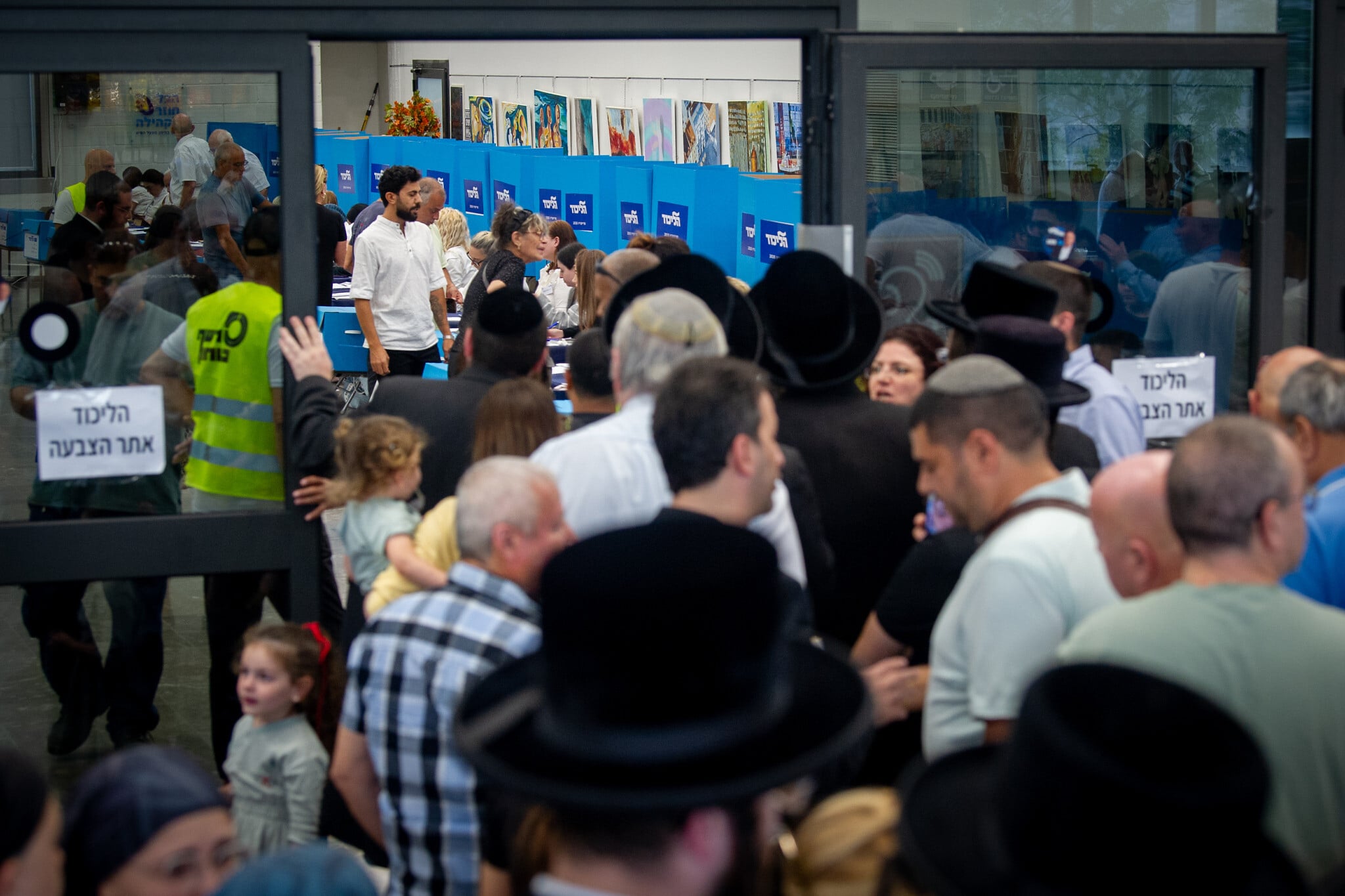
Israelis wait to vote in the Likud primary election at a polling station in Haifa on August 17, 2026.(Sharon Leibel/Flash90)
That Likud is slated to win significantly fewer seats than it currently holds has further tightened the race.
Opinion polls have suggested that Netanyahu’s party will win between 22 and 24 seats, meaning that many of the 32 Likud lawmakers currently serving in the Knesset are likely to leave the Knesset.
Both these factors combined meant that a host of veteran lawmakers and newcomers were competing for a drastically reduced number of realistic slots on the list.
Apart from his own slot atop the slate, which was not up for grabs in Monday’s vote, Netanyahu controls the 3rd, 5th, 9th, 11th, 15th, 18th, 26th and 29th slots on the list. So far, he has tapped Foreign Minister Gideon Sa’ar, Likud Central Committee chair Haim Katz, and political newcomer Oren Dobronsky to fill three of these eight slots, although he hasn’t definitively clarified their exact placements.
According to Hebrew media reports, the premier’s push for reserved slots was based on concerns that the primary could elevate candidates who are highly popular among the Likud base — including firebrand Likud MK Tally Gotliv and ministers Shlomo Karhi and May Golan — but who internal party polling suggests are less appealing to moderate right-wing and swing voters whose support could prove decisive in the upcoming national election. It was also reportedly motivated by Netanyahu’s desire to settle scores with internal critics such as Barkat.
Help us report truthfully on social media

As a multimedia journalist, my job is to take the quality, fact-based journalism produced by The Times of Israel newsroom and make it accessible across every platform — from Instagram posts to podcasts to short-form videos.
This is how many, especially young people, consume news these days. But misinformation is rampant on social media. Our team at ToI produces accurate, responsible short-form reporting on Israel and the Jewish world.
If you believe in the importance of factual social media journalism, please consider joining our reader support group, The Times of Israel Community. Your financial support is essential to sustain responsible multimedia reporting.
— Gabriella Jacobs, multimedia journalist
Already a member? Sign in to stop seeing this
You’re a dedicated reader

That’s why we started the Times of Israel – to provide discerning readers like you with must-read coverage of Israel and the Jewish world.
So now we have a request. Unlike other news outlets, we haven’t put up a paywall. But as the journalism we do is costly, we invite readers for whom The Times of Israel has become important to help support our work by joining The Times of Israel Community.
For as little as $6 a month you can help support our quality journalism while enjoying The Times of Israel AD-FREE, as well as accessing exclusive content available only to Times of Israel Community members.
Thank you,
David Horovitz, Founding Editor of The Times of Israel