
BEIRUT, Lebanon, Aug. 18 (UPI) — Lebanese, exhausted by decades of armed conflict that reached an unprecedented peak in intensity, casualties, and destruction during the recent Israel-Hezbollah war, increasingly want an end to hostilities, but they remain divided — as they often are — over how that can be achieved.
While they have become more open to pursuing peace with Israel, their southern neighbor, a majority remain opposed to normalization and unwilling to establish close ties with the country. Others, however, remain committed to armed resistance against Israel.
Such peace is intended to be the ultimate goal of the ongoing direct negotiations between Lebanon and Israel, launched with the U.S.-brokered framework agreement signed by both countries under pressure from Washington on June 26, but the process has so far faced significant obstacles and yielded little progress.
When Lebanese President Joseph Aoun opted for direct talks with Israel as the only viable path to ending the war, despite Hezbollah’s staunch opposition, he also sought to bring the decades-long conflict to a definitive close.
While Lebanon seemed more than ever ready for such a move, despite persistent but shifting divisions among its population, Israel had other calculations, showing little willingness to relinquish the military upper hand and gains it had achieved during its campaign against Hezbollah.
At the core of the framework agreement was the complete disarmament of Hezbollah, a firm Israeli condition — strongly rejected by the militant group — for halting its attacks and withdrawing from parts of southern Lebanon it has occupied since the war began on October 8, 2023.
On that day, Hezbollah opened a support front for Gaza. It resumed limited attacks against Israel on March 2, 2026, in solidarity with Iran, after which Israel launched a much broader military campaign in Lebanon.
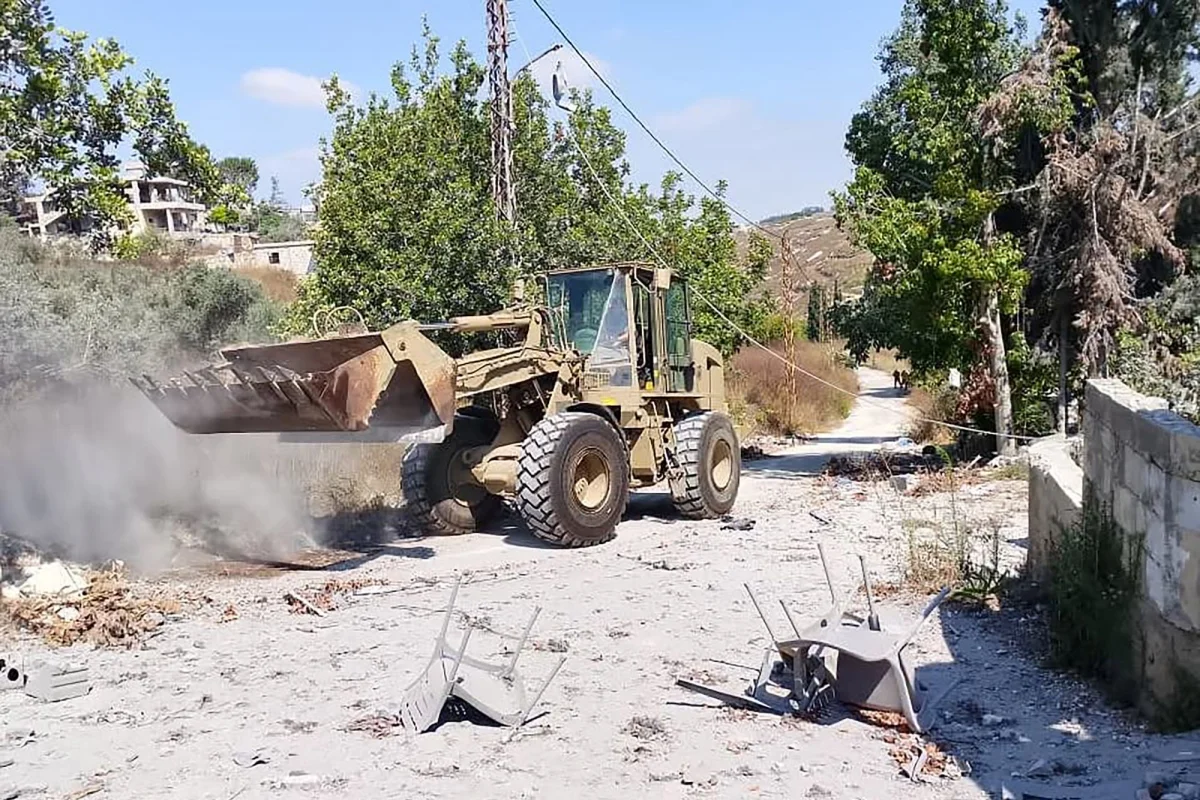
The killing of 4,346 people and injury of 12,301 others since March 2, along with the reduction of some 70 border villages in southern Lebanon to rubble and their rendering uninhabitable, represented only a fraction of the devastation inflicted by Israel.
Closing the “open front” with Israel has become essential to Lebanon’s survival and its efforts to reclaim occupied territory, according to political analysts and residents of southern Lebanon.
Sami Nader, Middle Eastern affairs analyst and director of the Levant Institute for Strategic Affairs, argued that it is in Lebanon’s interest to “defuse the conflict,” work out a settlement with Israel that would close “this open front,” and put an end to the narratives promoted by Hezbollah that have repeatedly drawn Lebanon into a cycle of war.
“At first, the war was every 10 years, and now it is practically every year,” Nader told UPI. “When we talk about ending the war and (achieving) peace, it doesn’t mean that we are sacrificing the Palestinian cause… Israel is an entity that has usurped Palestinian rights. This is not up for discussion.”
Israel, he noted, was neither ready for peace nor willing to “pay a price” for it, at least under Prime Minister Benjamin Netanyahu‘s current government, the most right-wing and religiously conservative in Israel’s history.
That is precisely what has left Lebanon facing two bitter choices: risky negotiations or a return to war.
“There is no third option,” Nader said.
To the once-powerful Hezbollah and its loyal followers, its armed resistance — which helped liberate southern Lebanon in 2000 after 22 years of Israeli occupation — remains necessary to protect Lebanon.
However, the group — armed and funded by Iran since its creation in the early 1980s becoming its most powerful regional non-state armed actor — is no longer strong enough to drive Israeli forces out this time.
Imad Bazzi, a municipal council member from Bint Jbeil — one of dozens of villages reduced to rubble in southern Lebanon — said “it would be something wonderful” if the framework agreement could result in a settlement with Israel that ends the state of war, secures the return of the displaced, and paves the way for reconstruction.
But Israel, Bazzi said, should respect the agreement and stop seeking pretexts to continue its campaign against Lebanon, knowing well that neither Israel nor the U.S. could disarm Hezbollah, whose weapons belong to Iran and are being used by Tehran as a bargaining chip in its talks with Washington.
“We are paying the price at their negotiating table,” he told UPI, adding that most southerners are opposed to the war, support the Lebanese state and want to return to their villages under the protection of the Lebanese Army and “not any other armed group” — a reference to Hezbollah.
While they increasingly seem to be abandoning the belief that Iran can still liberate southern Lebanon through military or diplomatic pressure, support for peace with Israel has gained ground.
But a peace treaty does not mean normalization, diplomatic, economic or trade ties, or the opening of embassies, according to Bazzi.
“Normalization would then mean completing the crime that Israel has been committing against the people of southern Lebanon, without distinguishing between those who support Hezbollah and those who oppose it,” he said.
The Israel-Hezbollah war has no doubt changed Lebanese attitudes toward Hezbollah and its armed resistance, as well as their views on making peace with Israel.
Ayman Mhanna, executive director of the Samir Kassir Foundation, a civic organization promoting freedom of expression, said calls for peace and/or normalization have become more visible online, alongside a division that has grown “more acute.”
Mhanna explained that one side sees peace as a pragmatic way to end a cycle of destructive wars, restore state sovereignty, and remove Hezbollah’s justification for retaining its weapons, while the other views peace amid continued Israeli occupation and military attacks as a form of capitulation to Israel.
“There is much less space for a position that combines peace, Lebanese sovereign rights, accountability, and a serious discussion of the Palestinian question’s impact on the sustainability of any agreement,” he told UPI.
He noted that the resistance narrative promoted by Hezbollah against Israel has clearly been weakened in terms of its claims of military effectiveness and deterrence,” while at the same time, Israel’s continued occupation of Lebanese territory and its ongoing military operations give Hezbollah an argument for why resistance remains necessary.
Mhanna explained that Hezbollah increasingly portrays disarmament and normalization as Israeli objectives, while its supporters often characterize advocates of engagement as promoting normalization or collaboration with Israel.
“Such rhetoric can become particularly aggressive online and in partisan media,” he warned.
The mood has changed in certain circles to the extent that some Lebanese newspapers, television stations, and websites have recently begun challenging longstanding taboos by engaging with Israeli journalists, despite a Lebanese law prohibiting such contact.
“I see this primarily as the erosion of a taboo,” he said, arguing that once the Lebanese state itself entered direct negotiations with Israel, it became increasingly difficult to maintain an absolute barrier around journalistic contact.
With 80% of Israelis supporting continued war against Lebanon and Hezbollah, and Israeli Prime Minister Benjamin Netanyahu showing little willingness to cooperate, Nader cautioned that the negotiations “are a risky bet” and may not succeed, with the situation in Gaza serving as a clear example.
Worse, a settlement between Iran and the U.S. — if ever reached — could come at Lebanon’s expense, he warned.