
Under Swedish law, mining activity can not take place under buildings.
Robert Ylitalo, chief executive officer of Kiruna’s development company, explains: “There’s no risk of people falling through cracks. But fissures would eventually damage the water, electricity and sewage supply. People have to move before the infrastructure fails.”
The iron ore mine’s operator, LKAB – also Kiruna’s biggest employer – is covering the city’s relocation bill, estimated at more than 10bn Swedish krona ($1bn; £737m).
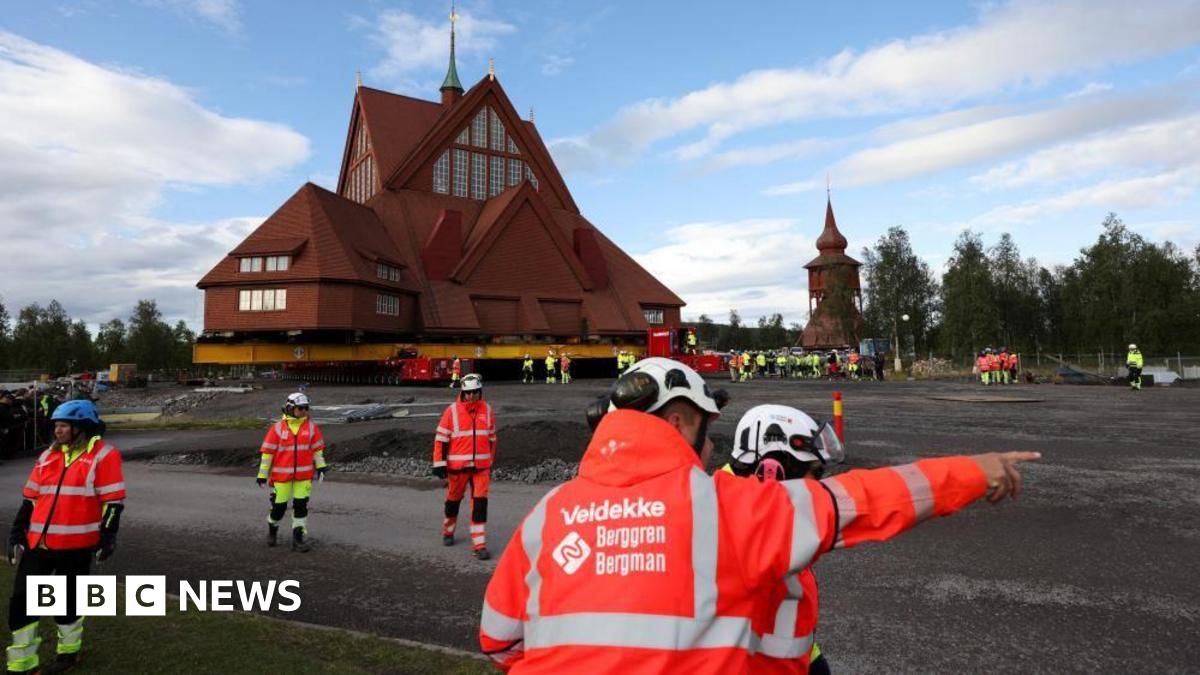
Kiruna Church is 35m (115ft) high, 40m wide and weighs 672 tonnes. It was once voted Sweden’s most beautiful pre-1950 building.
Relocating such a large building is an unusual feat. But instead of dismantling it, engineers are moving it in one piece, supported by steel beams and carried on self-propelled modular transporters.
“The biggest challenge was preparing the road for such a wide building,” says project manager Mr Johansson.
“We’ve widened it to 24 metres (79ft) and along the way we removed lampposts, traffic lights as well as a bridge that was slated for demolition anyway.”
Among the most delicate aspects of the move is the protection of the church’s interior treasures, especially its great altar painting made by Prince Eugen, a member of Sweden’s royal family.
“It’s not something hanging on a hook that you just take off,” says Mr Johansson.
“It’s glued directly onto a masonry wall so it would have been difficult to remove without damage. So it will remain inside the church during the move, fully covered and stabilised. So will the organ with its 1,000 pipes.”