
This story is adapted from the Slatest newsletter. You can sign up here to get it in your inbox every day.
Investors are selling off U.S. Treasury bonds in droves, and the Trump administration doesn’t seem to have a clue what to do about it. If you’re like me, talk of bonds, yields, and buybacks makes your eyes glaze over. But we wouldn’t spend a whole edition of the Slatest explaining the bond sell-off if it didn’t matter. So in plain English, here’s why it—and the Trump administration’s seat-of-the-pants response—could make a financial dent in your life.
Yeah, I’m going to need some context here. What is a Treasury bond?
A Treasury bond is essentially a loan to the U.S. government. To have enough money to keep up with federal spending, the government sells bonds to banks, private companies, other countries’ governments, and even individuals. Bondholders collect interest in return for lending their money, which is known as the bond yield. Investors can buy bonds that last for different lengths of time and yield interest annually at a fixed rate over that period.
Why are these investors ditching their bonds?
The yield on 30-year Treasury bonds hit 5.3 percent this week, its highest level since 2007. There are a lot of reasons why: Some investors may be worried about the national debt, which reached a record $40 trillion this week. Other countries have fallen victim to debt spirals, where high levels of debt lead investors to demand higher interest rates, in turn fueling more borrowing until eventually a country defaults. Deficit hawks have been warning about such a scenario in the U.S. for decades, even though most investors still (rather rationally) believe that an economic superpower will find a way to make its payments.
The bigger worry is protracted inflation, driven by Donald Trump’s trade wars and his Iran war. When inflation is higher, investors need a better return on Treasurys to make it worth their while. And because Trump keeps pushing the “Make stuff more expensive” button with tariffs and smashed the “Send oil prices skyward” button with a war of choice in Iran, investors are demanding better payouts when they loan money to the government. Ergo, higher yields.
OK, but why are higher yields a bad thing?
In the short term, the Federal Reserve sets interest rates that dictate what businesses and individuals pay to borrow money. But the interest rate you pay for a mortgage or other long-term debt is actually more closely tied to the 10-year Treasury yield. This means that higher yields, like we have now, make it costlier to finance a home. Thanks to the bond sell-off, mortgage rates are once again rising. With many Americans already feeling pinched after postpandemic inflation drove up the prices of goods and services, that could be a recipe for even greater economic malaise.
I see. So what is the administration doing in response?
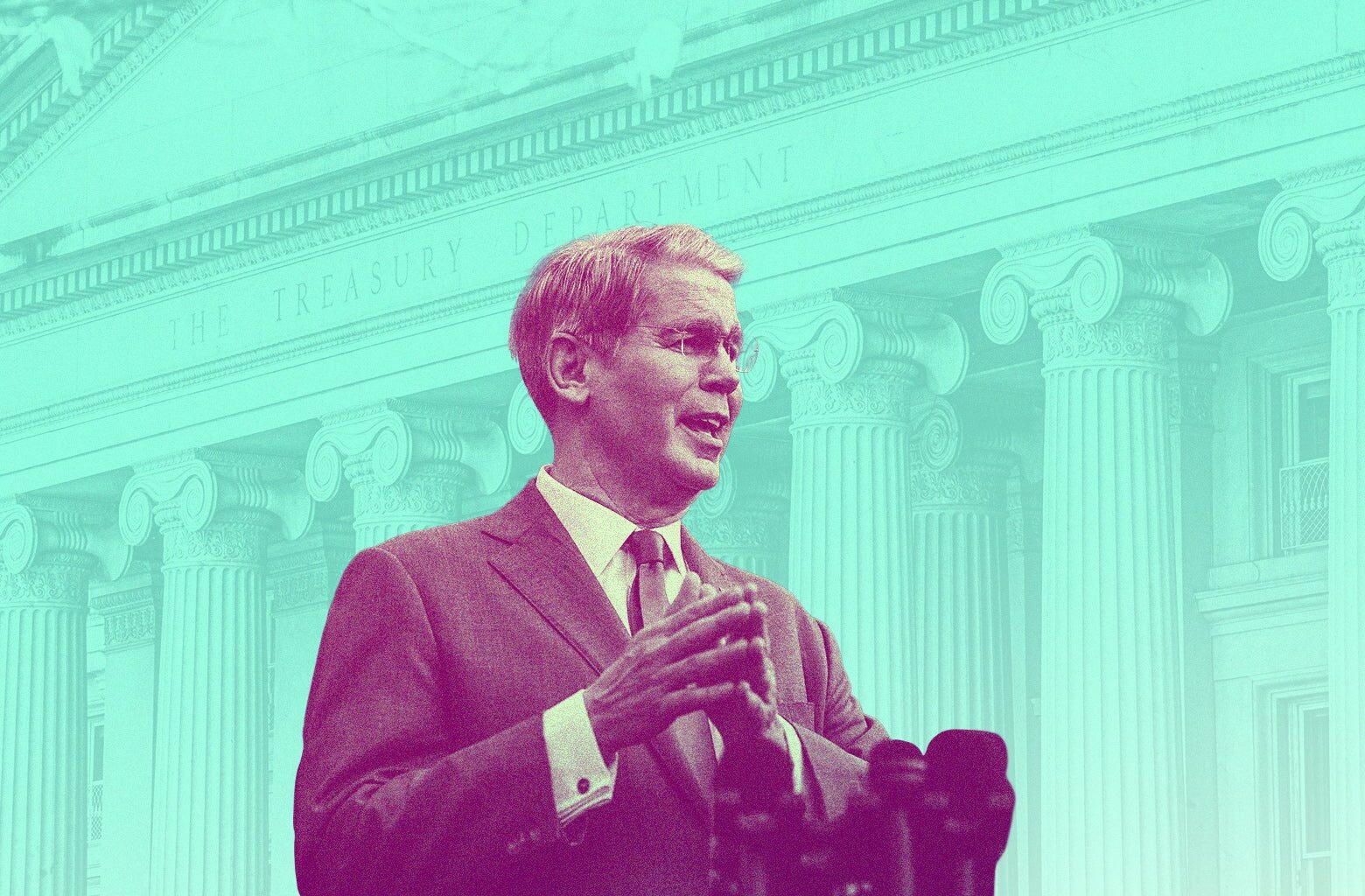
Trump’s Treasury secretary, Scott Bessent, is running point. A former hedge-fund manager, Bessent has taken a hands-on approach in an effort to wrangle bond yields lower. Last year, the Wall Street Journal reports, he proposed rolling back government rules put in place after the 2008 financial crisis that could let banks hold more Treasury bonds. (What could go wrong?!) And this week, Bessent announced that the government would temporarily increase the amount of longer-term bonds that it buys back from investors in an apparent bid to lower yields.
How did investors respond to Bessent’s buyback approach?
At first, it seemed to work. Yields on 30-year Treasury bonds fell, and the stock market jumped higher on Wednesday. But that relief proved short-lived. Yields shot back up today as stocks sank. Some financial analysts compared Bessent’s maneuvers to “rearranging deckchairs on the Titanic”—which probably isn’t an analogy he’d prefer to see!
But why didn’t Bessent’s move help?
In short, because it didn’t address the underlying reasons investors are nervous. As the New York Times reported today, some saw the buybacks as a transparently political attempt to lower interest rates ahead of the midterm elections, rather than as a serious move to address investor concerns. In response, Bessent has tried to downplay those worries. “There’s nothing magic about the $40 trillion number,” he said on CNBC today, arguing that the government has “a big toolkit” to bring down yields. But those assurances didn’t seem to make much of an impression either.
OK, so what might?
For one thing, actually balancing the federal budget and reducing the debt by cutting spending, raising taxes, or both. But despite Trump’s repeated promises to lower the deficit, his chief legislative accomplishments, a pair of massive tax cuts, have made the country’s fiscal straddling even more precarious. Ending the Iran war could also help, but things seem poised to get worse on that front. With the fighting stalemated and peace talks going nowhere, Trump pledged last night to hit Iran with “the MOST CRUSHING ECONOMIC OPERATION EVER TAKEN AGAINST ANY COUNTRY!” The details aren’t yet clear, but the president described an “ECONOMIC D-DAY” that would hit “ANY country that allows its financial institutions, businesses, airports, or government entities to provide any type of lifeline to Iran.” The result could be sanctions that reverberate worldwide and hit Americans’ pocketbooks in the form of even higher gas prices.
In fairness to the administration, though, it’s not clear that Trump and Bessent can fix all the factors driving up yields. Tech companies are borrowing money to fund the development of advanced A.I. systems, for instance, which exacerbates the bond sell-off because investors think A.I.-powered economic growth will keep interest rates higher for longer.
I guess we’ll find out. But what’s the bigger picture here?
Bessent’s bid to tinker with Treasury buybacks appears to be another instance of this administration trying to manipulate the U.S. economy to serve the president’s narrow political interests. This week, Trump renewed his pressure campaign to get the Federal Reserve to directly lower interest rates, which the central bank has kept high to combat elevated inflation. The president—who launched a sham criminal investigation of his first Fed chair because he wouldn’t prematurely lower rates—lamented on Wednesday that his newly installed Fed chair, Kevin Warsh, has to deal with a “political board” that, Trump implied without any evidence, is keeping rates high to hurt him. Lowering rates now could juice voter sentiment in the short term but allow inflation to fester, which is why it’s important for the Fed to make decisions independently. If Trump and Bessent put too many fingers on the scale, it may give Americans and investors even less reason to trust that what the Fed and the Treasury are doing is for the good of the economy rather than a sop to the president.
Tolga Akdoğan
OK, that’s enough numbers for one day. Let’s do some fun math instead—like how these recommendations from my colleagues might add up to an enjoyable evening for you:
A field guide to the dinosaurs in The End of Oak Street: Anne Hathaway’s new movie presents us with a whole host of prehistoric creatures. Just how realistic are they? Professional paleontology nerd Riley Black gives us her delightfully detailed assessment.
This Content is Available for Slate Plus members only
A Streamer Predicted He Could Kill a Black Person and Get Away With It. Thousands Watched. When He Shot Someone, the Real Story Began.
The Issue That Could Cost Democrats a Senate Seat in Michigan
A series of clues to crack: What was the catalyst for the Boston Tea Party (three letters)? What’s a cookie that shares its name with an Italian city (six letters)? A cereal famously not for rabbits (four letters)? If you enjoy a little wordplay, try out our daily crossword.
Advice for a burned-out breadwinner: A letter writer who’s outwardly successful by all measures—a wife, kids, a well-paying job—can’t stop dreaming about leaving it all behind. Lillian Karabaic shares some advice for dealing with these kinds of persistent fantasies.
A guide to embracing moments of friction: Technology has ruined our tolerance for inconvenience—and we’re losing touch with some of the very things that make us human in the process (the ability to navigate unfamiliar social situations, for example, or to engage in creative thinking). ICYMI’s Kate Lindsay spoke to author Kathryn Jezer-Morton about how to “friction-maxx.”
Speaking of that: It’s not too late to join our series of challenges to help you rediscover the beauty of socializing in a pre-smartphone era. You can sign up anytime and start getting one challenge a week for the following six weeks.
OK, that’s it for me. Enjoy the rest of your night (maybe sans smartphone?), and I’ll see you tomorrow!