
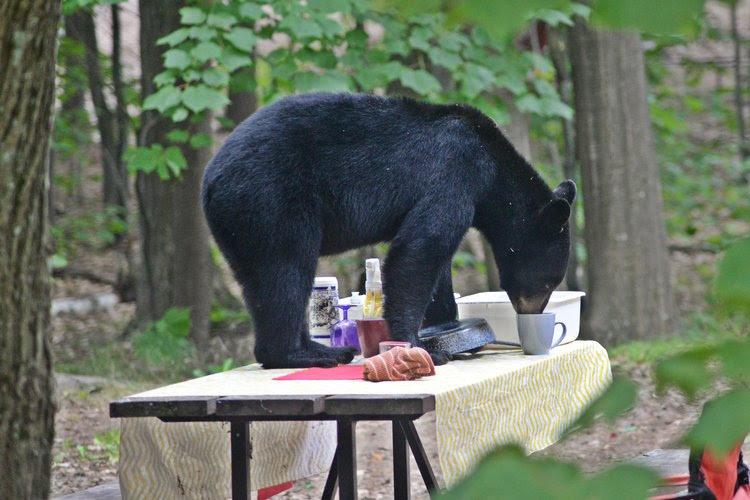
A female bear knocked over a fisherman and bit his legs late Friday evening near the confluence of the North Fork and main stem South Platte rivers in Jefferson County, state officials said, and the bear was tracked by a dog team and euthanized early Saturday.
The attack, which sent the man in his 60s to a hospital with injuries, was witnessed by a number of other anglers on the trail. As bear-human contacts are setting a record this summer, fueled by drought and lack of natural foods, such as chokecherries and acorns, CPW is warning mountain recreators that things will get worse in coming weeks as bears ramp up foraging in preparation for hibernation.
“Bears are starting to enter hyperphagia, a period of time where bear activity increases as they eat up to 20,000 calories per day,” a CPW release said. “Historic drought has caused bear’s natural food sources to become scarce. As food is harder to find, bears may act bolder to find calories.”
The state wildlife agency said the bite victim was walking up a trail toward the North Fork Trail parking lot, about 40 miles southwest of Denver, after a fishing session. He was not carrying any fish that might have attracted the bear. Still, the bear knocked him to the ground. The attack and biting went on for several minutes, according to the witnesses, until the victim’s fishing friends and other bystanders were able to help scare the bear away and seek medical help.
A team from CPW was joined by a dog team run by the U.S. Department of Agriculture and Plant Health Inspection Service to track the bear using scent. It is CPW policy to put down bears after such attacks.
“The 50 to 60 pound subadult female did not show signs of nursing. No cubs were located in the area. CPW wildlife veterinarians will perform a necropsy,” CPW said. They noted it’s the sixth reported bear attack in 2026.
State wildlife officials on Aug. 13 warned that bear contact records were being broken. “From Jan. 1 through Aug. 13, CPW received 6,129 reports of bear sightings and conflicts, compared with 3,115 during the same period in 2025. This year is on pace to have the highest number of bear reports since CPW implemented its statewide digital reporting system in 2019,” a state release said.
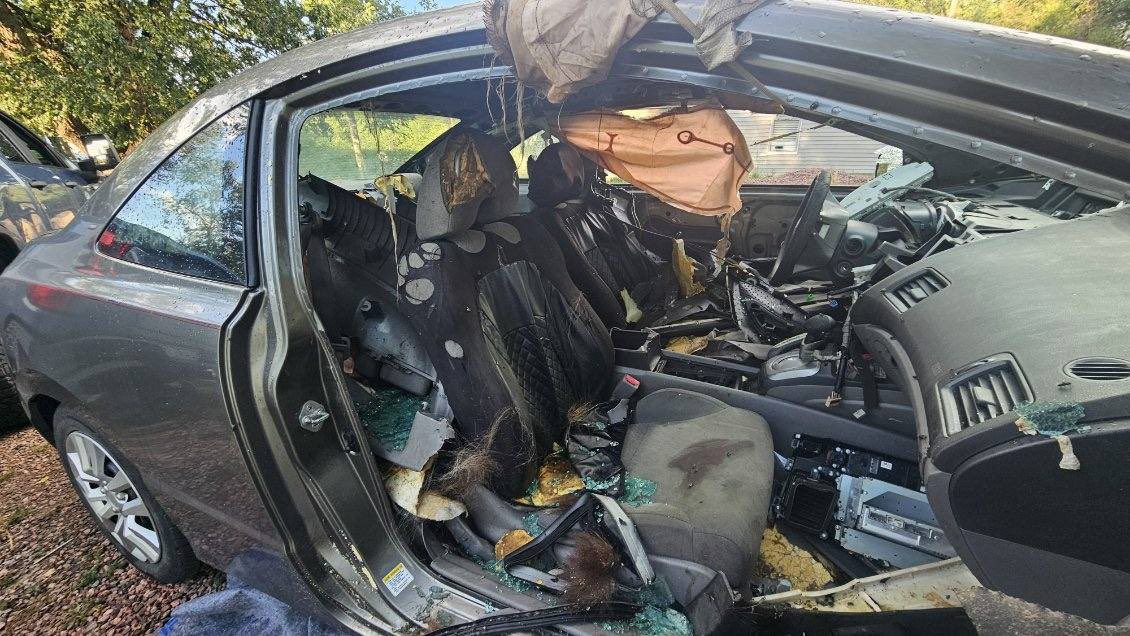 A destroyed car after a black bear entered it in Colorado Springs sometime in August. It was left undiscovered for days in the heat. Officials warn residents to lock their car doors and remove trash or food. (Photo provided by Colorado Parks and Wildlife)
CPW is spotlighting attacks to focus public attention on its human behavior recommendations around bears:
Stay alert and stay together — Pay attention to surroundings and stay together. Walk, hike, jog, or cycle with others when possible. Keep kids within sight and close by. Leave earbuds at home and make noise periodically so bears can avoid you.
Leave no trash or food scraps — Double bag food when hiking and pack out all food and trash. Don’t burn food scraps or trash in your fire ring or grill. Leaving scraps, wrappers, or even “harmless” items like apple cores teaches bears to associate trails and campsites with food.
Keep dogs leashed — Letting dogs chase or bark at bears is asking for trouble; don’t force a bear to defend itself. Keep your dogs leashed at all times or leave them at home.
Camp safely — Set up camp away from dense cover and natural food sources. Cook as far from your tent as possible. Do not store food, trash, clothes worn when cooking, or toiletries in your tent. Store in approved bear-resistant containers or out of sight in locked vehicles or suspended at least 10 feet above the ground and 10 feet from any part of the tree. Local regulations vary.
Know what to do if you see a black bear — If you see a bear before it notices you, don’t approach. Stand still, enjoy, then quietly move away. If a bear sees you, back away slowly. Never run; running may trigger a chase response. If a bear approaches, hold your ground, wave your arms and yell “Hey Bear” until it leaves. If it keeps approaching, use bear spray. If a black bear makes contact with you, do not play dead; fight back aggressively.
Type of Story: News
Based on facts, either observed and verified directly by the reporter, or reported and verified from knowledgeable sources.