
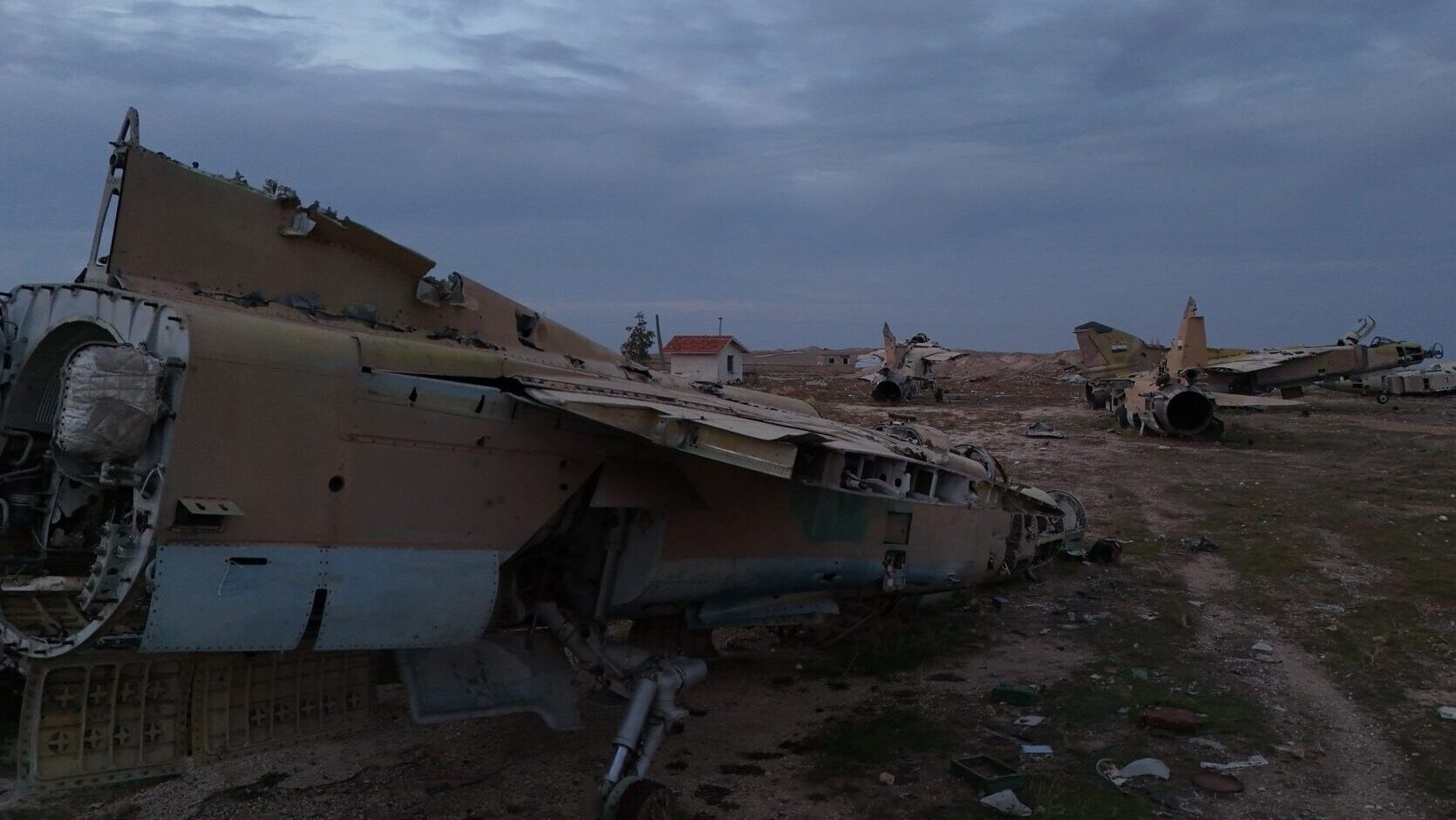
One bombed runway in northwestern Syria has become the fault line in a widening contest among Israel, Turkey and the government in Damascus. Giorgia Valente traces how Israel’s August 18 strike on the Abu al-Duhur airbase turned overlapping security fears into direct friction—and why Washington is scrambling to keep that friction from becoming a war.
Israel fears that Turkish radar, air defenses, or other military infrastructure in Syria could restrict the Israeli Air Force’s ability to operate against Iran and Iran-linked targets. Turkey sees a stable, unified Syria tied closely to Ankara as a strategic and economic gain. Syria wants both stronger state institutions and an end to Israeli attacks, without becoming the arena in which two regional powers settle their differences.
Professor Kobi Michael of the Institute for National Security Studies and the Misgav Institute warns that Turkish systems could one day force Israel to choose between surrendering freedom of action and striking Turkish assets. Yet he also criticizes Israeli leaders for conducting the dispute through public declarations and social media. Barın Kayaoğlu of the Social Sciences University of Ankara reads Ankara’s intentions differently, arguing that Turkey wants de-escalation and that Israeli pressure could drive Damascus toward competing security alliances.
That possibility leads to the Mecca Joint Defence Agreement, signed August 7 by Saudi Arabia, Turkey and Pakistan. Its collective-defense language resembles NATO’s Article 5, but both experts question whether it will develop real operational muscle. Syria has not joined, and any move in that direction remains hypothetical. Still, the pact offers Damascus another potential avenue if Israeli strikes continue.
For now, all sides appear to prefer containment. US Special Envoy Tom Barrack is promoting a mechanism to prevent accidental clashes, while Syria says negotiations with Israel could resume despite deep mistrust. The danger lies in how easily one radar installation, airstrike or intercepted aircraft could outrun diplomacy.
Read Valente’s full article for the competing Israeli and Turkish assessments, the electoral calculations surrounding the confrontation and the larger struggle over who will shape postwar Syria.