
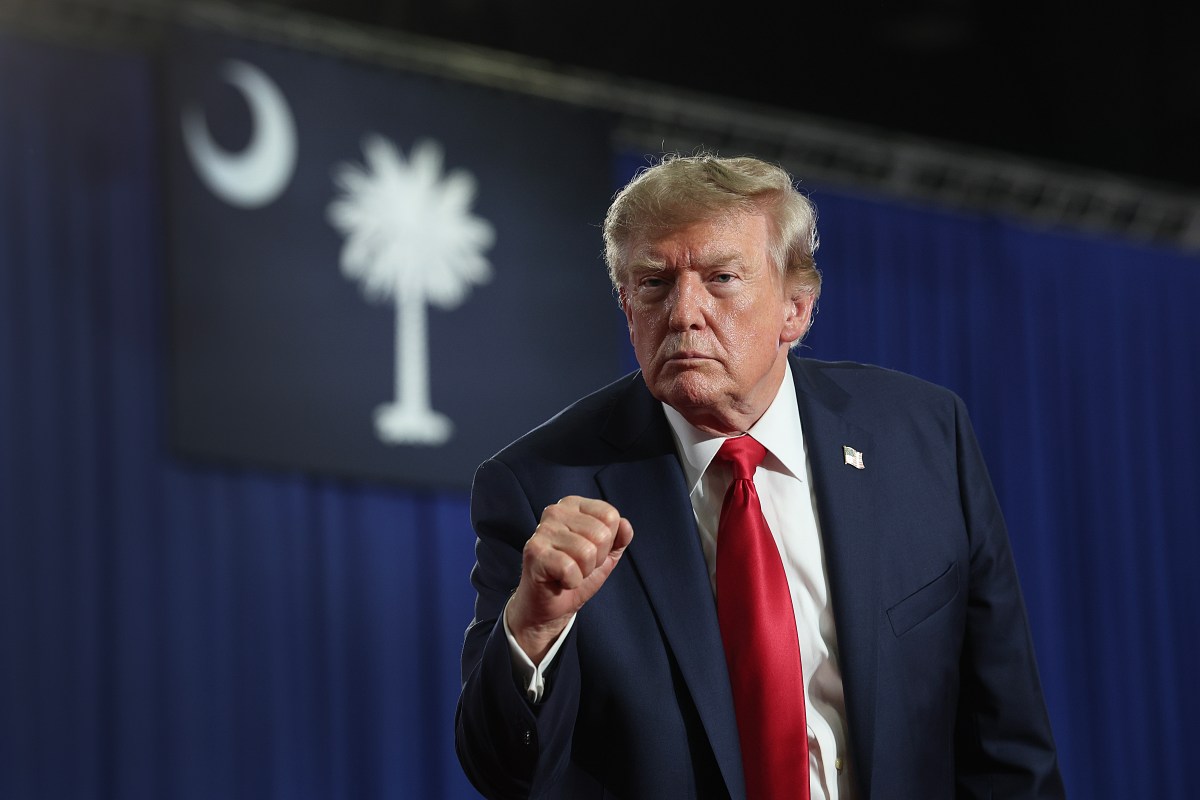
A map shows where voting by mail is most popular in the United States, as the Supreme Court on Monday opened the door for the possible implementation of President Donald Trump’s executive order restricting mail-in voting ahead of November’s midterm elections.
The Supreme Court on Monday granted the Trump administration’s request to temporarily lift a lower-court order that had blocked parts of Trump’s order, though it remains unclear how much of the order could be put in place before the midterm elections.
It comes at a time when voting by mail remains a major feature of the U.S. electoral system, though its use differs sharply across the country.
Read More on News
Over 66 Million Votes Sent to Voters
A 2025 report from the U.S. Election Assistance Commission (EAC) showed that nearly a third of Americans—30.3 percent—voted by mail in the 2024 election. Nationally, more than 66 million mail ballots were sent to voters, with about 72 percent returned and nearly 99 percent of returned ballots were ultimately counted.
According to the report, the highest concentration of mail voting was in the Western U.S., where several states automatically send ballots to registered voters.
Turnout by mail was highest in Oregon in the 2024 election, where 99.3 percent of votes were cast by mail, followed by Washington (98.5 percent), Utah (91.5 percent) and Colorado (91.3 percent). Hawaii, California and Nevada also recorded high use of mail ballots in the 2024 election due to expansive vote-by-mail systems.
Stricter ID Requirements
In contrast, several Southern and Midwestern states reported no or much lower percentages of mail-in ballots, often due to stricter identification requirements and limited access to mail-voting options. West Virginia saw 2.9 percent of votes cast by mail in 2024, while Texas reported 3.3 percent of votes were cast by mail.
Costas Panagopoulos, a professor of political science at Northeastern University, told Newsweek that states with high rates of mail-in voting will likely be affected most by the Supreme Court’s ruling, but all states could be impacted.
“Mail-in voting is concentrated in western states, but this includes red, blue and purple states,” he said. “Even as Democrats are more likely than Republicans to vote by mail, the ruling could unleash backlash that crosses geographic and party borders.”
Why It Matters
The legal fight over how voters can cast their ballots comes with less than 70 days until the midterm elections on November 3, when control of Congress is at stake and Republicans are fighting to preserve their slim majorities in the House and Senate.
Trump has long criticized mail voting and claimed that it leads to fraud despite evidence to the contrary and his own repeated use of the method to vote. Supporters of the Trump administration’s approach argue stronger safeguards are needed to maintain confidence in elections and have raised concerns about voter-roll accuracy, ballot verification procedures and the possibility that ballots could be issued to ineligible voters.
Studies have found instances of fraud to be rare when it comes to mail ballots. A study by the Brookings Institution found about four cases of fraud out of every 10 million mail votes cast across U.S. general elections from 2016 to 2022.
Democratic voters are more likely to cast mail ballots, according to States United Democracy Center.
More than one in three estimated Democrats voted by mail in 2024, compared to an estimated one in four Republicans, according to an analysis by the nonpartisan organization.
 What To Know
Trump’s March executive order directed federal agencies to create lists of eligible voters and ordered the U.S. Postal Service to deliver mail ballots only to people on the lists. New requirements released on Friday would forbid the Postal Service from sending mail ballots from any state that does not comply with Trump’s order.
Democratic officials in 23 states and the District of Columbia sued to block the order, arguing that the Constitution gives states and Congress the power to run elections and Trump’s changes could lead to chaos and partisan abuse.
The Supreme Court’s 6-3 decision on Monday didn’t decide the legality of Trump’s order, but ruled that the states and the District of Columbia did not have the legal right to challenge it.
“The Court’s disposition of this application does not mean that any measure taken by the Government to implement the Order will necessarily be lawful,” the majority wrote in an unsigned opinion. “On that score, time will tell.”
The court’s three liberal justices dissented, with Justice Ketanji Brown Jackson saying the ruling “needlessly injects chaos and uncertainty into the upcoming midterm elections.”
The White House described the ruling as a “major win” for election security.
“These are commonsense measures that protect the security of mail-in ballots and ensure only Americans are electing American leaders,” spokeswoman Lauren Bis told Newsweek in a statement. “This Administration will continue to lawfully enact the agenda President Trump was elected on—which includes the safety and security of our elections.”
Democrats Blast Ruling
Democratic governors and attorneys general blasted the High Court’s ruling and said they would continue the legal fight to block efforts to restrict mail-in voting.
California Governor Gavin Newsom wrote on X that his state “WILL SUE again to BLOCK Trump’s attack on mail-in voting!”
He added: “Every eligible voter gets a mail-in ballot here—and we’ll fight to keep it that way.”
Pennsylvania Governor Josh Shapiro said on X that the ruling “does NOT deal with the substance of Trump’s unconstitutional Executive Order and does not mean his illegal attempt to restrict mail-in voting will go forward.”
Shapiro wrote: “Donald Trump does not run elections here in Pennsylvania—or in any state. We’ll see the Trump Administration in court. In the meantime, I’ll keep defending Pennsylvanians’ right to free, fair, and secure elections.”
New York Attorney General Letitia James called the decision a “painful setback,” but said it would “not be the final word.”
“The right to vote is sacred, and no administration should be able to put that right in jeopardy,” she wrote on X. “We’re exploring our legal options.”
What Supreme Court Ruling Means for Midterms
A separate nationwide injunction blocking Trump’s order that was issued earlier this month remains in effect. The Trump administration has asked the judge in that case to void or suspend it in light of the Supreme Court’s ruling on Monday.
U.S. District Judge Indira Talwani earlier in August sided with the League of Women Voters and other voting rights groups and granted a preliminary injunction that barred the Postal Service from taking any steps to implement Trump’s order for this year’s midterm elections.
“That it is now less than 90 days before the November 3, 2026 midterm elections underscores the critical need for an injunction to prevent Defendants from changing election rules on the eve of the election,” Talwani, who was nominated by Democratic President Barack Obama, wrote in the ruling.
In June, Talwani had granted summary judgment in favor of the coalition of the nearly two dozen Democratic state attorneys general who sued over the order, preventing key parts of Trump’s order from taking effect.
Still, the Supreme Court’s ruling leaves room for additional court challenges that could slow efforts to implement Trump’s order.
Some states are set to send mail ballots to voters in just a few weeks, leaving little time for major changes to come into effect.
Contact Newsweek editors on this story: John Fitzpatrick and James Debens