
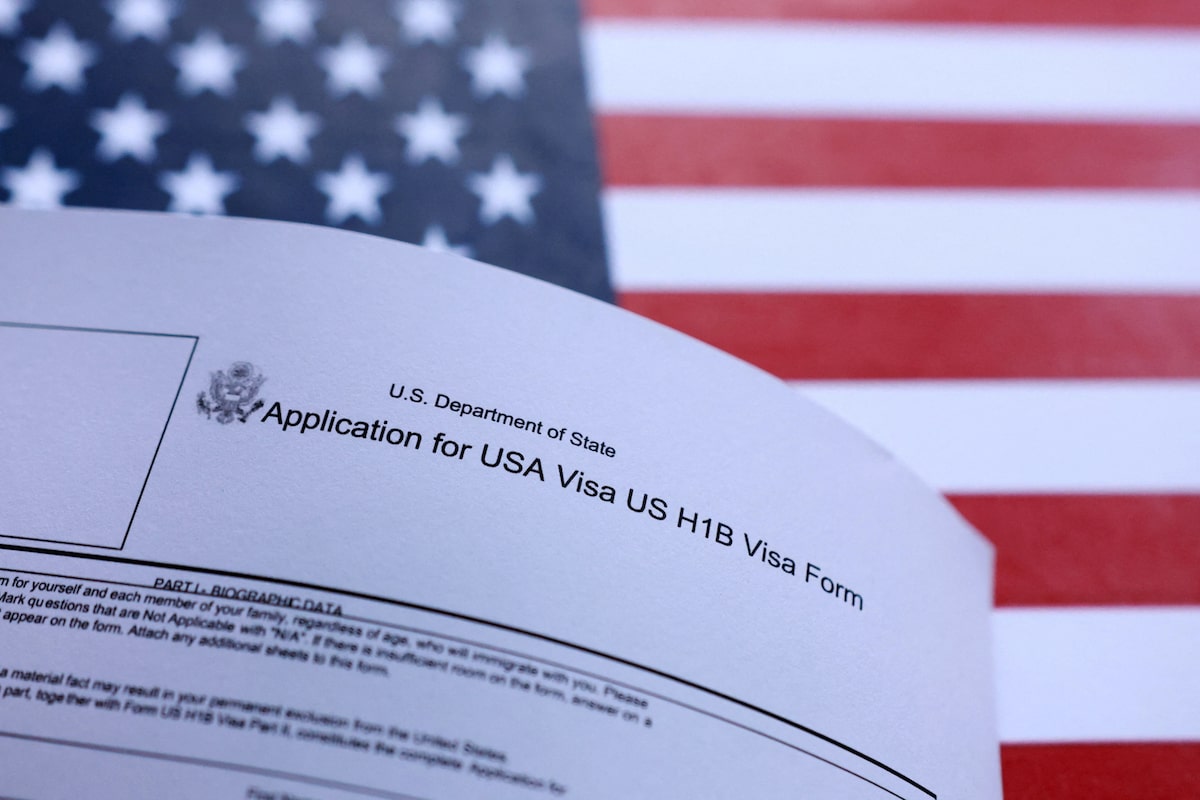
This week, the Trump administration signalled plans to revoke the tourist and business visas of up to 200,000 foreign nationals who have applied for or are actively seeking asylum in the United States.Dado Ruvic/Reuters
Immigration experts say Canada should prepare itself for the arrival of asylum seekers at the border after the Trump administration indicated it is preparing a mass cancellation of visas issued over the past decade.
This week, Washington signalled plans to revoke the tourist and business visas of up to 200,000 foreign nationals who have applied for or are actively seeking asylum in the United States. The move is expected to prompt legal challenges, but if it goes ahead it would be the largest single mass revocation of visas in U.S. history.
Some immigration lawyers and academics researching migration in Canada are urging Ottawa to consider allowing those who face having their visas cancelled to enter Canada on a discretionary basis.
Under the Safe Third Country Agreement with the U.S., foreign nationals who have already claimed asylum in the United States are turned away at Canada’s border, with a few exceptions, including for those who have family in Canada.
But experts say the Trump administration has undermined the premise of the responsibility-sharing agreement between the two countries by eroding the rights of asylum seekers in the U.S. This latest plan to cancel visas issued between 2016 and 2026 further undermines the pact, they told The Globe and Mail, which is premised on asylum seekers being treated fairly in the United States.
On his inauguration day in January, 2025, U.S. President Donald Trump said an “invasion” at the U.S.-Mexico border justified extreme measures. He indefinitely closed that border to asylum seekers, signed an executive order freezing refugee processing and has slashed the U.S.’s annual refugee cap to a historic low.
Trump administration moves to increase H-1B visa fee to more than $100,000
Lori Wilkinson, Canada Research Chair in Migration Futures at the University of Manitoba, said the latest announcement from the Trump administration may drive asylum seekers who face the revocation of their visas to try to enter Canada, and said Ottawa should begin considering how it will respond. Border agents and immigration authorities could apply discretion to meet Canada’s international humanitarian obligations, she said.
“It’s going to mean more people wanting to come to Canada. How many is essentially up to the Canadian government and if they are going to enforce the Safe Third Country Agreement or turn a blind eye,” Prof. Wilkinson said. “If we want to obey the international laws and agreements we have signed onto, if we want to fulfill our humanitarian traditions, maybe we will use discretion.”
Immigration lawyer Maureen Silcoff said a mass revocation of visas by the Trump administration would undermine the Safe Third Party Agreement to such a degree than Canada should consider pausing it or cancelling it altogether.
The Supreme Court of Canada upheld the Safe Third Country Agreement in a 2023 decision, ruling that it could stand “because it contained ways for Canada to consider refugee status claims when ineligibility under the scheme would lead to deprivations of liberty or security of the person,” a summary of the decision said.
Ms. Silcoff said this ruling gives the federal government some leeway in how it interprets the agreement, allowing it to use legislative “safety valves,” such as discretionary exemptions on the basis of humanitarian, compassionate or public policy grounds.
Ms. Silcoff said Canada could apply such “safety valves” in the case of asylum seekers from the U.S. who face revocation of their visas, including by not turning them away if they arrive at the border.
“The government has the option to revoke the agreement or temporarily suspend the agreement while they take a hard look at what is going on,” added Ms. Silcoff, who is representing a group of refugee lawyers that has launched a judicial review of the agreement seeking to have it declared invalid.
She said the agreement was signed as a responsibility-sharing arrangement but this “has evaporated under Trump.” The latest Trump administration policy, she said, reinforces that the U.S. is unsafe for refugee claimants.
In a social media post on Monday, U.S. Deputy Secretary of State Christopher Landau said “People in the U.S. and all over the world are fed up with bogus asylum claims. Asylum isn’t supposed to be a loophole to circumvent immigration law.”
Toronto immigration lawyer Sergio Karas said the visas the Trump administration is seeking to cancel are mostly visitor visas used by people to gain entry to the U.S. to then seek asylum. They cannot be deported until their asylum cases are decided, he added.
Mr. Karas, a member of Lawyers for Secure Immigration, cautioned Ottawa not to signal that Canada would welcome asylum seekers from the U.S. He urged Canadian authorities to launch “an information campaign in the U.S., and especially in the ethnic media, warning that those who attempt to enter Canada illegally will be caught and turned over to the US authorities.”
“It would be a colossal mistake to repeat the ill-advised tweet that Justin Trudeau published during the first Trump Administration, inviting the entire world to flee to Canada. Neither our processing resources nor our current economic situation can tolerate such folly,” he said in an e-mail, referencing a 2017 social media post from the former prime minister that said Canada would welcome anyone fleeing terror, war or persecution.
Taous Ait, a spokesperson for Immigration Minister Lena Metlege Diab, said “having a U.S. visa revoked or losing status in the United States does not impact whether a person’s asylum claim will be considered in Canada.”
“People seeking Canada’s protection must demonstrate they meet the criteria of a Convention Refugee or are in need of Canada’s protection from persecution, death, torture or inhumane treatment as outlined in Canada’s Immigration and Refugee Protection Act,” she said in an e-mail, adding that the immigration department and the Canada Border Services Agency “continue to work closely together to monitor migration trends and to assess potential impacts on Canada’s immigration programs.”
With a file from the Associated Press