
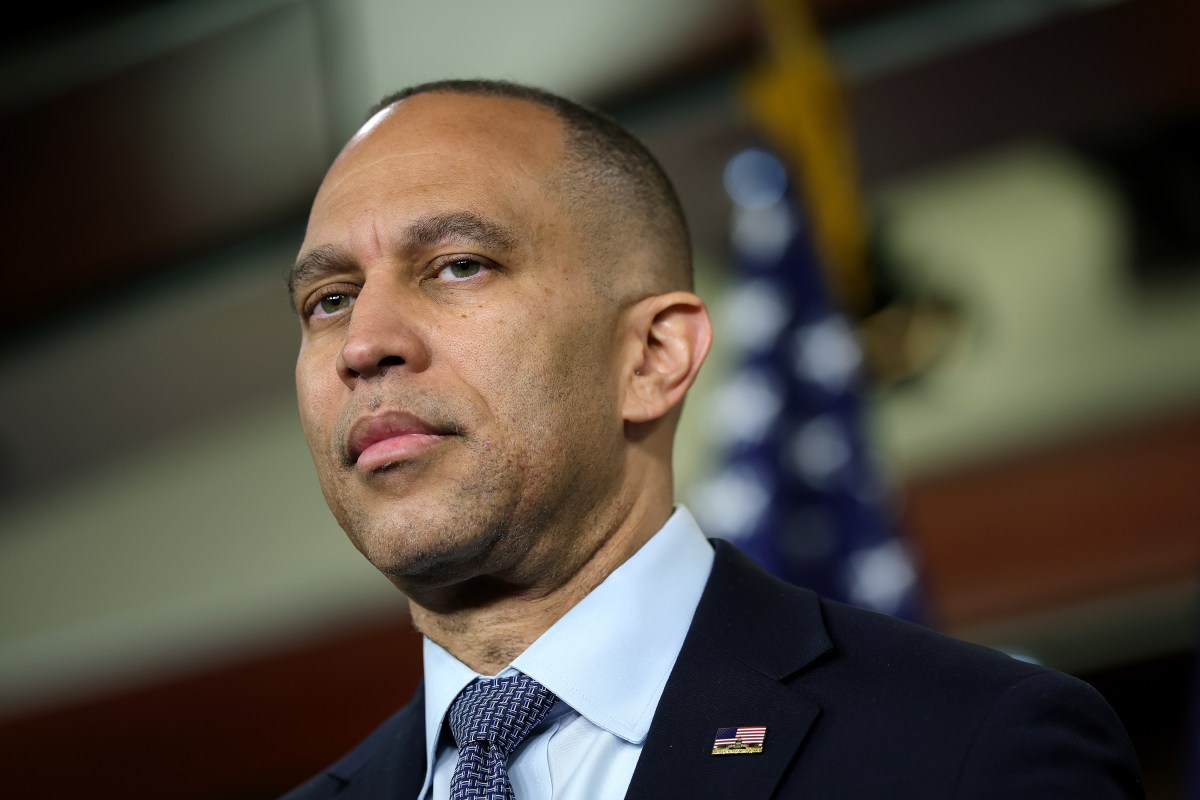
House Minority Leader Hakeem Jeffries is facing renewed criticism from progressives after one of the House’s most outspoken pro-Israel Democrats received a key foreign policy assignment at a time when Democratic voters are increasingly critical of Israel’s conduct in Gaza.
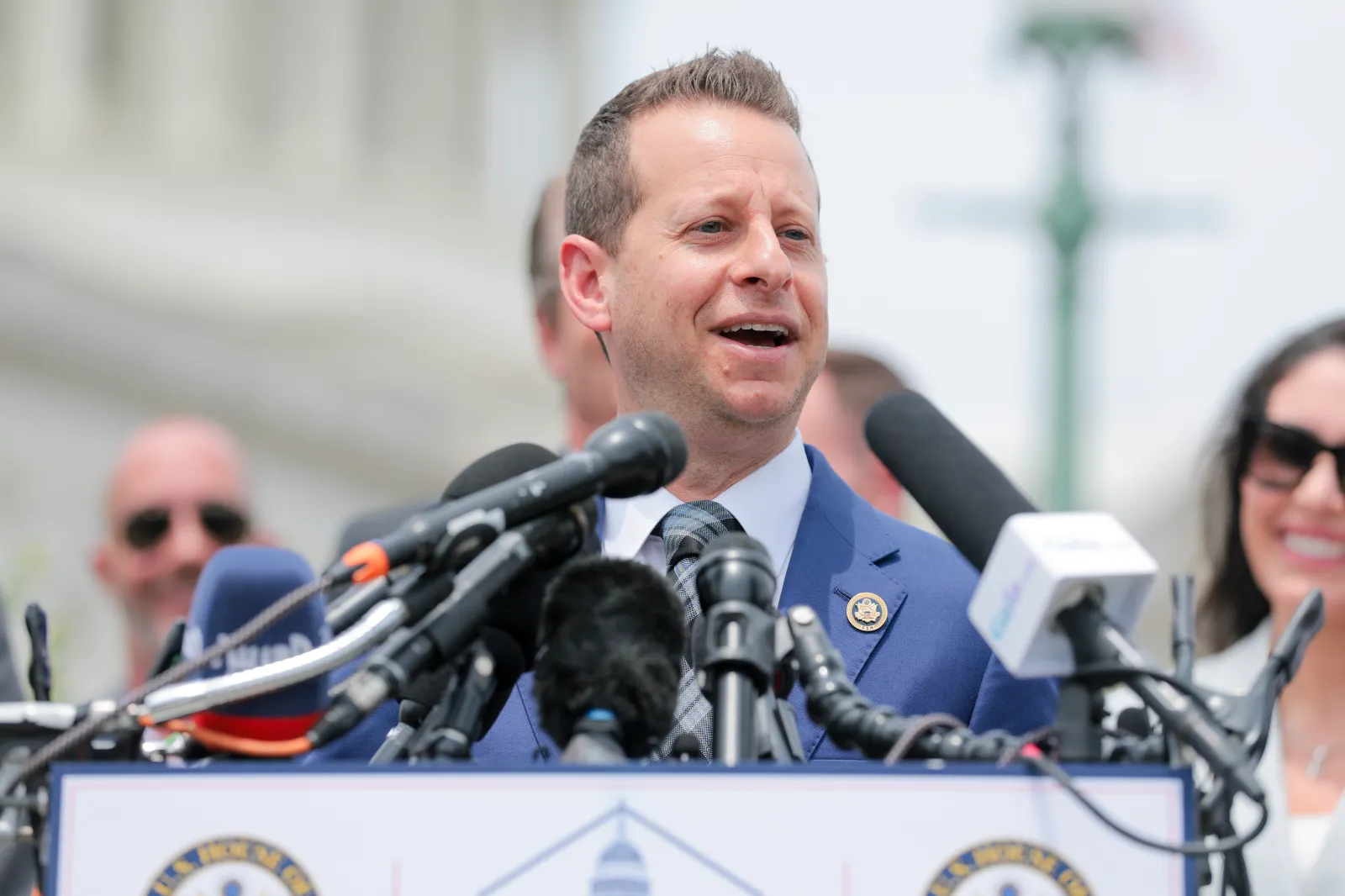
Florida Representative Jared Moskowitz was named ranking member of the House Foreign Affairs Committee’s Subcommittee on the Middle East and North Africa on Tuesday, a decision announced by New York Representative Gregory Meeks, the panel’s top Democrat.
While Meeks is the committee’s ranking member, Jeffries has been the one who has absorbed most of the backlash, with progressives casting the pick as another sign of Democratic leadership’s unwillingness to shift on Israel, even as its voters have.
Read More on Politics
Moskowitz confirmed the appointment on X, thanking Jeffries and Meeks, calling it an honor and pledging to strengthen relationships between the United States, Israel and Gulf allies at what he described as a moment of significant change across the region.
Democrats React to Moskowitz Pick Amid Gaza Poll
Moskowitz’s appointment quickly drew criticism of House Democratic leadership from progressive media figures and at least one former Obama administration official.
Ben Rhodes, a former deputy national security adviser under President Barack Obama, wrote on X that the decision amounted to a giant “f*** you from Democratic leadership to Democratic voters.”
Cenk Uygur, host of The Young Turks, focused on a different part of the decision, arguing that the influence of political donors has shaped how lawmakers in both parties approach Israel, as well as issues involving pharmaceutical companies and defense contractors.
Journalist Prem Thakker echoed the criticism over the timing, pointing to the new polling showing support among Democratic voters for sanctions against Israel and an end to weapons transfers.
Another prominent critic, podcast host Kyle Kulinski of Secular Talk, wrote on X that Jeffries had picked a “diet MAGA pro-war pro-Israel” Democrat to lead on foreign policy and said Jeffries “needs to resign.” Hasan Piker, the left-wing streamer who broadcasts as HasanAbi, also weighed in, arguing that Democratic leaders were ignoring their voters on what he described as a lopsided issue.
Wally Rashid, a Palestinian-American journalist and political commentator, took the criticism in a different direction, pointing to earlier reporting that Jeffries had met with Jared Kushner, Trump’s son-in-law and a special peace envoy. Rashid suggested that the meeting could be connected to Moskowitz’s promotion, although he offered no evidence linking the two events.
Hakeem Jeffries Approval Rating: What the Polls Show
The appointment comes as Jeffries’ standing with voters remains mixed.
A Civiqs national tracking poll found that 26 percent of respondents viewed Jeffries favorably through August 12, compared with 54 percent who viewed him unfavorably. Another 20 percent said they were unsure.
The unfavorable numbers are not limited to Civiqs. A CNN poll conducted by SSRS in July found Jeffries’ unfavorable rating had reached one of its highest points since the network began tracking him.
In that survey, conducted July 23-27, 16 percent of respondents viewed the House Democratic leader favorably, compared with 32 percent who viewed him unfavorably. The 13-point gap was the widest CNN has recorded on Jeffries since December 2022, when 17 percent viewed him favorably and 19 percent unfavorably. His unfavorable rating climbed to 27 percent in April before reaching 36 percent this spring.
A YouGov tracker measuring popularity among national Democrats tells a similar story. Jeffries ranks 22nd on the list, with a 30 percent popularity rating, well behind the party’s most popular figures.
The Democratic Party is facing broader problems with its standing among voters. A Fox News poll released this month found that 41 percent of respondents viewed the party favorably, compared with 56 percent who viewed it unfavorably. It marked the first time in a decade that Republicans were viewed more positively than Democrats in that survey.
Fox News polling also found that 77 percent of self-identified Democrats now hold a favorable view of their own party, down from 87 percent a year earlier. A separate AP-NORC poll conducted earlier this year found that 67 percent of Democrats approved of their party, down from 85 percent in September 2024.
Jeffries has nonetheless remained confident that Democrats will retake the House majority in the November midterm elections. In an interview with NBC News’ Kristen Welker last year, he said Democrats would “definitely” win back control of the chamber.
Polling Shows Growing Democratic Opposition to Israel
Polling also offers a stark picture of the growing divide between the Democratic base and Israel. The IMEU Policy Project, a think tank focused on Palestinian human rights, commissioned a YouGov survey of Democratic voters in South Carolina, Nevada, New Hampshire, New Mexico, Michigan and Virginia, states that will play an early role in the 2028 presidential nominating process.
In Michigan, 80 percent of respondents said they believed Israel was committing genocide against Palestinians in Gaza, including 91 percent of those under 45. In South Carolina, 52 percent said they opposed selling arms to Israel, while just 2 percent said they supported military assistance.
Hamid Bendaas, a spokesperson for the IMEU Policy Project, told Al Jazeera that the results show how far Democratic voters have moved on Israel. He argued that policies once considered outside the political mainstream, including sanctions, now have substantial support among voters who will help choose the party’s next presidential nominee.
A Gallup poll released in February found that 65 percent of Democrats now sympathize more with Palestinians than Israelis, compared with 17 percent who side with Israel. Democrats favored Israelis by more than 2-to-1 as recently as 2013. Independents joined the shift toward Palestinians for the first time this year, and Republican support for Israel has dropped to its lowest level since 2004.
 Hakeem Jeffries’ Pro-Israel Record Faces Growing Democratic Revolt
Jeffries has long been one of the strongest defenders of the U.S.-Israel relationship in the House Democratic Caucus, a position he has maintained as the party’s base has shifted. Senate Minority Leader Chuck Schumer, also a New York Democrat, has taken a similarly steadfast position.
The stance has increasingly put Jeffries and Schumer at odds with a growing number of Democrats. In July, more than 100 House Democrats, nearly half of the caucus, voted to block a weapons transfer to Israel, a measure neither Jeffries nor Schumer supported.
The issue has also become more prominent in Democratic primary contests. This month, Abdul El-Sayed defeated Representative Haley Stevens, a pro-Israel opponent who had outspent him by more than $60 million to win the Democratic nomination for a U.S. Senate seat in Michigan. Progressives have pointed to the result as another sign of where grassroots energy in the party is moving on Israel.
Bendaas argued that closing the gap between the party’s official position and its voters would require new leadership willing to break from what he called a status quo view of the relationship with Israel.
Contact Newsweek editors on this story: Jason Lemon and Dave Siminoff.