
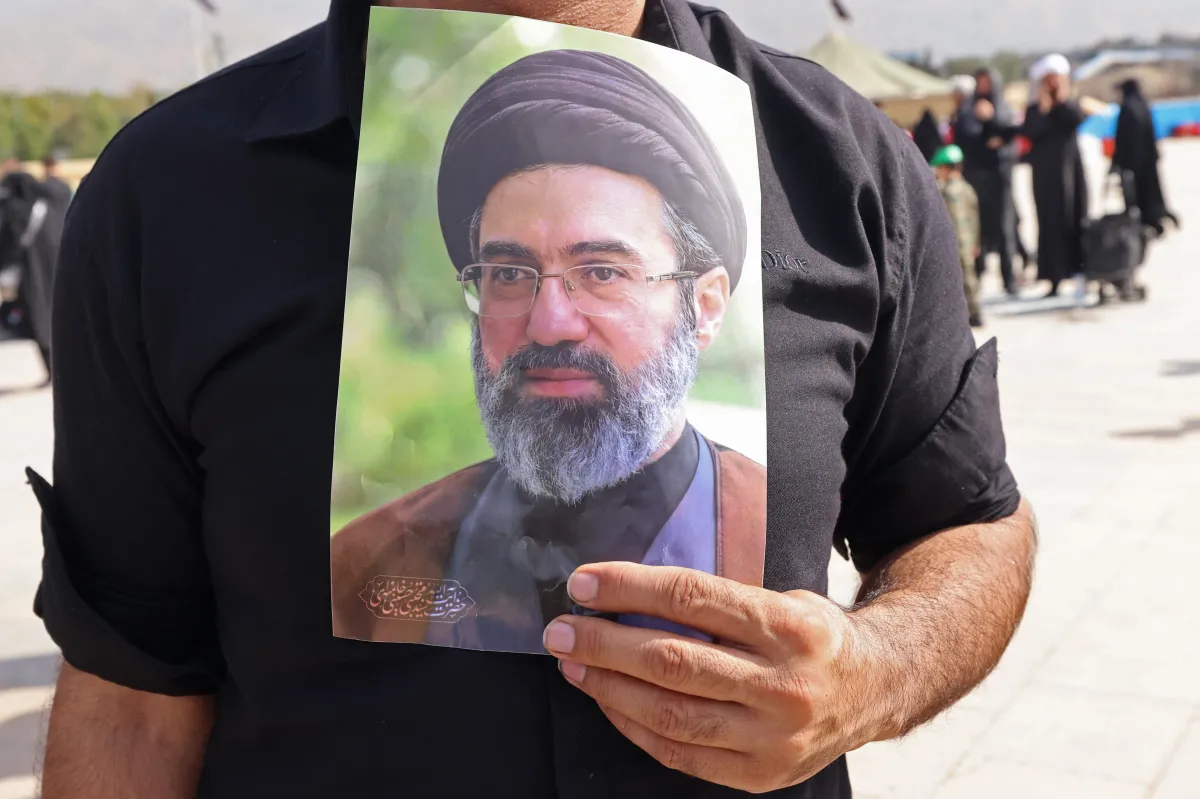
It’s been almost six months since the U.S. killed Iran’s former supreme leader Ali Khamenei in the brutal salvo of American and Israeli strikes that heralded the launch of Operation Epic Fury back in February.
Since then, a lot has changed: Tehran has locked down the Strait of Hormuz, Washington has announced another ominously named operation—Economic Outcast—to punish Iran’s economy, and other Middle Eastern countries have launched a NATO-style pact to protect themselves from further threats.
One thing has stayed the same: Iran’s new Ayatollah Mojtaba Khamenei remains missing. But he’s not dead; not according to Donald Trump. The U.S. President told Blaze Media’s Glenn Beck in a phone interview today: “I don’t think he’s dead. He was very seriously wounded… if he is dead, they’re putting on a pretty good show.”
Read More on Analysis
For Iran, though, it almost doesn’t matter whether Mojtaba is dead or alive. He can rule the Islamic Republic anyway, even from beyond the grave.
Like Father, Unlike Son
Mojtaba Khamenei may carry the family name, but he is nothing compared with the political operator his father became.
Ali Khamenei was a dyed-in-the-wool revolutionary and trusted ally of Iran’s first Supreme Leader Ruhollah Khomeini from the very inception of the Islamic Republic in 1979.
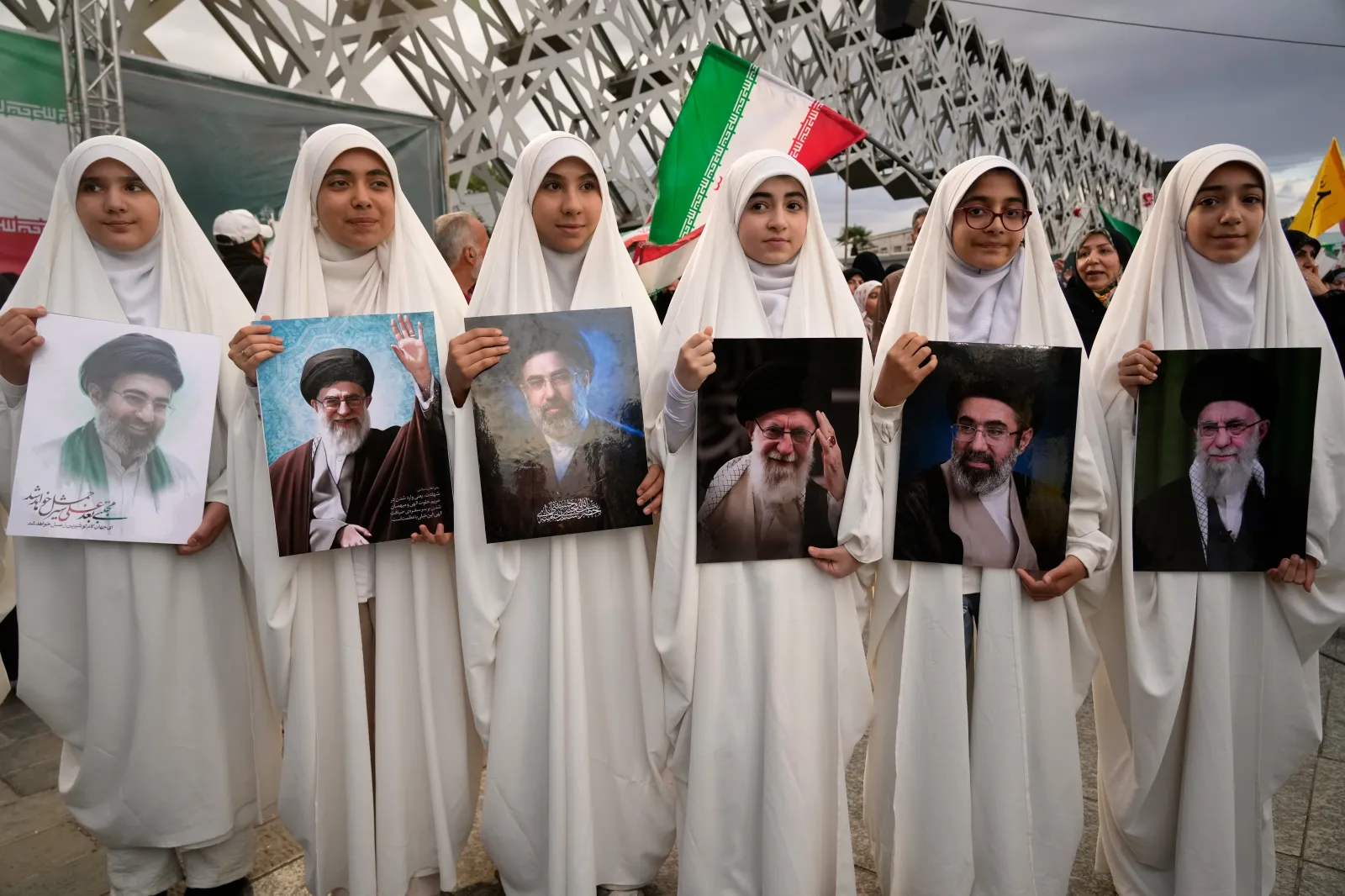
Once the Shah had been toppled, Khamenei spent decades cultivating Tehran’s power, building the IRGC and security services while developing vital relationships with each of Iran’s internal factions; first as president from 1981, before becoming supreme leader in 1989 following his predecessor’s death.
His son has none of the political experience or control over Iran’s power brokers. Even if he is alive, he is painfully out of his depth and wholly incapable of maintaining control over Iran’s highly influential IRGC and security services—much less leading a country locked in a war with the world’s most powerful military for control of one of the world’s most important chokepoints.
In practice, Iran’s public-facing diplomacy and wartime decision-making have increasingly run through a small group of powerful figures who are now likely the ones actually running the show: parliamentary speaker Mohammad Bagher Ghalibaf, who has acted as Iran’s principal negotiator; Dr. Mohsen Rezaei, the new secretary of the Supreme National Security Council; and General Ahmad Vahidi, the IRGC’s commander-in-chief.
By contrast, Mojtaba is a shadow with a letterhead.
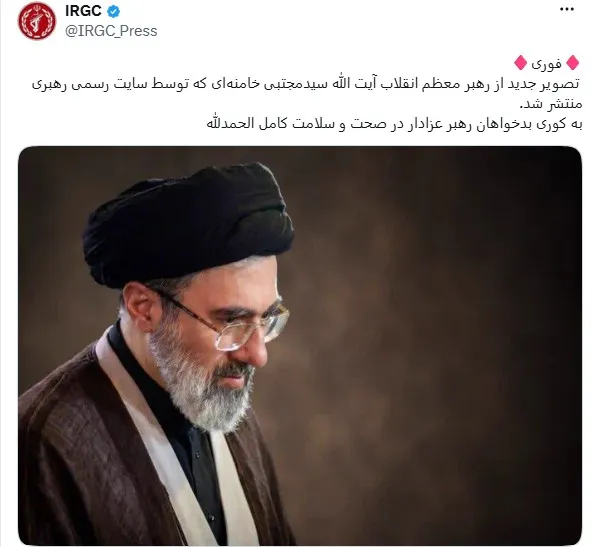
He has issued nothing more than a smattering of short statements, transmitted through Iran’s news services and social media networks. There is no way of knowing whether he actually said them.
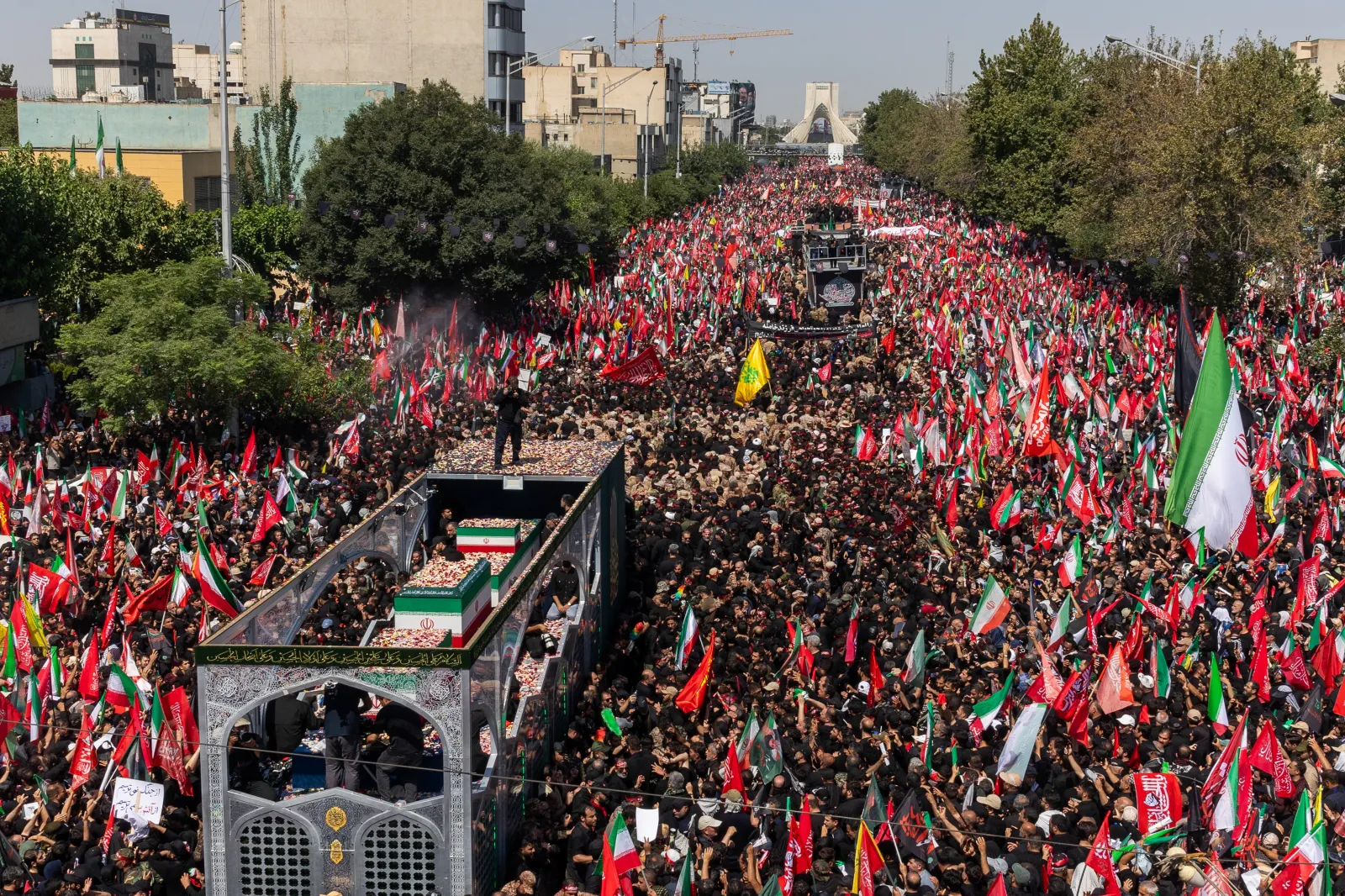
He has not shown his face, appeared in public, delivered a live address or issued so much as a single audio recording since February. He was not even seen at his father’s days-long state funeral.
But this suits Tehran’s new power brokers just fine.
 A Fallen Idol
Khosro Isfahani, research director at the National Union for Democracy in Iran, said Mojtaba is “an impotent young cleric who no one takes seriously.”
Isfahani believes the IRGC and Iran’s security services are using statements attributed to Mojtaba to “paint whatever picture they like,” symbolically seeking his blessing to justify whatever course of action they want to take. The ayatollah’s disappearance is “a blessing for the regime,” he told Newsweek.
“The center of political gravity has shifted from turbaned clerics to the Revolutionary Guards, men that the elder Khamenei personally handpicked and groomed. Mojtaba was chosen by those same IRGC officers to project continuity. Nothing more. He carries no political weight and holds no sway over policy.”
Andreas Krieg, a Middle East expert at King’s College London, put the shift more formally: “Iran is no longer governed from the top down.” He said there is now “a competition among the IRGC command, the Supreme National Security Council, parliament, the presidency, the diplomatic bureaucracy, and the clerical establishment.”
“The clearest winner is the IRGC,” Krieg said. “It controls the instruments through which any political authority is made real: military operations, intelligence, domestic repression.”
In reality, Mojtaba may be more powerful as a symbolic figure; an idol around which Tehran can rally the population of Iran, which is overwhelmingly Shia Muslim.
“Shia Islam holds that the Twelfth Imam, the messianic figure whose return is awaited at the end of time, has been absent from physical view for more than 1,200 years,” Tehran-based political analyst Peiman Salehi told Newsweek.
“This messianic figure need not be physically present among the faithful; guidance can be sought through spiritual, metaphysical, and doctrinal means,” Salehi said.
Mojtaba can therefore serve as a spiritual leader, an ideological figurehead that the real decision-makers in Tehran can manipulate to maintain public support and legitimize their policies at a time when the Iranian people are likely to face yet more hardship under Operation Economic Outcast.
The men with the guns, the ministries, the negotiators and the media apparatus can invoke Mojtaba when useful and ignore him when necessary. His absence gives them room to govern. His name gives them cover.
Whether Trump is right that Mojtaba is still alive may matter for U.S. and Israeli intelligence purposes, propaganda calculations and military decisions.
But for the actual balance of power in Tehran, Mojtaba’s survival may be beside the point. Iran is already being run around him.