
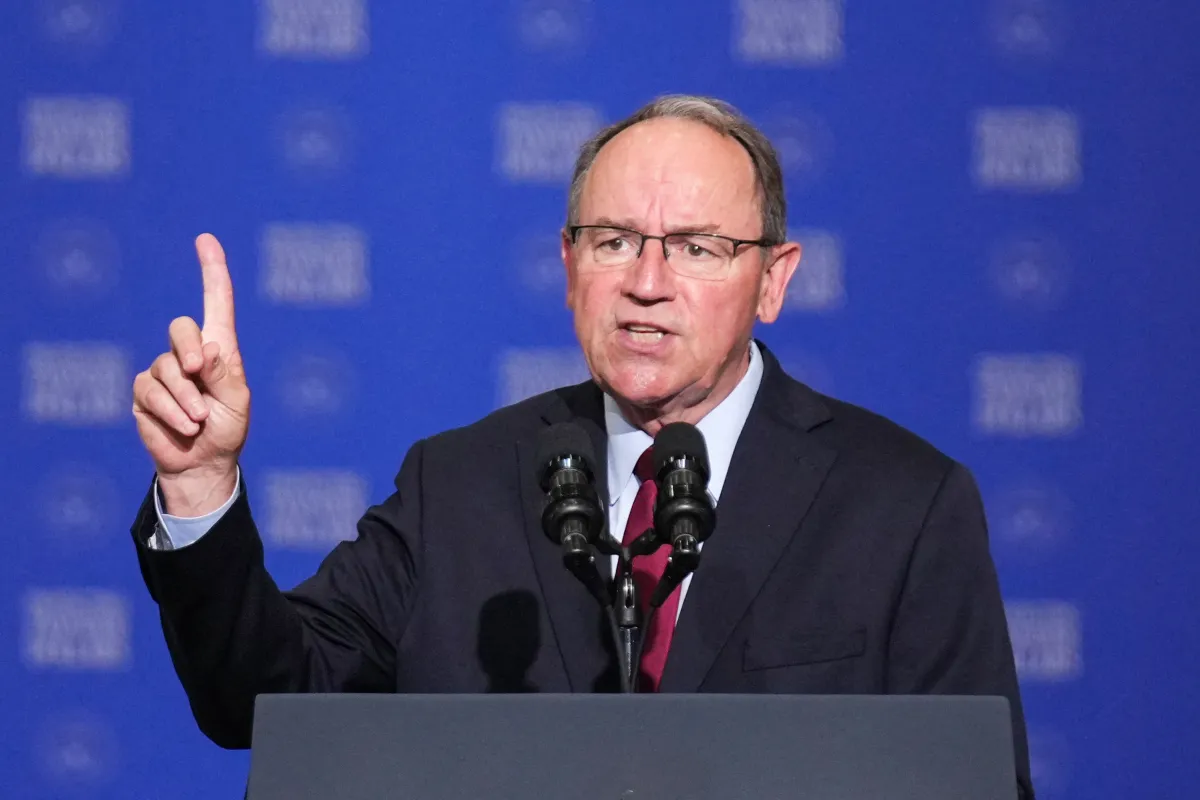
A new Marquette Law School poll showed a close race between Milwaukee County Executive David Crowley, a Democrat and Republican Representative Tom Tiffany in the Wisconsin governor’s race, as both parties view the seat as competitive in the 2026 midterms.
Wisconsin is one of the most closely divided swing states, so both parties are targeting the governor race after incumbent two-term Governor Tony Evers, a Democrat, announced his retirement. Wisconsin voters have gone back and forth between the parties over recent election cycles, backing President Donald Trump by only about a single point in 2024.
Democrats are optimistic about Crowley’s chances, as they believe he will benefit from political headwinds favoring their party. President Donald Trump’s approval rating has slipped to record lows in several polls and threatens to weigh down Republicans in closely divided states. But Republicans still believe the race is competitive, particularly after a divisive Democratic primary that saw Crowley barely eke out a victory against democratic socialist Francesca Hong.
Read More on Politics
Crowley, Tiffany Face Close Race in Wisconsin
The new poll gave Crowley a slight advantage among likely voters, showing he has support from 49 percent of Wisconsin voters compared to 44 percent planning to cast their ballots for Tiffany. Seven percent were still undecided about who they would support.
Among registered voters, however, the race was tied, with each candidate receiving 44 percent support and 12 percent undecided.
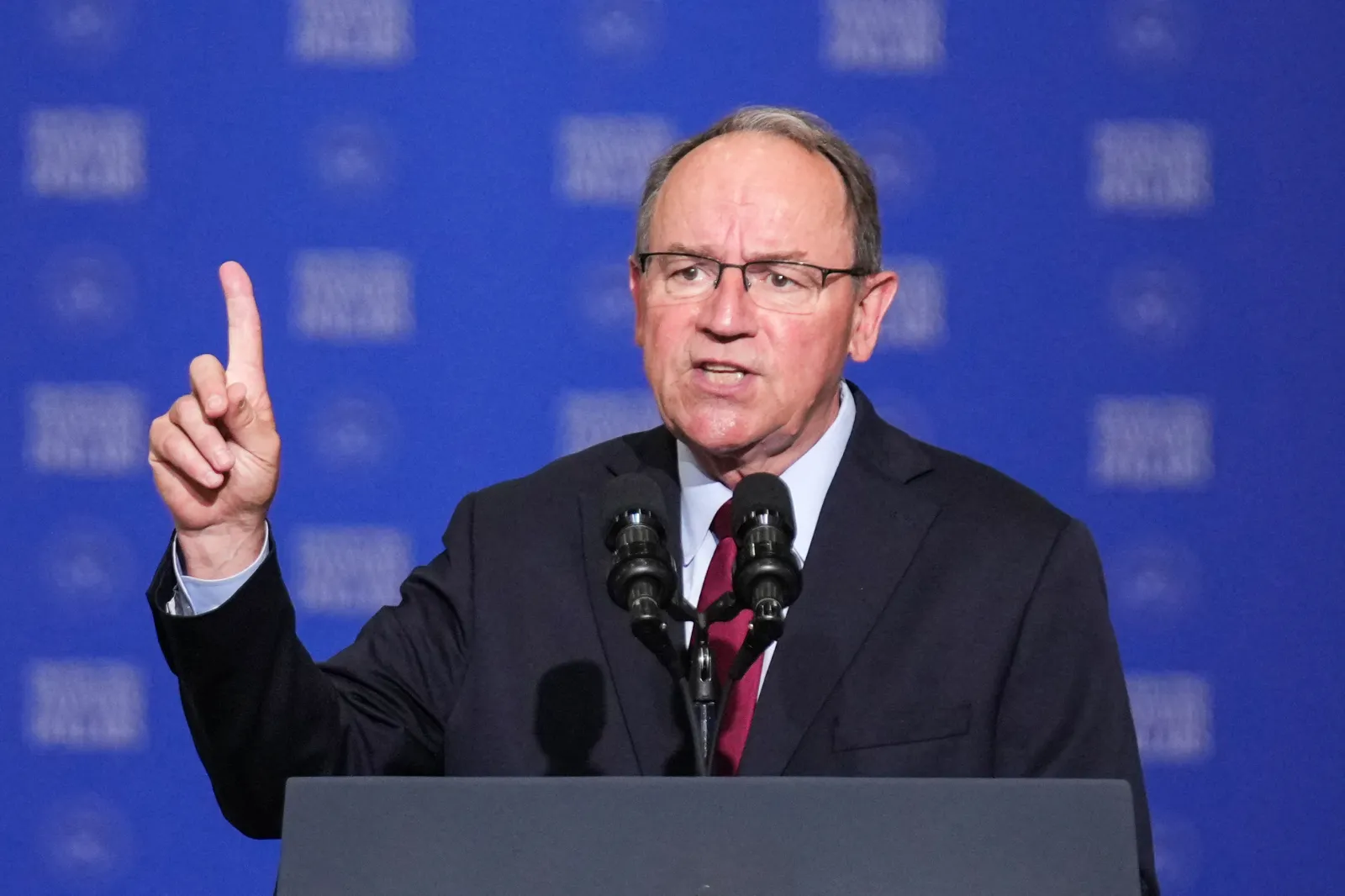
The poll also found that Republicans are more excited about voting. Fifty-five percent of Republican respondents said they are “very enthusiastic” to cast their ballot for their nominee in November, compared to 49 percent of Democrats.
“The gap in Democratic enthusiasm may reflect less enthusiasm among supporters of State Rep. Francesca Hong. Among Democratic voters with a favorable opinion of Hong, 52% are very enthusiastic about voting, while 63% of those favorable to Crowley are very enthusiastic,” the pollster wrote in a post on X.
It surveyed 891 registered voters in Wisconsin from August 12 to 20, 2026, and had a margin of error of ±4 percentage points.
The poll also found that Trump is broadly unpopular among the electorate, reaching a new low of -19 points, with 59 percent disapproving and 40 percent approving among registered voters. That is a new low for Trump’s approval in a Marquette poll, down from a -18 net approval rating in July.
Still, Democrats were viewed more negatively in the poll. Unfavorable views of the Democratic Party stood at 60 percent, while unfavorable views of the Republican Party were at 55 percent. On the generic ballot, Democrats led by only 3 points, 48 percent to 45 percent.
Kathleen Dolan, a professor of political science at the University of Wisconsin-Milwaukee, told Newsweek the race is “pretty competitive.”
“Crowley’s lead of five percentage points in the MU poll looks like a lot, but it is almost within the margin of error for the poll (4 percentage points), so, in reality, things could be neck and neck. This is only one poll and one snapshot in time. I think the race will likely tighten a bit over time and I expect this election could be close in November,” she said.
Democrats have some advantages such as Trump’s disapproval numbers, but Republicans “have a money advantage and have been on the air with attack ads against Crowley since the day after the election,” she said.
What Other Polls Show
Other polls have also shown a close race between the two candidates. A Platform Communications poll, which surveyed 500 likely voters from August 12 to 13, 2026, showed Crowley up 4 points, 48 percent to 44 percent. It had a margin of error of ±4.4 percentage points.
A GBAO poll, which surveyed 800 likely voters from July 30 to August 3 and had a margin of error of ±3.5 percentage points, showed Crowley up 3 points over Tiffany, 47 percent to 44 percent.
Meanwhile, a survey released by RMG Research and the Napolitan News Service gave Crowley a 3-point lead, 46 percent to 43 percent. It surveyed 800 registered voters from July 20-24, 2026 and had a margin of error of ±3.5 percentage points.
Forecasters expect the race to be close, with the Cook Political Report classifying it as a toss-up. However, Sabato’s Crystal Ball views it as Lean Democratic. On August 12, the forecaster shifted the race to Democrats.
Crowley’s victory in the primary over Hong “makes the Democrats modest favorites to start the November campaign,” analysts Kyle Kondik and J. Miles Coleman wrote in the update.
“The Wisconsin gubernatorial race moves from Toss-up to Leans Democratic following Crowley’s victory. Crowley will face Rep. Tom Tiffany (R, WI-7), who was only lightly opposed in his own primary. Tiffany is not a moderate: He’s a member of the House Freedom Caucus and has backed President Trump’s bogus claims about the 2020 presidential election, including voting against certifying the 2020 presidential results in Arizona and Pennsylvania,” they wrote.
Crowley Leads Prediction Markets
Crowley is favored in prediction markets, having a 79 percent chance of winning on Kalshi and an 81 percent chance on Polymarket as of Wednesday afternoon.
Prediction markets allow traders to buy and sell contracts tied to political outcomes and current events, aggregating real-money wagers into probability estimates. Prices fluctuate as traders react to polling, fundraising, candidate developments and broader political trends. They measure trader sentiment in the moment but do not always accurately predict the future.
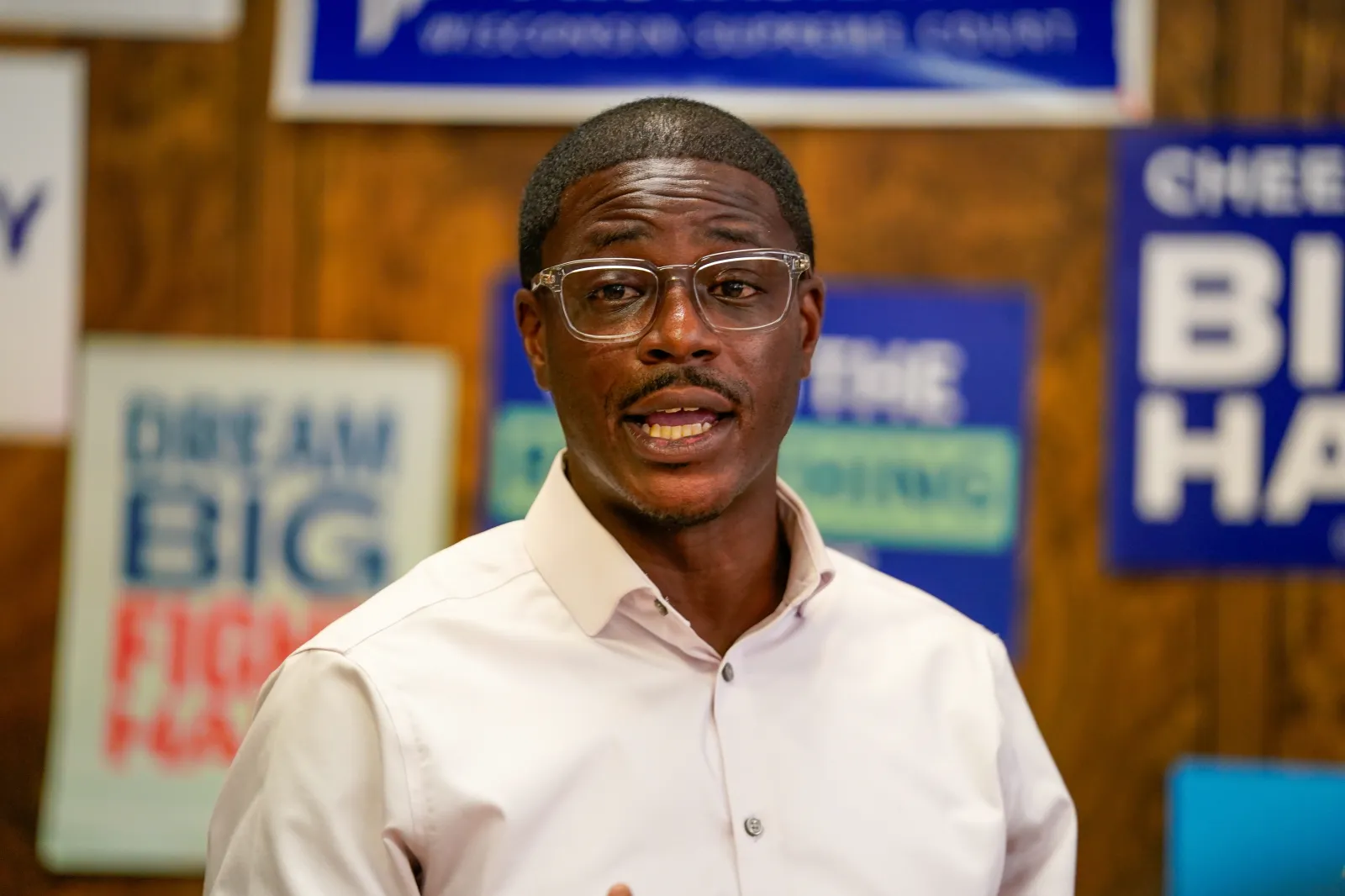 Where Crowley and Tiffany Stand on Data Centers
The question of AI data centers has become a central issue for this year’s midterms that has crossed traditional partisan lines. In Wisconsin, both Crowley and Tiffany are hoping to make their opponent appear as the pro-data center candidate.
The new poll found broad support for a temporary moratorium on data centers among likely voters, with 65 percent supporting and 35 percent opposing such a measure.
Dolan said that both candidates are “more ‘moderate’ on data centers than is general public opinion.”
“Unfortunately for both candidates, having nuanced policy discussions is really hard in a campaign, so it will be interesting to see how the two campaigns decide to handle this moving forward,” she said.
Earlier in August, Tiffany’s campaign released an attack ad against Crowley for his position on data centers, calling him “Data Center David Crowley,” highlighting his comments that Wisconsin could become a hub for AI and attacking him for supporting a tax incentive for data centers.
Crowley, meanwhile, has outlined his own plan on data centers. His campaign website says he would “let communities decide for themselves” whether to build a data center. He also called for guardrails, including requiring 100 percent renewable energy, covering 100 percent of infrastructure and grid-update costs, and banning NDAs.
Tiffany previously voiced positive views on data centers in February, calling them an “exciting new technology,” but said ratepayers should not be harmed.
“It would be unfair to existing manufacturers, for them to pay much higher electricity rates just because a new industry came in. So we’re going to probably have to find a new template if AI and the data centers specifically come into Wisconsin,” he said, according to PBS Wisconsin.
On Tiffany’s website, he says he supports ending taxpayer subsidies, giving local communities the final say, preventing “productive farmland” from being used for development, ensuring data centers pay costs they create and banning secret NDAs.
Wisconsin Is a Closely Divided State
Recent history shows Wisconsin as a closely divided state. In fact, it was the closest state in 2024, giving Trump 49.6 percent of the vote to former Vice President Kamala Harris’ 48.7 percent.
In 2020, former President Joe Biden won the state with 49.5 percent of the vote to Trump’s 48.8 percent, flipping it after Trump won in 2016. That year, Trump received 47.2 percent of the vote compared to former Secretary of State Hillary Clinton’s 46.5 percent. Trump’s 2016 win ended a decades-long winning streak for Democrats in Wisconsin.
Trump flipped the state by making inroads with rural, white, working-class voters across the state, many of whom voted for former President Barack Obama in 2008 and 2012. But Democrats’ margins in cities like Madison and Milwaukee have held strong, and they have improved in Milwaukee’s suburbs, keeping the state competitive.
Wisconsin last elected a Republican governor in 2014, when former Governor Scott Walker won reelection. He lost reelection to Evers four years later in 2018.
Contact Newsweek editors on this story: Gabe Whisnant, Gray R. Thomas, Sam Wilson.