
Almost 48 hours since deadly flash flood – a timelinepublished at 02:00 BST
02:00 BST
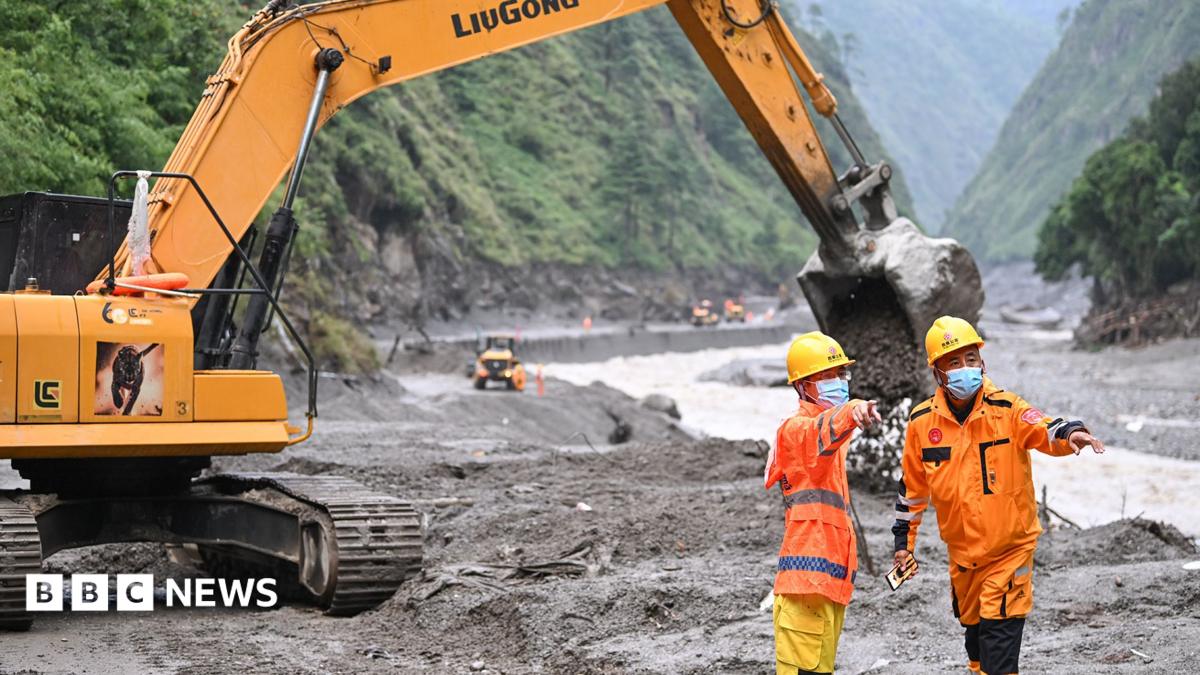
On Wednesday morning, a huge surge of mud and water swept down from the Nepal-Tibet border, leaving destruction in its path. Since then, the number of dead and missing has climbed, with rescue efforts made more challenging by fears of a second flood.
This is how the last nearly 48 hours have developed:
Wednesday
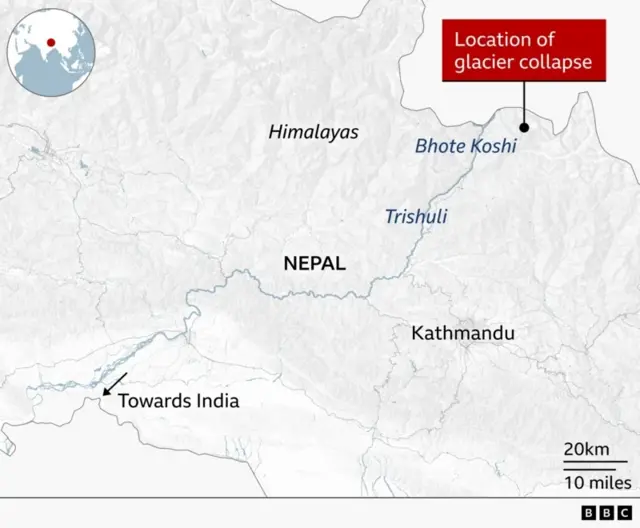
08:37 local time in Nepal (02:52 GMT): A magnitude 5.2 seismic event occurs near the Nepal-Tibet border. This was initially thought to be an earthquake, but the US Geological Survey (USGS) has since said it was a glacial collapse.
The USGS says the flow of debris from the collapse led to “subsequent catastrophic impacts downstream”.
Moments later: A wall of water and other material crashes downstream, taking buildings, roads and vehicles in its wake.
14:45: Authorities say 384 tourists are missing, including 291 foreign nationals. Nepalese authorities later confirm that 33 Britons are among those missing.
By 17:00: Nepalese police tells the BBC that at least 17 people have been killed.
22:45: The Nepalese prime minister’s office says search and rescue operations will continue throughout the night, with civilian and military personnel mobilised.
Thursday
By 08:00 local time (00:00 GMT) in Tibet: China says three people were killed on the Tibetan side, while 558 others are missing.
Shortly after 07:15 (01:30 GMT) in Nepal: Nepalese police say they have recovered 162 bodies so far. This figure has continued to rise throughout the day – and currently stands at 389.
Mid-morning: The Dalai Lama, the spiritual leader who lives in exile from Tibet, says he is praying “for all those who have lost their lives”.
14:00 in Nepal: An update from authorities puts the number of missing people at more than 900, including more than 500 foreign nationals.
Around 18:30 in Nepal, the Chinese Ministry of Water Resources says it is preparing for the possibility that a lake of rising water that has formed along the China-Nepal border to burst its banks.
After midnight, Nepal’s officials tell the BBC the glacial collapse that caused the flood took place on the Nepali side of the Himalayan mountains, not in Tibet on the Chinese side.
Friday
Around 01:00, Nepal’s prime minister’s office says 350 people have been rescued from a tunnel near the Trishuli river, as the army works to rescue 100 others inside.
It has just turned 06:45 in Nepal where rescue efforts continue for the hundreds still missing.