
The reserves, intended to cushion severe shortages and emergencies, have been tapped at a pace in recent weeks that has prompted warnings from experts within the state about the consequences of continuing, the sources said.
Remaining fuel stocks could be depleted within several weeks if withdrawals continue at the current rate, limiting the government’s ability to offset disruptions to domestic production or imports and prevent widespread supply stoppages, according to the sources.
The growing reliance on strategic stocks has also opened a dispute between the government and the Revolutionary Guards over how long withdrawals should continue, they said.
 Iran keeps finding gas. Getting it out is the problem
Revolutionary Guards officials oppose unrestricted use of the reserves, while government officials want to keep drawing on them to keep filling stations operating and contain public concern over shortages and higher prices, the sources added.
Daily shortfall strains supplies
Iran produces about 120 million liters of gasoline a day but consumes around 135 million liters, leaving a daily deficit of about 15 million liters.
Ali-Akbar Saghab Esfahani, head of Iran’s Energy Optimization and Strategic Management Organization, put the daily gasoline shortfall at 14 million to 15 million liters on August 15.
Before the shortage intensified, imports covered about half the gap, much of it through fuel supplies from Russia, the sources said.
A US maritime blockade, Ukrainian strikes on Russian refining infrastructure and the closure of the Caspian Sea supply route have sharply restricted Iran’s ability to maintain those imports, according to the sources.
Iranian diplomatic efforts to secure alternative fuel supplies from allies and neighboring countries have yet to produce an agreement.
Britain and Qatar have meanwhile backed a new US economic campaign against the Islamic Republic, as Washington seeks to restrict its financial, shipping and energy trade routes.
Fuel moved to reopen Tehran stations
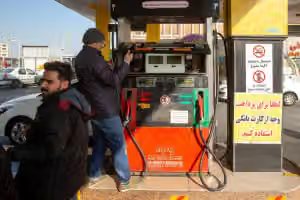
Gasoline shortages have reached Tehran, forcing some filling stations to close, according to information obtained by Iran International.
Authorities have ordered fuel transferred from neighboring provinces to reopen some stations in the capital, but dozens of others remain at risk of closure, the sources said.
 Iran weighs gasoline rationing as fuel deficit widens
Videos and messages sent by citizens have also documented long lines, station closures and difficulties obtaining gasoline in Tehran, Alborz, South Khorasan and Razavi Khorasan provinces.
The Tehran regional manager of the National Iranian Oil Products Distribution Company attributed temporary closures at some stations to a sudden rise in demand and congestion along fuel transportation routes.
Reports from citizens suggest the disruption is also affecting transportation costs. Several people told Iran International that fares charged by ride-hailing services Snapp and Tapsi had risen sharply as fewer drivers accepted trips.
“Gas stations are crowded, GPS doesn’t work and you can’t work for Snapp. Fares have gone up, but there are no drivers to accept the trip. We’re left without money and without gasoline,” a Tehran resident told Iran International.
Another citizen said the cost of a regular Snapp journey had risen from 1,000,000 rials last month to 3,200,000 rials, while a resident of Shiraz described steep increases in ride-hailing fares despite no gasoline shortage there.
A Snapp driver said fuel consumption from running air conditioning for passengers required him to refill about every two days, but his quota had been exhausted and purchases outside the quota were limited to 25 liters.
Other messages sent to Iran International accused authorities of deliberately restricting supplies before a possible price increase.
“When they want to raise the price of cooking oil, they say there isn’t any. When they want to raise the price of rice, they say there isn’t any. But after the price goes up, everything is available,” a resident of Mashhad said. “Now it’s gasoline’s turn.”
The Mashhad resident said filling stations were not receiving enough gasoline but predicted supplies would become readily available if authorities raised prices.
Another citizen questioned why a gasoline deficit of 10% to 20% was causing such widespread disruption and accused authorities of deliberately making fuel scarce to make consumers more willing to accept higher prices.
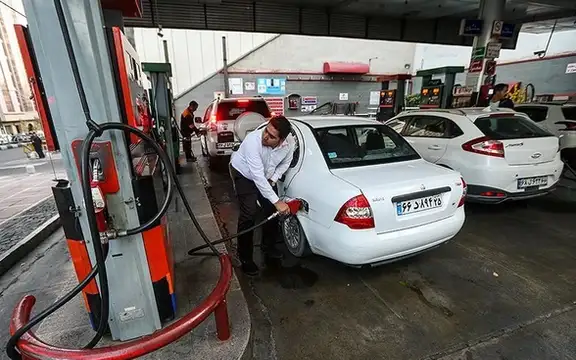 File photo shows a man filling his car with gasoline at a gas station in Tehran.
“Many gas stations are either closed or have no gasoline to distribute,” a Tehran resident said, also accusing the government of diverting fuel for foreign currency earnings.
Another message accused authorities of using the shortage as justification for a gasoline price increase and manipulating distribution to create congestion at filling stations and reduce resistance to higher prices.
“Half of Pakdasht’s gas stations have no gasoline and the rest are extremely crowded,” a resident said. “They are trying to force people to accept higher gasoline prices.”
Government weighs three options
The government is considering three responses to the shortage: limiting gasoline supply to domestic production levels, reducing subsidized quotas and selling additional consumption at the unrestricted price, or shifting fuel quotas from vehicles to individuals.
Concern that higher gasoline prices could trigger protests has encouraged the government to use strategic reserves to buy time, the sources said.
Fuel price increases have been politically sensitive in Iran. A sudden rise in gasoline prices in November 2019 triggered nationwide protests followed by a deadly state crackdown.
The attempt to delay harder choices by drawing on emergency stocks is now creating another problem, according to Iran International’s sources: the buffer intended to protect Iran during severe supply disruptions may itself be only weeks away from exhaustion.