
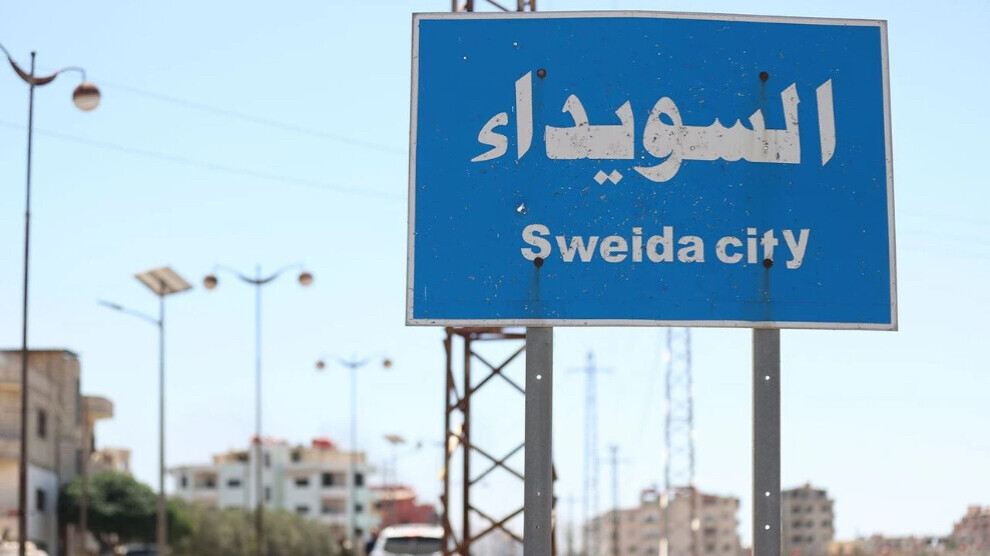
According to the United Nations (UN), nearly 80,000 people have been displaced by ongoing violence in southern Syria. This was announced by the International Organization for Migration on Friday. Water and electricity supplies in the affected province of Suweida have also collapsed, while a shortage of fuel is hampering evacuations. This was also confirmed by the Suweida Military Council.
Meanwhile, fighting continues between Sunni Bedouin tribes and members of the Islamist government on one side and Druze resistance groups on the other. The self-appointed leadership in Damascus again deployed troops to the south of the country on Friday “to restore stability in the region,” according to a statement from the president’s office. Accordingly, the authorities will “send special forces to end the fighting and resolve the conflict on the ground.”
The clashes in Suweida began on Sunday. One day later, Damascus sent its Islamists to the area. After a supposed ceasefire was announced on Wednesday, the transitional government withdrew its troops from Suweida around 24 hours later. Israel, which sees itself as the protector of the Druze minority, had previously intervened in the fighting and bombed targets in Damascus and in the south of the country.
On Friday, additional armed members of Sunni tribes from Idlib, parts of Deir ez-Zor, Homs, and other regions controlled by the regime gathered in villages near Suweida to support the Bedouins. The Observatory reported that the tribal militias had entered the region with the support of government troops. In addition, the destruction of private property belonging to the Druze minority and looting of their homes continued.
According to SOHR, more than 700 people have been killed in Suweida since Sunday, including many civilians. The organization accused Syrian government forces of serious human rights violations, including kidnappings and the execution of 165 Druze civilians. Their bodies were left on the side of the road, some bound or burned.
The UN High Commissioner for Human Rights, Volker Türk, also spoke of reports of widespread violations and abuses, including summary executions and arbitrary killings, kidnappings, destruction of private property and looting of homes, by members of the security forces and individuals affiliated with the interim authorities.
Syria’s interim authorities must ensure accountability and justice for the killings and other gross human rights violations and abuses in the southern city of Suweida, Volker Türk said on Friday, repeating his call for a new Syria that works for all its people, equal in dignity and without discrimination.
“This bloodshed and the violence must stop, and the protection of all people must be the utmost priority, in line with international human rights law,” Türk said. “There must be independent, prompt and transparent investigations into all violations, and those responsible must be held to account, in accordance with international standards. Incitement to violence and hate speech, both online and offline, must also be stopped.
“It is crucial that immediate steps are taken to prevent recurrence of such violence. Revenge and vengeance are not the answer.”
“My Office has received accounts of distressed Syrians who are living in fear for their lives and those of their loved ones,” said the High Commissioner. “The deployment of State security forces should bring safety and protection, not add to the fear and violence.”
Türk called for a thorough, urgent and independent vetting process to ensure that those responsible for human rights violations and abuses are not integrated into Syria’s official security or military structures. “This is a vital step in rebuilding public trust and advancing Syria’s broader transition,” he said.
He also called on the Syrian interim authorities to publish the results of the national fact-finding committee’s investigations into the violence in coastal areas earlier this year.
“Impartial and thorough investigations into the recent violence would also strengthen the ongoing wider transitional justice process to ensure accountability for past violations and abuses,” the High Commissioner added. “Syrians deserve truth, accountability, and guarantees that such violations will not be repeated.”
“With the fall of the former government, Syrians have witnessed a moment of hope for a better future based on human rights. It is the responsibility of the interim authorities to demonstrate that this chapter will be defined by rights, justice, and equal protection for all.”