

Listen to this article
Estimated 5 minutes
The audio version of this article is generated by AI-based technology. Mispronunciations can occur. We are working with our partners to continually review and improve the results.
The Great Lakes, one of the largest stores of freshwater and a source of water for some 40 million people, have long symbolized how closely intertwined Canada and the U.S. are.
U.S. President Donald Trump took a public sledgehammer to that relationship Thursday as part of his trade war with Canada, signing an executive order directing that Lake Ontario be renamed Lake America.
It’s unclear whether Trump can unilaterally rename the lake, whose name predates European colonization of the Americas and has been widely recognized internationally for centuries. But the move comes amid a broader push by the Trump administration that has hindered U.S.-Canada collaboration on scientific research and restoration work in the Great Lakes.
“The way that this current administration in the United States views the environment and views science is demoralizing,” said Aaron Fisk, professor at the Great Lakes Institute for Environmental Research at the University of Windsor.
“With the U.S. moving away from evidence-based decisions about the environment … that’s a real concern to me because we need them to be a world leader. This really goes against their long term investment in good science,” he said.
As part of its massive cuts to the federal public service, the Trump administration has made major cuts to iconic U.S. scientific agencies such as the National Oceanic and Atmospheric Administration and the Environmental Protection Agency. Those cuts have, in turn, affected monitoring and research in the Great Lakes.
“The water does not respect political boundaries, and you have to manage it as a water body, as a watershed, not just as a national or state or provincial boundary,” said Joel Brammeier, president and CEO of the Alliance for the Great Lakes, a U.S. non-profit that advocates for Great Lakes conservation and restoration.
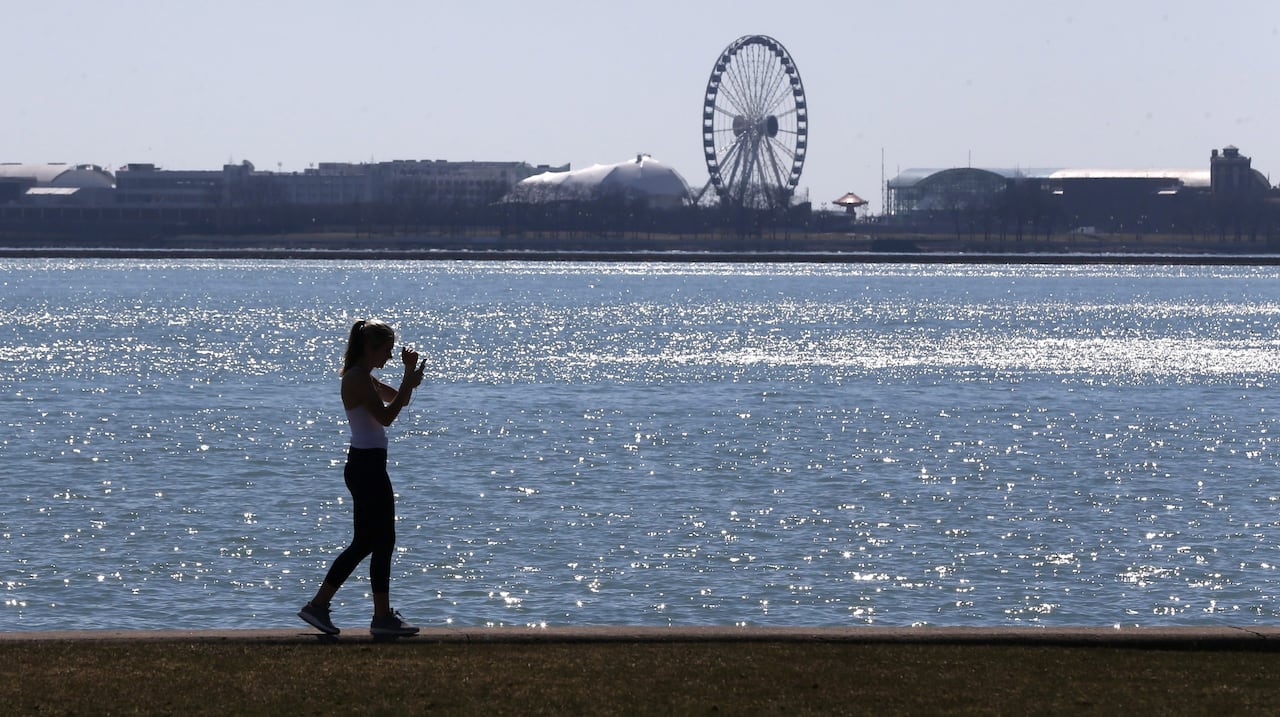 The Lake Michigan coast in Chicago. U.S.-Canada collaboration is essential to manage and restore the shared waters of the Great Lakes. (Charles Rex Arbogast/The Associated Press)
“Which is why it’s always a bit painful when we see somebody out of the U.S. side challenging that collaboration. Because, honestly, the Great Lakes don’t get cleaned up and they don’t get protected unless the U.S. and Canada collaborate and co-operate.”
Bipartisan support saves key Great Lakes program
Even amid the cuts, support for the Great Lakes has crossed political lines. The Great Lakes Restoration Initiative, a two-decade-old program to restore ecosystems and clean up industrial pollution, was targeted for near-total elimination by Trump during his first administration.
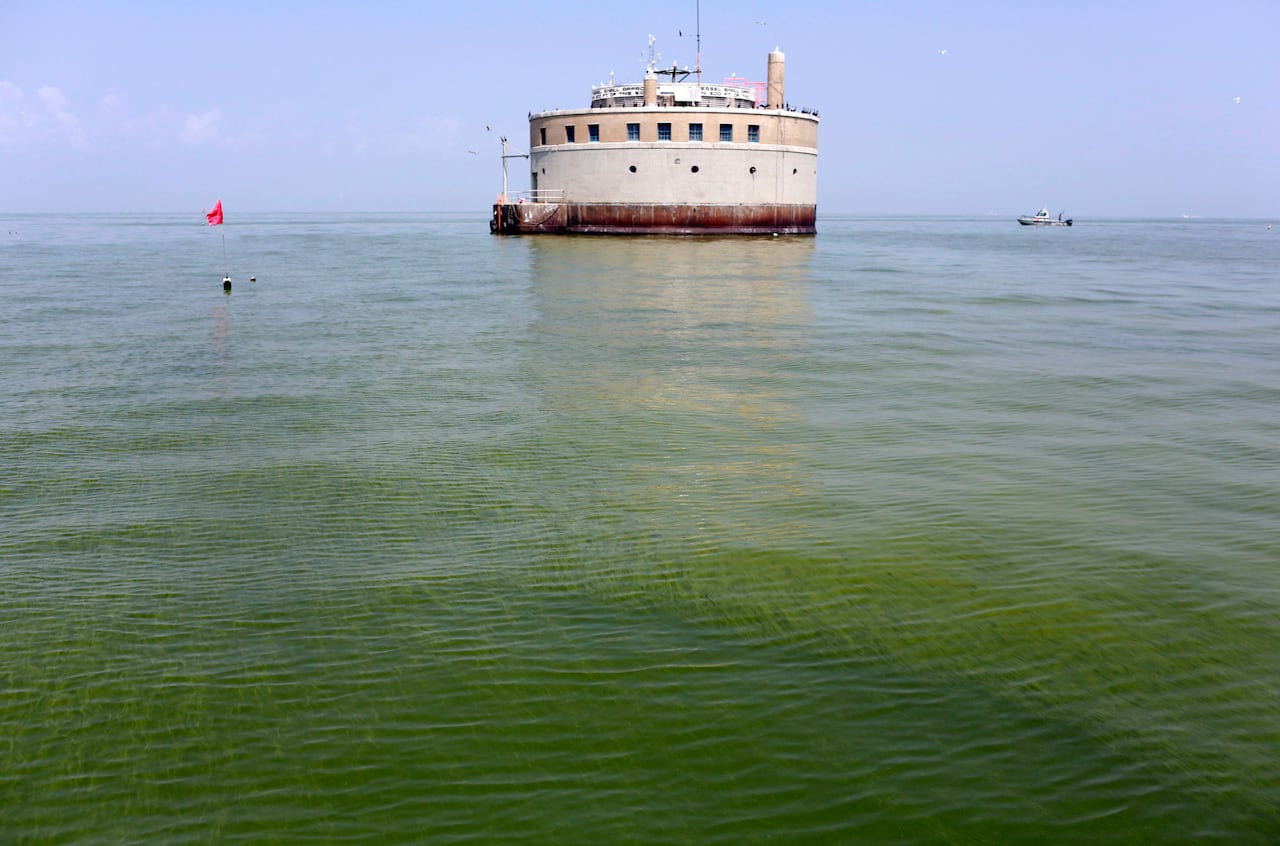 In this 2014, file photo the water intake crib for the city of Toledo, Ohio, is surrounded by an algae bloom on Lake Erie. The Great Lakes Restoration Initiative program has funded work in Ohio to slow down Lake Erie’s toxic algae. (Haraz N. Ghanbari/The Associated Press)
The U.S. House of Representatives voted to reauthorize the program through 2031, with nearly $500 million US in federal funding per year going to local communities in the region. The measure received both Democratic and Republican support and is now working its way through the U.S. Senate.
“There are few issues that unite political parties like the Great Lakes. The Great Lakes Restoration Initiative has been so successful in doing that,” Brammeier said.
The Great Lakes region has been central to industrial growth in both the U.S. and Canada, Brammeier said, hosting major industries such as steel, chemical and aluminum manufacturing. That growth has also left widespread industrial contamination that communities across the region want cleaned up.
“Even though a lot of damage was done across a large part of the Great Lakes, in an odd way that’s actually led to this near universal support for the restoration program because so many decision-makers, so many members of Congress have seen the harm in their own communities,” he said.
Climate change brings new threats
Historical pollution is not the end of the Great Lakes’ problems. Climate change is bringing extreme heat and shifting precipitation to the region, which researchers say requires close study on both sides of the border.
Mike Shriberg, director of the University of Michigan’s Water Center, said water availability and access are emerging challenges.
“This summer’s a great example. We’ve had increasing drought and then increasing intensity of precipitation. So water flows have changed because of climate change,” he said.
That, combined with future water demand from data centres, power generation and especially agriculture — which is expanding farther north as the climate warms — could create problems in the coming years. Shriberg also said he expects more people to move to the region from parts in the U.S. facing water shortages, particularly in the West, potentially putting further strain on the Great Lakes.
WATCH | Renaming Lake Ontario: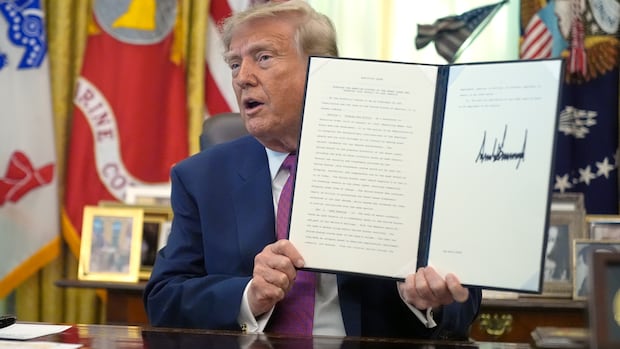
Trump signs executive order to rename Lake Ontario to ‘Lake America’
U.S. President Donald Trump signed an executive order directing the interior secretary to rename Lake Ontario to ‘Lake America,’ as the trade war with Canada continues.
Andrew Gronewold, professor at the University of Michigan, is also thinking about future demand. “I think we’re going to face some very difficult choices and questions about how Great Lakes water is used,” he said from Hamilton, Ont., where he was meeting with Canadian and First Nations research partners.
Gronewold pointed to efforts by a group of Great Lakes state governors and premiers to “future-proof” the Great Lakes compact and agreement, a set of pacts among U.S. Great Lakes states, Ontario and Quebec governing how the water is used.
“I think over the next several decades, there’s going to be increased pressure from outside of the basin for that water, whether it’s for agriculture or industry or other uses. That’s something that we need to be paying attention to,” he said.