
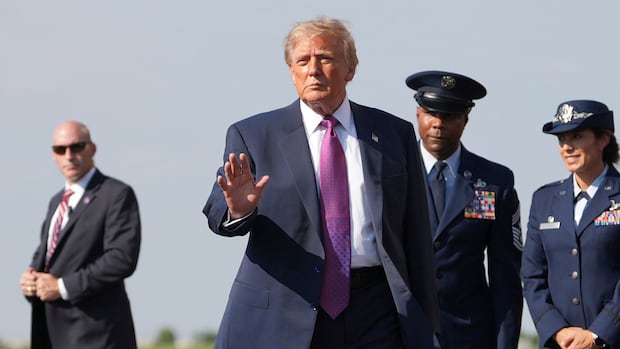
A number of U.S. lawmakers called on Donald Trump to end the war with Iran as it reached its six-month mark on Friday, while the U.S. president has given off mixed signals regarding the state of the conflict.
Trump has said that the combined effects of the military’s offensive strikes and blockade of the Strait of Hormuz have helped the U.S. achieve its objectives. On social media on Wednesday, he shared a post declaring “MISSION ACCOMPLISHED 2026,” alongside AI-generated images that included the face of Iranian supreme leader Ayatollah Ali Khamenei, who was killed on Feb. 28 as the U.S. and Israel launched airstrikes to begin the war.
Tehran and Washington have exchanged little more than bellicose statements in recent weeks, leaving the diplomacy to third parties, and Trump has been more preoccupied this week, at least publicly, with his anger over Canada calling a halt to trade talks on tariffs.
It is expected that the U.S. president will increasingly turn his attention to the Nov. 3 midterms, where he has been engaged in efforts to influence how votes are cast, while preparing for a unique, midterm Republican mini-convention in two weeks’ time.
Rep. Adam Smith of Washington, the top Democrat on the House of Representatives’ armed service committees, released a statement Friday raising a number of outstanding issues the war has caused, but leading with the toll to those serving in the military.
“Losses continue to accumulate, including 19 American service members killed and over 750 wounded, while thousands of innocent civilians have been killed across the region,” said Smith. “Tens of billions of dollars of taxpayers’ money is being wasted while driving up the cost of gas, utilities, and groceries at home and throttling economies around the world.”
‘More costly and more unstable’
The U.S. and Israel have killed a number of Iran’s top religious, military and political officials and Khamenei’s successor, his son Mojtaba, hasn’t been seen in public amid reports he was seriously injured early in the war.
As well, it has been estimated that the price of rice is up some 60 per cent since the war began and beef 150 per cent higher for Iranians, who have also dealt with long lines to fill up vehicles. The International Monetary Fund forecasts that Iran’s gross domestic product will contract more than 5 per cent this year.
But costs have also been incurred on the U.S. side beyond the literal price tag for Operation Epic Fury, from the approval rating for Trump multiple polls to higher prices at gas pumps for many Americans due to the disruption in oil markets. The war has also strained relations between the White House and allies in Europe, the Middle East and Asia, as Trump has expressed anger that they haven’t supported the U.S. in the war.
Trump “has made the world more costly and more unstable,” Brett Bruen, a former U.S. diplomat now at the D.C.-area public affairs agency Global Situation Room, told CBC News on Friday.
Iran found leverage after the initial shock and awe of the U.S. strikes through its own drone attacks and mining in the critical Strait of Hormuz. That dissuaded commercial vessels from countries not friendly to the regime from transiting the passage where substantial amounts of oil and liquefied natural gas typically were moved.
The U.S. eventually responded with its own naval blockade to prevent the movement of ships to Iranian ports. Trump has repeatedly said the strait is open, including this week, but ship-tracking services have estimated activity at roughly 5 per cent to 15 per cent of pre-war volumes.
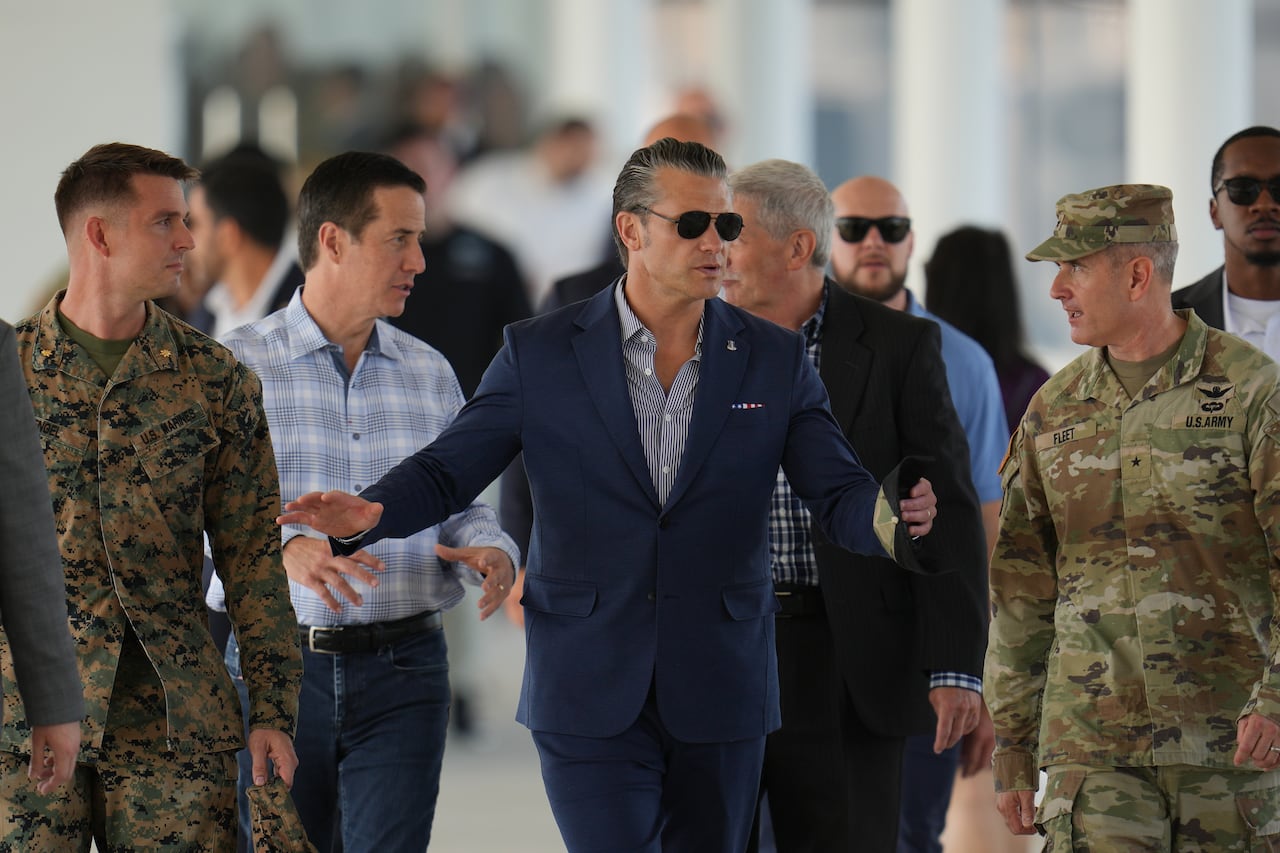 U.S. Defence Secretary Pete Hegseth is shown on Aug. 13 attending military exercise in Panama City, Panama. Hegseth in July estimated that the Iran war had cost the U.S. $37 billion. (Matias Delacroix/The Associated Press)
Democrats earlier this week called for more transparency on the cost of the war. Defence Secretary Pete Hegseth told a congressional committee in July that the war had cost the military $37.5 billion US, but the opposition and some think-tanks believe that total underestimates the cost, given the missile systems and munitions the U.S. has expended this year, diminishing stockpiles.
“Pete Hegseth should be fired, the war must end and taxpayer dollars should be spent to make life more affordable,” House Minority Leader Hakeem Jeffries of New York posted on social media on Friday.
Few Republicans have expressed opposition to the war itself, though some have criticized military tactics. Rep. Thomas Massie of Kentucky, who generally opposes U.S. military interventions abroad, is an exception.
“The 1973 War Powers Act required Trump to withdraw forces within 90 days absent authorization from Congress,” he posted on Friday. “[The administration] ridiculously claimed to stop the war & restart new hostilities @ 91 days. We are past 180 days. End the War.”
LISTEN | Author, Iran-U.S. historian Trita Parsi (July 23):
Front Burner27:28Is Iran becoming a ‘forever war’?
Some embassy staff in region reportedly set to return
Trump said this week he’s “not in a hurry” to get Iran back to the negotiating table. It was a striking contrast to his messaging for much of the summer, where he said it was imperative to reach a deal with Iran to prevent it from obtaining a nuclear weapon.
There are no talks, but also no sense that a renewed military offensive is on the horizon.
The administration said it is focused on choking Iran economically, even as Treasury Secretary Scott Bessent’s “Operation Economic Outcast,” announced on Monday, was heavy on warnings and lighter on details.
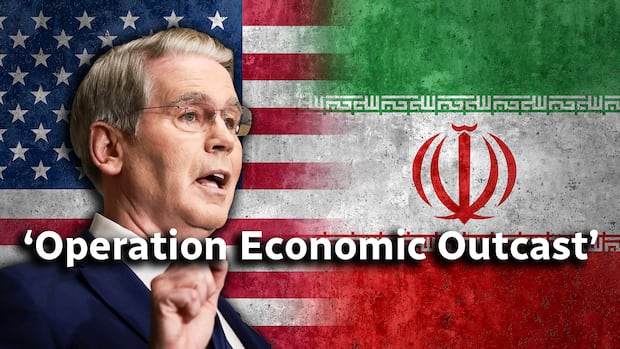
The U.S. threatens Iran with ‘economic D-Day’ | About That
The Trump administration declared ‘economic D-Day’ against Iran and warned global trade partners to cut all financial ties with Tehran or face severe economic consequences. Avneet Dhillon breaks down this latest push to isolate Iran’s economy and why secondary sanctions threaten to put the U.S. on a collision course with China.
(Photo credits: The Canadian Press, Reuters, Adobe Stock and Getty Images)
As well, Reuters reported this week that the Trump administration will soon start sending diplomatic personnel back to some missions in the Middle East that were evacuated or downsized due to the fighting. Posts in Lebanon, Israel, Saudi Arabia and Iraq are among those where staff will return, albeit at less than full capacity, two people familiar with the matter told Reuters.
Bruen told CBC News that the administration squandered an opportunity to affect change in Iran that would have been less costly, given the unusual level of domestic strife and protest seen there in January as demonstrators railed against perceived corruption of the regime and economic conditions.
Trump at the time promised Iranian protesters that “help is on the way,” but by the next month the U.S. launched its military campaign with Israel.
Bruen, a former member of Barack Obama’s administration, was pessimistic about what comes next after the six-month mark.
“It drags on indefinitely. I don’t see an easy ending to this around the corner,” he said. “I don’t think the dynamic in the region changes very much.”