
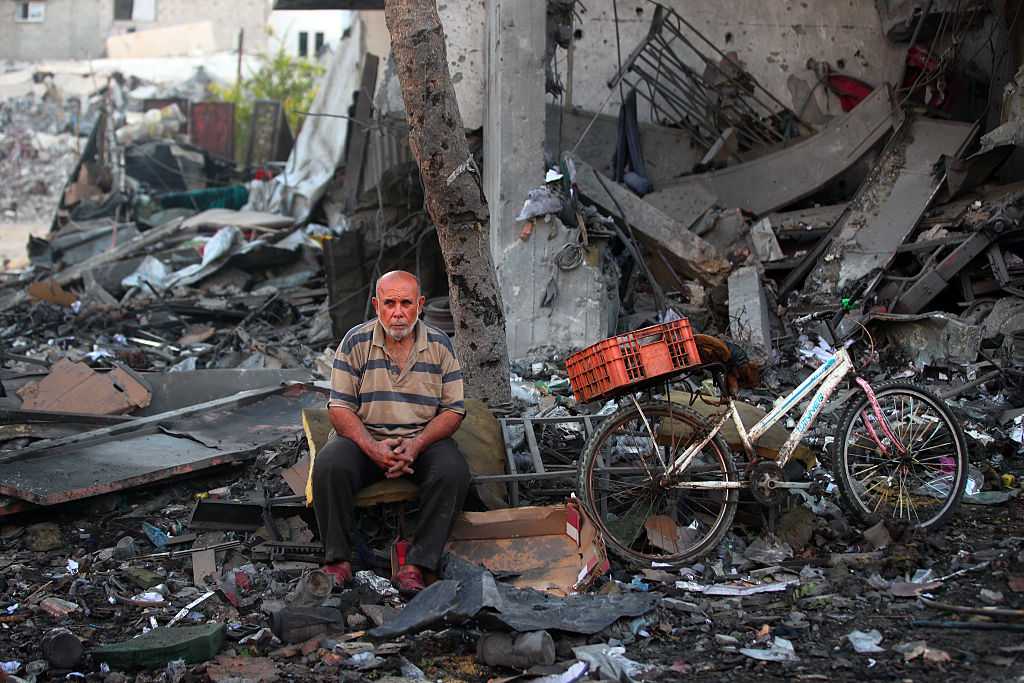
In January 2025, a ceasefire paused the bombings for two months. More than a million and a half Palestinians walked back to their homes and neighborhoods. Many found their houses destroyed. Many others found half a house still standing, and, as I have said, half was more than enough.
People told news crews they would live among the rubble, in the one room that survived. The scenes coming out of Gaza in those two months were ones of hope and resilience. Israel learned the lesson.
On March 18, 2025, its forces broke the ceasefire, and this time they had a goal in mind. In February 2025, the record showed 70,436 destroyed structures in Gaza. By October 2025, the number passed 123,400, an increase of 75 percent. In just seven months, Israel destroyed as many structures as it had in the previous year and a half.
Israel will argue, again, that it was attacking Hamas. But my house tells a different story, and so do tens of neighborhoods like ours. The Israeli military packed remote-controlled vehicles with tons of explosives, drove them into residential streets, and detonated them.
Entire neighborhoods vanished. Our third-floor house barely had any rubble. They destroyed it as if it never existed. Despite the ceasefire since October 2025, Israel has continued to destroy structures in Gaza. Since October 2025, the proportion of affected structures has increased by 1.5 percent, while that of destroyed structures has increased by 9 percent — the damage is deepening rather than spreading
In just seven months, Israel destroyed as many structures as it had in the previous year and a half.
This process of destruction is among the most documented in modern history, from satellite imagery analysis to millions of videos uploaded from Gaza. The data can tell us which structures were affected, which were moderately damaged, which were severely damaged, and which were destroyed.
I know this record well because I helped trace it and show it. At GazaIndex, the destruction data can go from the Gaza Strip (134,422 destroyed structures) to Gaza City (34,666 destroyed structures) to my own neighborhood of El-Tuffah, with 2,575 destroyed structures, one of which is my house. The record can show if a structure stood on that street, and if it no longer does so today.
But what it cannot know is that a house, like ours, sheltered four families. Nor can it know what those structures meant. They didn’t mean rocks. They meant shelter, water, Wi-Fi, a way to generate electricity (when there was any). They meant a possible future.
There is no data field that can trace that. This blind spot is not a flaw in the record. It is the shape of the record.