
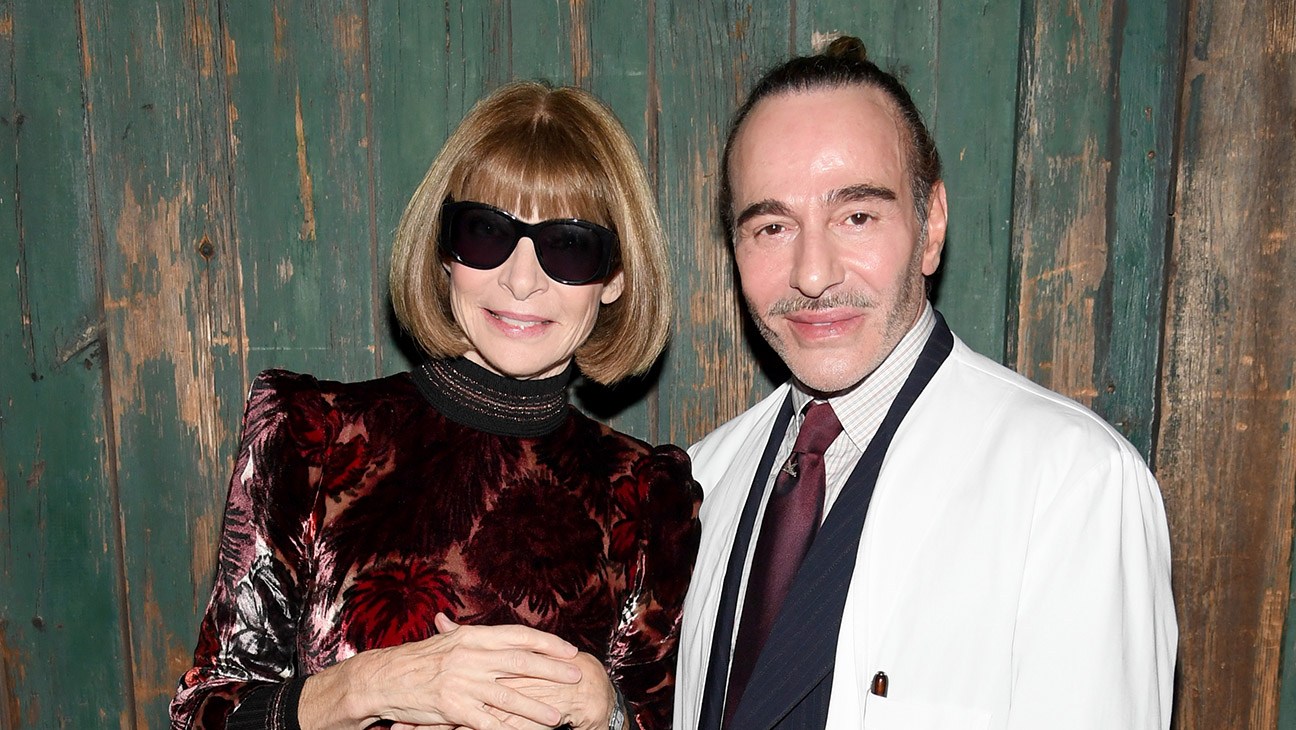
Every first week of May for the past 31 years, Vogue’s Anna Wintour has presided over the Costume Institute’s annual exhibit at the Metropolitan Museum of Art in New York, and the accompanying Met Gala, the lavish, star-studded event that has become the fashion world’s equivalent of the Oscars. Now, with the withdrawal of the Costume Institute’s latest honoree, John Galliano, over controversy surrounding past racist and antisemitic comments, and the canceling of the exhibit, that hallowed 70-year-old tradition may be going on an embarrassing hiatus. (The Met, in a statement earlier this morning, said plans for a new exhibit and gala would be announced later.)
For Wintour, who at 76 has outlasted generational rivals like Graydon Carter and Tina Brown and has amassed unparalleled power at Condé Nast — the publisher of Vogue as well as titles like Vanity Fair, GQ and The New Yorker — the misstep may cause more than temporary embarrassment.
Galliano, the longtime creative head of both Dior and Margiela — now collaborating with Zara — announced the news himself on Instagram Monday morning: “After much reflection and discussion with all those involved, I have decided, with great sadness, that it is best for the exhibition not to take place at this time. I do not want the debate surrounding me to place the Met in a difficult position or to distract from the remarkable work of the Costume Institute. I also recognize and respect that an exhibition my work would be painful for some.”
This is quite a break with fashion precedent. No Met honoree has ever bowed out before, nor has any pre-announced theme been canceled. (Only two honorees, Yves-Saint Laurent in 1983 and Rei Kawakubo in 2017, were alive at the time of the exhibits devoted to their work; and Galliano was set to be the third living honoree.)
But the Galliano choice was fraught the minute it was announced this summer. Despite his fashion genius, the notorious 2011 incident at a Paris — caught on a video, in which the visibly drunk designer slurred racist epithets to Jewish customers, declaring a fondness for Hitler and telling them their ancestors would be “gassed” — got him fired from Dior, making him an international persona non grata.
Despite apologies (a very public one in his 2024 doc High and Low: John Galliano) and work with Jewish leaders over the years, the rise of antisemitism in the last decade has brought the unfortunate — and inebriated — moment to the forefront.
Wintour said Monday in a statement in support of Galliano as he headed for the exit: “John’s decision that the exhibition devoted to his work should not take place at this time is very courageous and a measure of the man he is. I believe this is the right decision, and both he and the Museum have my full support.”
Though this is surely the most consequential Met Ball controversy under Wintour’s command, it is not the first. For 2009’s theme, “Model as Muse,” supermodels Stephanie Seymour and Naomi Campbell pulled out last minute: set to wear original gowns by their favorite designer, Azzedina Alaia, they found out last minute his work wasn’t even shown in the exhibit. Alaia begged them not to wear the gowns — instead, they chose boycott the event. Alaia blamed it on Wintour, claiming she had “too much power over the museum” and accusing her of favoring deep-pocked luxury advertisers in Vogue’s editorial coverage.
The 2013 edition of the gala was the very first for Kim Kardashian, then considered a déclassé reality star not chic enough for such a high brow affair. But when Givenchy designer Riccardo Tisci, as co-host, invited her — with Wintour’s approval — it shocked Met Ball guests and the media, opening the door to cheesy red carpet antics that came later.
Nine year later, in 2022, Kim Kardashian showed up sewn into in which she claimed was the original Jean-Louis illusion gown a very differently proportioned Marilyn Monroe wore to wish JFK a happy birthday, which Wintour had to have approved and which the fashion and Hollywood cognoscenti considered sacrilege. It was later discovered to be a recreation — an almost bigger scandal.
Beyond Met Gala–related kerfuffles, Wintour has weathered previous cultural storms, perhaps most prominently during the racial reckoning of 2020, when she issued an apology for sidelining or tokenizing people of color on Vogue’s staff and in the magazine. Then, too, fashion wags asked whether she would survive the scandal.
But it doesn’t seem like she’ll be able to skirt by with an apology this time. How bad has the backlash been? Among the voices decrying the Met’s decision to lionize Galliano is New York Mayor Zohran Mamdani, who has recently faced uproar over his vociferous criticism of Israel, which some have characterized as encouraging antisemitism. A spokesman for Mayor Mamdani last night shared the following statement with the New York Times: “John Galliano’s repeated use of antisemitic language is vile. The Mamdani administration recognizes that the Met’s decision to honor him has caused pain and anger among many Jewish New Yorkers. The Met is an independent institution and its decisions — and how it responds to the many Jewish New Yorkers appalled by this choice — are ultimately its own. But independence does not mean insulation from criticism.”
Is Galliano to blame? Hardly. The designer simply accepted the honor from Wintour and Met Costume Institute chief curator Andrew Bolton, who’d prepared for some backlash by working with Galliano to preempt the inevitable criticism. Wintour clearly knew the risks, but perhaps underestimated them. Nor did she seem to be sufficiently prepared for the populist backlash the Gala received when she asked Jeff Bezos and Lauren Sanchez Bezos to co-chair/sponsor this year’s Ball to the tune of $10 million.
New York streets were plastered with posters calling for a boycott of the gala, castigating the couple over their conspicuous displays of wealth, their lavish Venice wedding, Amazon’s $40 million Melania doc currying favor to the Trump administration and accusing them of attempting to buy their way into fashion high society. Marie Antoinette was invoked in some Bezos headlines, referring to Wintour.
So how will Wintour deal with this onslaught of negative press? Some New Yorkers believe this finally might be the moment the fashion world’s ultimate survivor steps away from her near 40-year career at Condé. “She’s used to being called an ‘ice queen,’” says one well-placed source in the high echelons of the New York fashion world. “But not to this level of bitter backlash.”