
News of the first direct exchange of fire between the US and Iranian militaries in roughly a month sent oil prices surging upward on Monday, with Brent futures rising above $90 per barrel as investors priced in renewed escalation.
Futures on Brent crude (BZ=F), the international benchmark, pushed to an intraday high above $91 per barrel, gaining over 2% to cross $90 for the first time in roughly a week. Meanwhile, those on US benchmark WTI crude (CL=F) gained roughly 4% to trade above $86.
Futures surged at the start of trading Sunday evening on news that the US military had launched a series of air strikes on Iran’s Larak Island, a small landmass inside the Strait of Hormuz, where US Central Command alleges the Iranian military was readying rockets that would carry sea mines into the waterway.
Given Larak Island’s location in the strait, it has become a crucial monitoring and traffic control point for Iran’s Revolutionary Guard Corps.
“Earlier today U.S. forces struck two Iranian launchers on Larak Island. Islamic Revolutionary Guard Corps forces were observed preparing to launch rockets with sea mines into the Strait of Hormuz,” a Central Command spokesperson said in a statement.
Iran’s military retaliated with a barrage of drones targeting sites within GCC nations Jordan and the United Arab Emirates and said it had seized a bulk carrier vessel near the port of Bandar Abbas inside the Strait of Hormuz. Tehran’s military leadership also claimed that an oil supertanker had struck a mine while attempting to transit an unauthorized route through the strait, though US Central Command said it had successfully demined the waterway in its statement on Sunday.
“Iran is officially a Failed Nation. IT IS DEAD!” President Trump wrote on social media Monday morning. “They have no Navy, they have no Air Force, they have no currency, they are not paying their soldiers or police, Inflation is at 300%, and their leadership is in total disarray and incapable of properly representing the country.”
 A pedestrian walks past a billboard depicting President Trump inside a catering container, installed on a building along a street in downtown Tehran on Aug. 31, 2026. (Atta Kenare/AFP via Getty Images) / · ATTA KENARE via Getty Images
The exchange of fire between the two nations underscores the perpetual stress that a war now in its sixth month continues to inject into the global economy.
Even as oil flows from the Persian Gulf have climbed to roughly two-thirds of their prewar levels, at around 15 million barrels per day, shortages of refined products like gasoline and diesel remain stretched, per research from Goldman Sachs. Attacks by Iran on refineries in the Middle East and, separately, by the Ukrainian military inside Russia — a key source of global refining capacity — have foisted elevated energy costs onto a range of businesses and consumers in both the US and abroad.
Read more: How the Iran war drives up the cost of gas and groceries
“Rising strikes on refineries in the Middle East and Russia have further constrained already-stretched global refining capacity, pushing refined product margins to new highs to incentivize refiners to run harder,” Goldman Sachs commodities strategists wrote in a recent note to clients. The bank’s strategists now expect a decline of roughly 7 million barrels per day in global refined product runs.
Anwar Gargash, a senior foreign policy adviser to the UAE’s leadership, wrote on X on Monday that “the state of neither war nor peace cannot be a sustainable solution.”
Any actions from the US Treasury Department will be in focus this week after Secretary Scott Bessent threatened “economic onslaught” against any nation identified by Treasury as doing business with the regime in Tehran — a pronouncement that comes as the White House pivots away from a hot-war approach and toward one aimed at extracting concessions through economic pressure.
 Goldman Sachs estimated that Persian Gulf crude oil exports have returned to roughly two-thirds of prewar levels. (Chart: Goldman Sachs) · Goldman Sachs
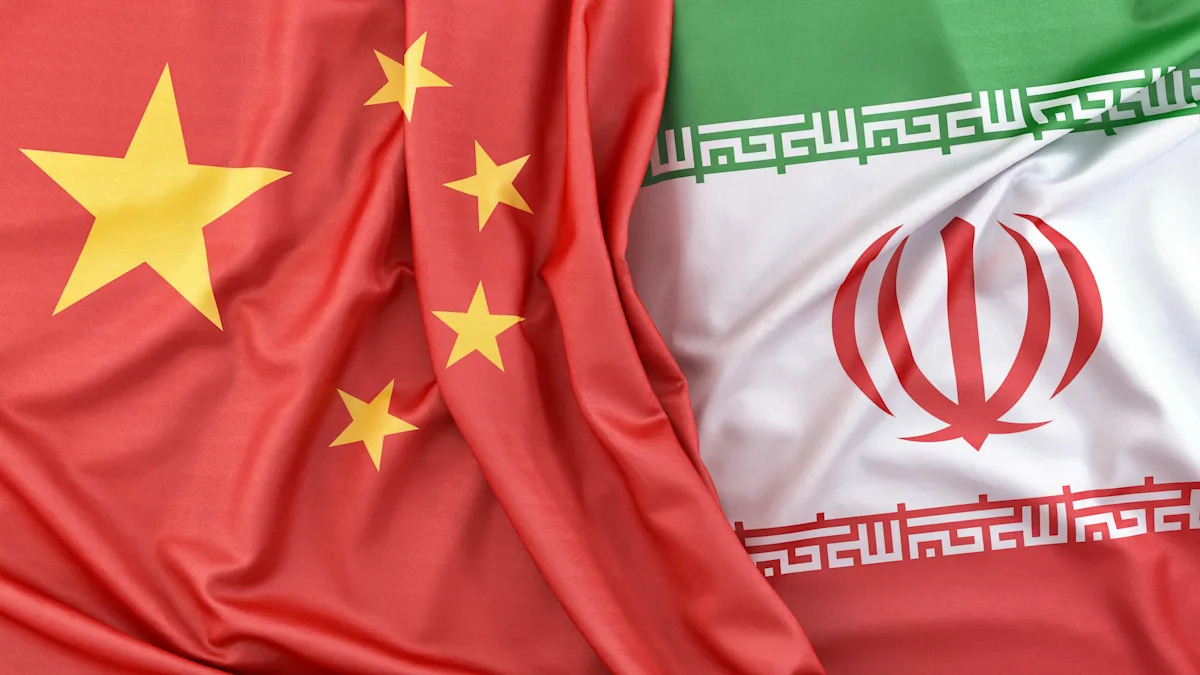
Late last week, the Treasury Department levied severe sanctions against the Emirati branches of Egypt’s second-largest bank, Banque Misr, alleging it was responsible for funneling roughly $1.8 billion for the Iranian regime. However, critics of the Treasury Department’s approach highlight that sanctions against any third country will be effective only if Bessent is willing to take on China, where refiners continue to buy roughly 90% of Iran’s crude oil exports, a critical lifeline for the regime.
The continued stress from a war that has far exceeded timelines initially laid out by the White House also comes as the Trump administration faces down the prospect of US midterm elections in November, roughly two months away.
While US gasoline prices have declined in the past month, the national average Americans are paying at the pump remains above $4 per gallon, sitting at $4.08 on Monday, per AAA — with affordability set to play a key role in the outcome of races that determine control of the US Senate and House of Representatives for the remainder of President Trump’s second term.
Jake Conley is a breaking news reporter covering US equities for Yahoo Finance. Follow him on X at @byjakeconley or email him at jake.conley@yahooinc.com.
Click here for in-depth analysis of the latest stock market news and events moving stock prices
Read the latest financial and business news from Yahoo Finance