
A second diplomat from a different candidate country was more optimistic about the consequences of Iceland’s negative vote, however. While their first reaction was disappointment, that diplomat said they expected Brussels would focus even more on getting the advanced candidate countries that are eager to join, especially Montenegro, over the line.
Security nothingburger
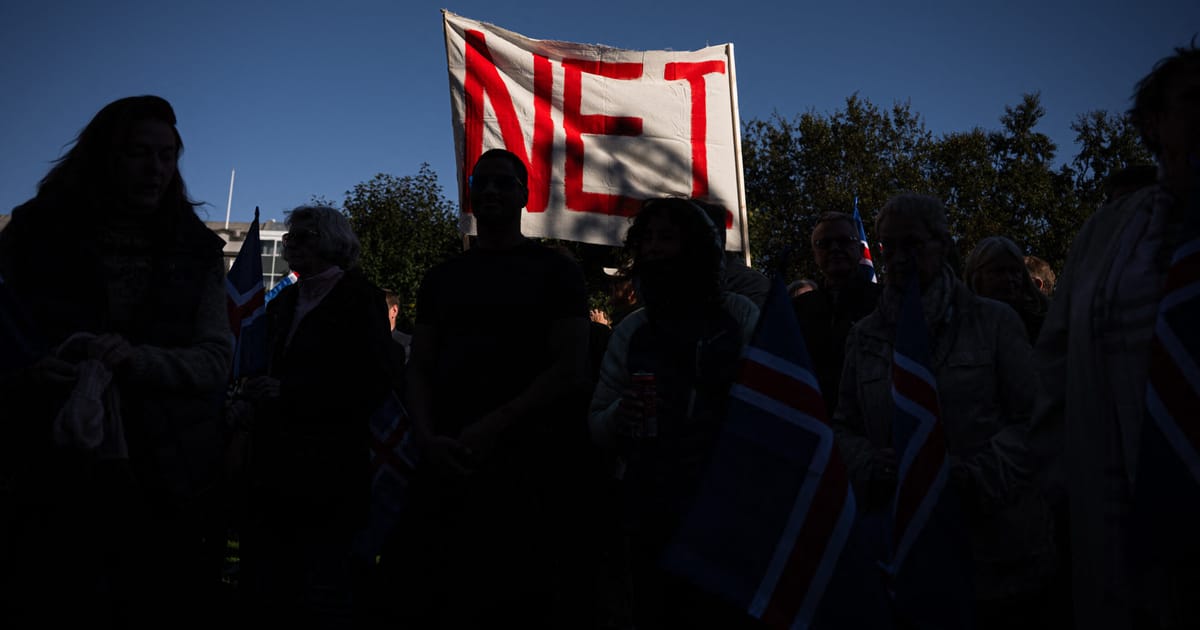
For Icelandic voters, the reasons for saying No boiled down to a few key issues: fishing rights, sovereignty, the economy, and the fact that Iceland is already inside the European Economic Area and Schengen Area, getting many of the benefits of being in the EU without having to bear the full cost of membership.
Yet the biggest draw was supposed to be security. With Trump looming over Greenland, and using trade to coerce allies and enemies alike, safety in numbers inside the bloc suddenly seemed like an appealing prospect for tiny, remote Iceland.
“We are living in a completely different world than just 10 years ago,” Icelandic Foreign Minister Þorgerður Katrín Gunnarsdóttir, who hails from a pro-EU party, told POLITICO before the vote. Ahead of the referendum, a Commission official said Trump had done the bloc a favor.
Yet Saturday’s referendum shows that while the EU’s promise of solidarity remains compelling for poorer, post-communist states on the bloc’s eastern flank, such as Moldova, Montenegro and Ukraine, security alone is not enough to lure richer, already well-integrated countries like Iceland, but also Norway and Switzerland, into the club.
Ólafur Ragnar Grímsson, Iceland’s longest-serving president and an opponent of EU membership, said the Trump fear factor was just not a convincing enough argument, given that Iceland is a founding member of NATO and has a long-standing bilateral security agreement with the U.S. “There’s no shred of evidence that President Trump’s administration has any intention whatsoever in weakening that agreement,” he argued.