
For many years I have had the opportunity to interact with many senior U.S. military officers and non-commissioned officers. The one thing they have in common is their abhorrence of the horrors of the battlefield. Their politics span the range of political persuasion—many conservative, but a surprising number on the left. They know the tragedy of losing comrades and others, and as such, most are very hesitant to use military force. They do not have the knee-jerk reaction of our current president that the solution to much of international difficulty is military action.
President Eisenhower unusually demonstrated a willingness to warn our nation about deficiencies in military-civilian relations and conduct in his farewell address in 1961, when he warned of the military-industrial complex’s influence on the nation. It was remarkable at the time to think that one of only three five-star generals in the history of the nation would criticize our military for its actions in influencing defense spending. Eisenhower’s warning was not over the conduct of a war, but the restructuring of our nation’s economy and its effect.
Israel is different from the U.S., and their military leaders have a long history of pushing back against government policy, often acting as a restraining, pragmatic force against ideologically driven politicians. The Israel Defense Forces (IDF) are a “citizen’s army,” with deep institutional prestige. Security chiefs—which include the heads of the IDF, Shin Bet, and Mossad—frequently clash with civilian leadership over strategic, legal, and democratic norms.
Ever since the “Generals’ Revolt” in 1948, which established civilian control of the military after protracted confrontations between Ben-Gurion and pre-state military commanders, and through the crisis of 1967, when the General Staff accused the government of weakness for not initially authorizing a preemptive strike, generals have felt they have a right and a responsibility to advise and criticize government military decisions they disagree with. (See The New York Times, May 21, 2016.)
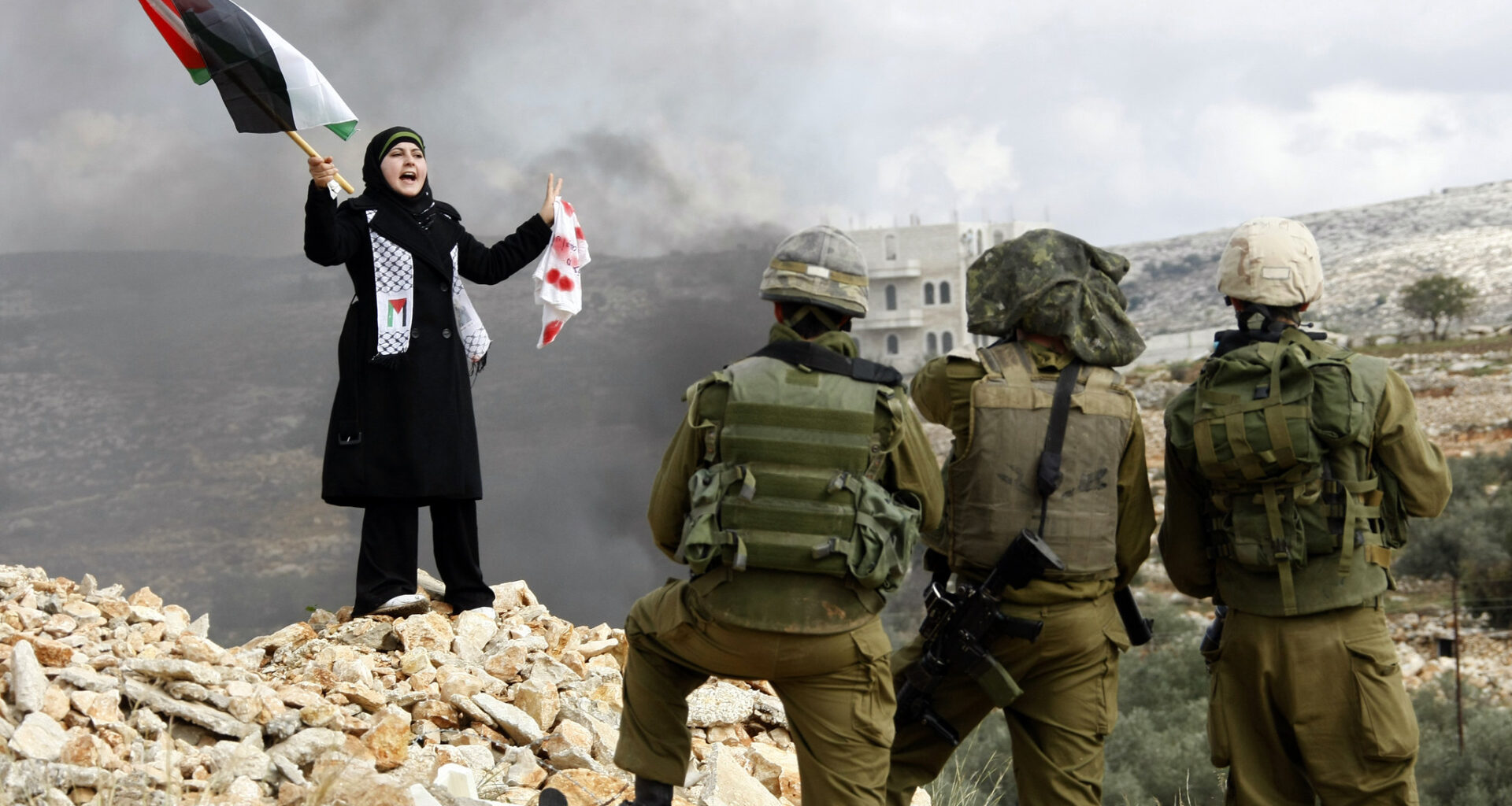
Recent comments by many senior military who have visited and analyzed Israel’s conduct in the West Bank are in this tradition and should be heeded by Netanyahu and all of Israel’s population. On August 31, The New York Times reported that numerous senior generals, intelligence officials, and prime ministers “are accusing settlers in the West Bank of committing ethnic cleansing with government support.” The Times quotes one official as stating, “(O)nce a society behaves this way … that society is doomed.” A particularly harsh assessment. After touring extensively in the West Bank with retired generals and former officials, Retired Major General Eyal Ben-Reuben concluded, “This, what the settlers are doing here, is the real threat to Israel. This is more concerning to me than Iran, Gaza, or Lebanon.” Others classified settler action as “…ethnic cleansing, to put it simply” (Ephraim Sneh, retired brigadier general and former minister of health, as quoted by The Times). Asaf Ammon, a retired Air Force general compared it to the Holocaust, not in scale, but in the effort to erase the Palestinian presence in much of the West Bank.
The United Nations Office for the Coordination of Humanitarian Affairs (OCHA) keeps track of casualties in the West Bank and other statistics such as property damage and displacement. As quoted by The New York Times, since the October 7, 2023, massacre by Hamas, settlers have waged thousands of attacks in the West Bank, “injuring thousands of Palestinians.” Settler attacks have displaced more than 3,200 Palestinians this year alone, double the rate of last year.
Over 200 rabbis, a Nobel laureate, writers, two former prime ministers, more than “three dozen retired Army and Air Force generals, [and] the former heads of the nation’s foreign and domestic intelligence services” signed a letter three months ago demanding that the government stop the attacks against Palestinian civilians in the West Bank. It was a tough message, calling for an end to “Jewish Terrorism” and the ethnic cleansing in the West Bank and accusing the Netanyahu government of pursuing “a deliberate government policy,” using the entire security establishment. Moshe Ya’alon, the former army chief of staff and defense minister under Netanyahu until 2016, said in a recent interview that “(E)ighty years after the Holocaust, ‘Mein Kampf’ in reverse. The master race is us.”
What happened to the liberal Israel many Jews revered? What happened to the two-state solution contemplated by the U.N. and other nations? A recent vote in the U.N. is an exemplar of the collapse of support for Israel and the denial of the current policy of Netanyahu to quietly but openly espouse the annexation of the West Bank and Gaza while brutally waging war against civilians in Gaza, Lebanon, and the rest of the Middle East.
In the last few years, Israel’s policy has become apparent: annexation of all the land in the West Bank of the Jordan River by occupation and the continued displacement of Palestinians. This is “de facto annexation,” without even an attempt to justify it with a vote on annexation in the Knesset. Even if such a bill were to pass, it is clear that most of the world’s nations would consider such action illegal under international law and give it no force or effect. (Netanyahu knows that most of the nations of the world disapprove of Israel’s violation of its establishing documents to have two states, so he has opposed such a bill by his right-wing settler allies, calling it a “provocation.”)
Just a week ago, Netanyahu told settlers, “(Y)ou are fulfilling the vision of the land of Israel, and this is our land.” He bragged that he recently legalized 104 communities and 160 farms, with more to come. In September 2025, he was even clearer when he declared that there would be no Palestinian state west of the Jordan River, according to CBS News..
In September 2025, the U.N. General Assembly voted to endorse the “New York Declaration on the Peaceful Settlement of the Question of Palestine and the Implementation of the Two State Solution.” The results overwhelmingly supported the international resolution that was part and parcel of the establishment of Israel (The 1947 UN Partition Resolution, Resolution 181).
One hundred forty two countries voted in favor of the resolution calling for a two-state solution. Ten voted against it, 12 abstained.
Despite historically supporting a negotiated two-state solution, this time U.S. administrations did not, joining Israel, Argentina, Hungary, Micronesia, Nauru, Palau, Papua New Guinea, Paraguay, and Toga in opposing one.
This was not a vote to recognize Palestinian statehood, but in 2025 alone, Israel’s policies and actions caused France, the United Kingdom, Canada, Australia, Portugal, Belgium, Luxembourg, Malta, Andorra, and Monaco to announce recognition of Palestine, bringing the number of U.N. member states that recognize Palestine to well over 150.
Israel is becoming a pariah state, and the recent opinions of many of Israel’s best and brightest show why.