
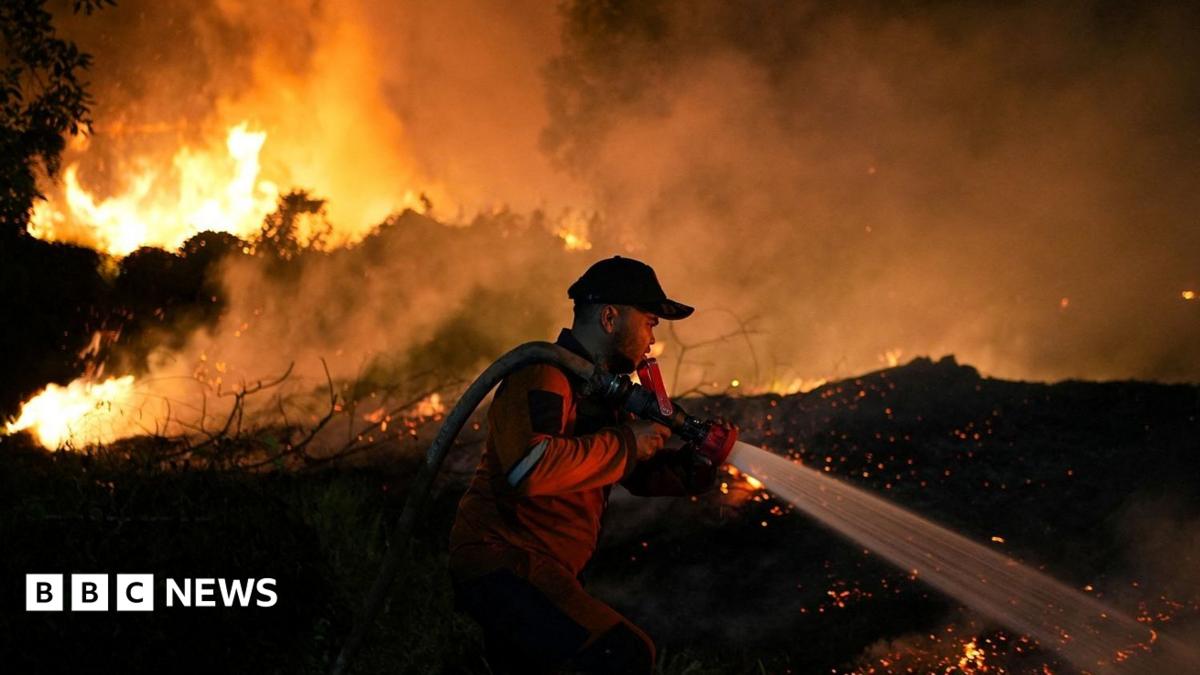
Stench from wildfires seeps through our maskspublished at 04:01 BST
04:01 BST
Quinawaty Pasaribu
Reporting from Banjarbaru, South Kalimantan
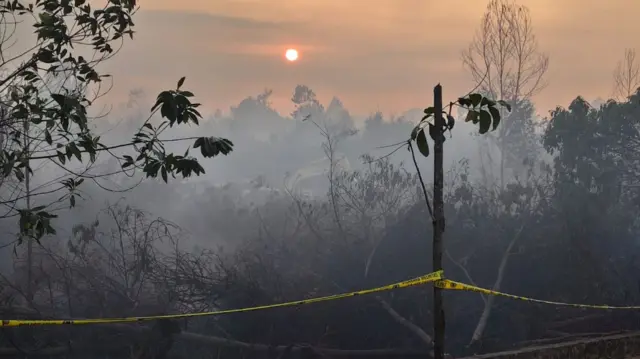
This morning, I travelled to Banjarbaru, about an hour by car from Banjarmasin. Compared with what I experienced last night in Banjarmasin, the air quality this morning in Banjarbaru felt significantly worse.
White haze was visible throughout much of the drive into the city, and the smell of smoke was strong enough to make breathing uncomfortable. Even while wearing a high-filtration mask, I could still detect the odor from recent fires.
Some residents I passed by on the streets were wearing masks, while others went about their day without them. Despite the haze, visibility remained relatively safe. During periods of dense smoke, visibility can deteriorate dramatically to no more than five to ten meters.
At around 6:30 local time, I visited the Guntung Payung area, where parts of a thin peatland tract owned by locals appeared to have burned recently. The ground was blackened, and white smoke continuously seeped from the surface, as if a fire were still smoldering beneath the soil.
Land and forest fires around Banjarbaru, the capital of South Kalimantan, have burned about 1,263 hectares (3,120 acres) over the past two months, with some of the worst damage occurring near the city’s international airport and surrounding protected forest areas.