
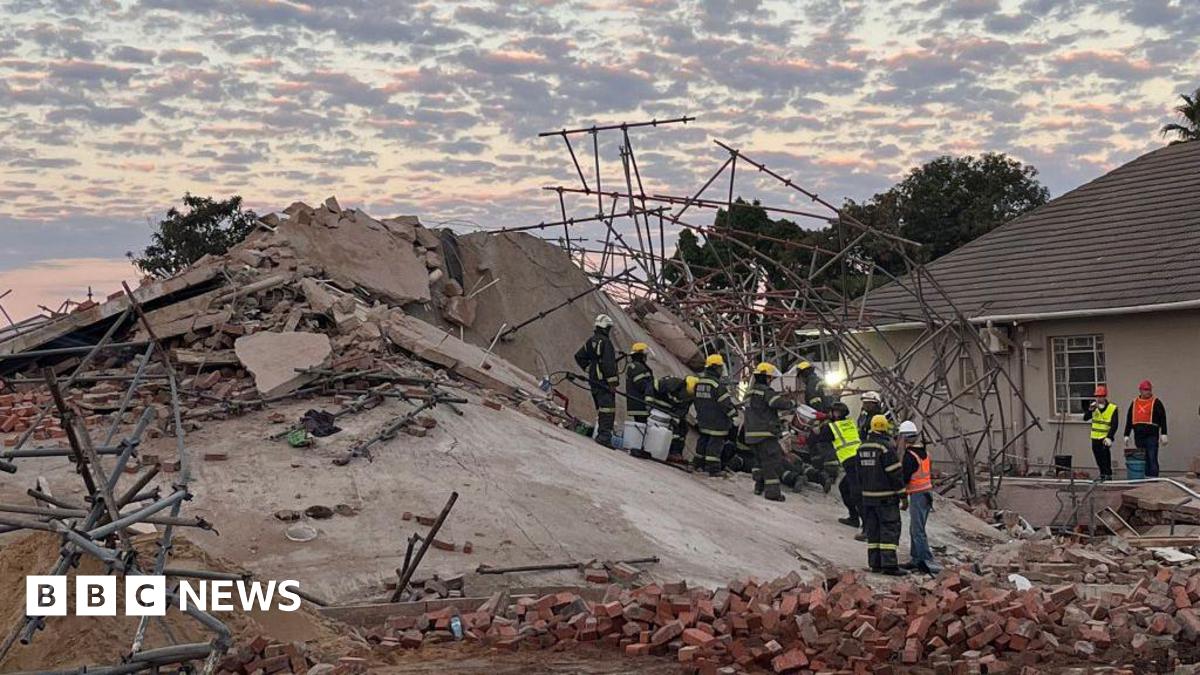
Some of the defects were detected a year before the collapse. The health and safety officer even resigned in protest but work continued, the report found.
“The work should have stopped,” Macpherson said.
He added that these signs were a chance to turn back but instead, problems with the building were “covered up”.
Workers reported feeling vibrations in the structure, and being told to cover up holes with sand and substandard concrete, the report revealed.
Following what the minister described as an “emotional and painful” private meeting with survivors and families of victims, he called for criminal accountability for those found to have been negligent.
A police investigation is under way but no arrests have been made.
Many survivors are still facing trauma, medical bills and struggling to put food on the table, Macpherson said.
Electrician Delvin Safers was pinned under the tonnes of concrete and mangled metal for 28 hours. He sent voice notes to his family believing he might die.
A colleague of his was killed instantly as the concrete fell on top of them.
After his rescue Mr Safers told the BBC he had noticed no warning signs, but believed that if shortcuts were taken during construction, then those responsible “should be held accountable”.
He did not attend the minister’s briefing but his father Deon, who did, told the BBC that he was impressed by the report.
“We want justice,” he said, adding that his son had received no compensation
Another survivor of the disaster, Elelwani, tearfully told local media, that her life had changed in the last year.
She lost many teeth, struggles to eat and has been the subject of bullying. She appealed for money from well wishers.
Macpherson pledged to introduce regulations to improve oversight in construction and reform outdated legislation.
The probe was conducted by the Council for the Built Environment and a parallel investigation by the Engineering Council of South Africa.