
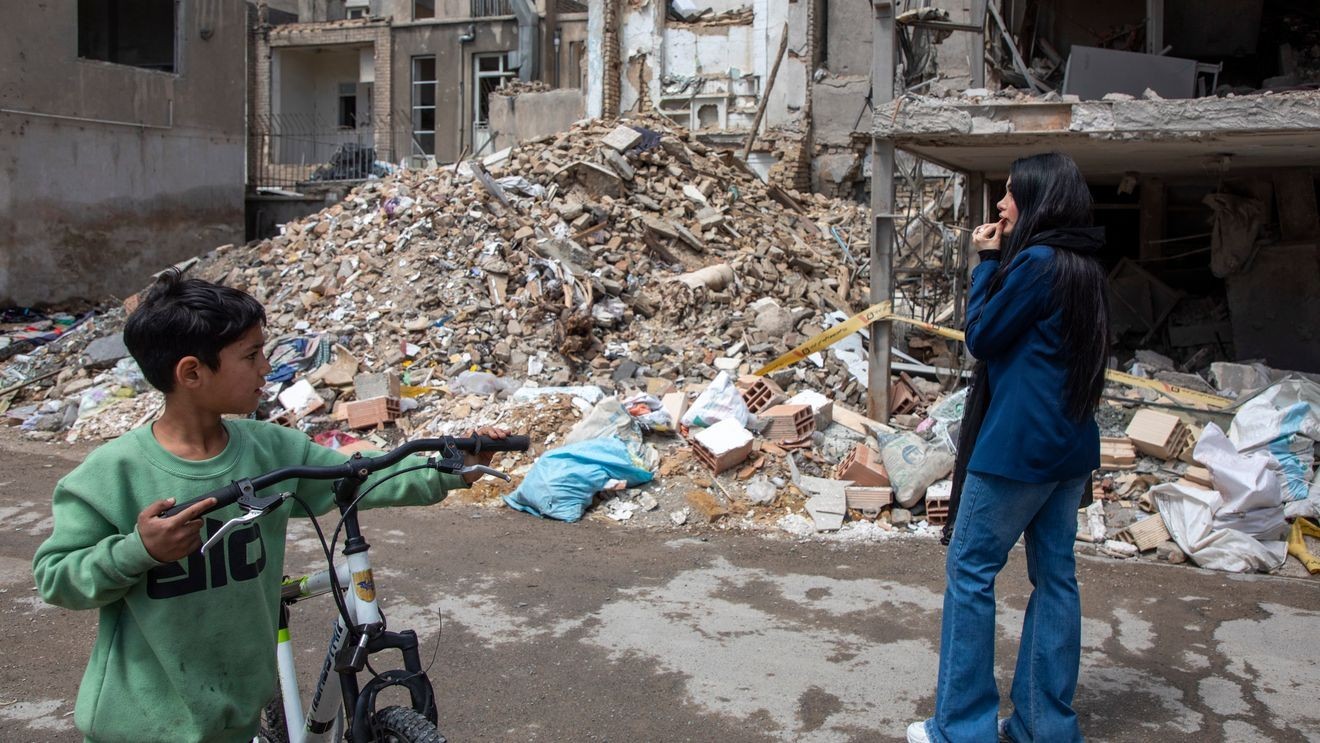
WASHINGTON (TNND) — Renewed fighting between the United States and Iran is raising tensions once again in the Middle East, renewing threats of mass destruction as the war grinds into a seventh month with no clear off-ramp in sight.
Fighting escalated again after the U.S. hit Iranian rocket launchers on an island in the Strait of Hormuz over the weekend. The U.S. said Iran was planning to use them to lay mines in the waterway, which has become a key point of contention in the conflict.
Since then, Iran has retaliated by firing on American military bases in the Middle East and threatened further action after state media claimed a U.S. strike hit a home hitting a wedding in a town that overlooks the strait.
The U.S. and Iran had been locked in a tenuous holding pattern for weeks, backing off from full-scale war to tit-for-tat strikes amid a stalemate over the Strait of Hormuz. While analysts say both sides would like to avoid a return to all-out war, tensions are running high amid threats to impose greater levels of damage that could spiral into a broader conflict.
The increasingly ominous threats appear to be aimed at convincing Tehran that continued resistance will result in imposing costs it cannot handle. But Iran has shown no signs of backing down, raising questions about what can be done to break the impasse.
President Donald Trump threatened increasingly damaging attacks if Iran continues to retaliate while making calls for the Iranian people to rise up against the regime.
“If the failed Nation of Iran retaliates for this very justified attack, they will be hit again at a much harder and higher level, but it will not be the biggest attack of them all, that is waiting in the wings and, when it is over, there will be very little left of the Islamic Republic of Iran!” Trump wrote on social media on Tuesday.
The president’s repeated threats and declarations Iran is nearing collapse from military victories and economic penalties have run into fierce resistance from Tehran. Iran’s government, which has become more hardline since the initial wave of strikes at the start of the war took out many of its key leaders, has refused to give into American demands over the strait, its military and nuclear program.
While Iran has suffered significant losses throughout the conflict, it has also gained some leverage by stalling traffic through the strait and targeting neighboring countries’ energy facilities, squeezing the global economy. That leverage has given Iran incentive to try to withstand military and economic pressure long enough to force the U.S. to reconsider its options.
“They’re going to continue to say that they have to stand up because anything short of that for the Islamic regime is a loss and they lose face, but they also lose — what they would perceive — the war,” said Mark Chandler, former director of Defense Intelligence Agency’s Middle East and Africa Center and professor at Coastal Carolina University. “Iran thinks they’ve got the upper hand right now, so they’re going to continue that.”
While Israel has mostly been on the sidelines since a peace agreement was reached in April, some of its leaders have ramped up threats toward Iran as tensions have escalated over the last week. On Thursday, Israeli Defense Minister Israel Katz threatened to send Iran “deep into the Stone Age and darkness” if Tehran attacked the country.
“An Iranian attack on the State of Israel would free Israel from any existing limitations on attacking Iran,” Katz said. “We would cripple all of Iran’s national military and civilian infrastructure, including energy infrastructure, and would send Iran back to the Stone Age and darkness.”
Katz said there were signs of mounting military and economic pressure on Iran that could push the regime to take “desperate measures,” the Times of Israel reported. Those threats also come after Iran warned the U.S. that it would respond forcefully to an Israeli offensive in southern Lebanon where Iranian military personnel are embedded with Hezbollah fighters.
Israel has fought a series of wars against Hezbollah, with the latest one starting after the militant group fired missiles over the border following the start of the conflict with Iran. Lebanon and Israel reached a deal in June where Israeli forces would withdraw from occupied areas in southern Lebanon in exchange for the disarmament of Hezbollah, but little progress has been made toward that goal.
An Iranian attack on Israel would threaten to reopen an expanded conflict that would put even more military pressure on Tehran and create greater challenges for Washington to persuade the Israeli military to scale down strikes.
“That’s where a miscalculation could come into play because what we’ve seen since the ceasefire back in April is that Iran is using the United States to put pressure on Israel not to respond and to not attack as widespread or as overwhelmingly as it was in the first few weeks of the fighting, and that has seemed to work,” Chandler said. “The U.S. will have less influence as time gets closer to the elections and the threat grows from Iran.”