
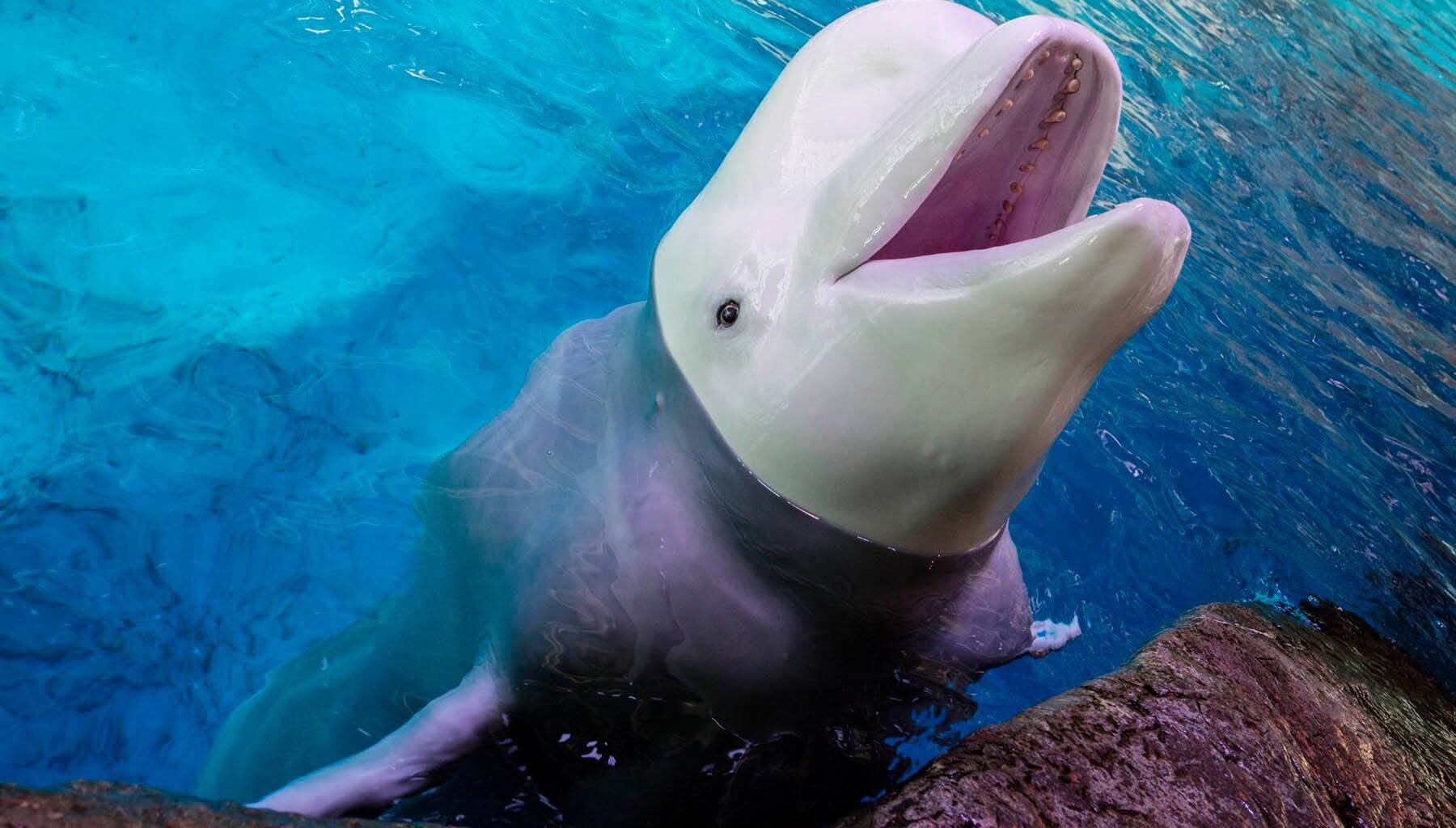
DOWNTOWN — Three beluga whales at Shedd Aquarium have died in little more than a week, including two recently transferred from a shuttered Canadian marine park and a longtime Shedd resident.
It has raised questions from animal-welfare advocates about the health of the rescued whales and the circumstances surrounding their transfer.
The deaths were unexpected, Shedd officials said, and it is not yet known what caused them or whether they are related. Necropsies, blood tests and additional exams are underway, with some answers expected to come more quickly than others.
The latest deaths came Wednesday, when Rain, a 20-year-old female who arrived at Shedd from Marineland in Ontario last month, and Beethoven, a 34-year-old male who had been a Shedd resident for decades, died despite lifesaving efforts, according to the aquarium.
The deaths came eight days after Peekachu, a 23-year-old female who was also transferred from Marineland, died suddenly at Shedd.
“Losing Beethoven and Rain so soon after Peekachu carries a profound weight for the people who knew and cared for them,” the Shedd said in a statement.
Beethoven was born in 1992 and was the oldest adult male in Shedd’s beluga pod and its second-largest beluga, measuring at 14 feet long and weighing 1,900 pounds.
As a member of the aquarium’s original pod of eight belugas, Beethoven became a familiar presence to generations of Shedd visitors who learned about belugas and the threats facing the species through the aquarium’s exhibits and programs.
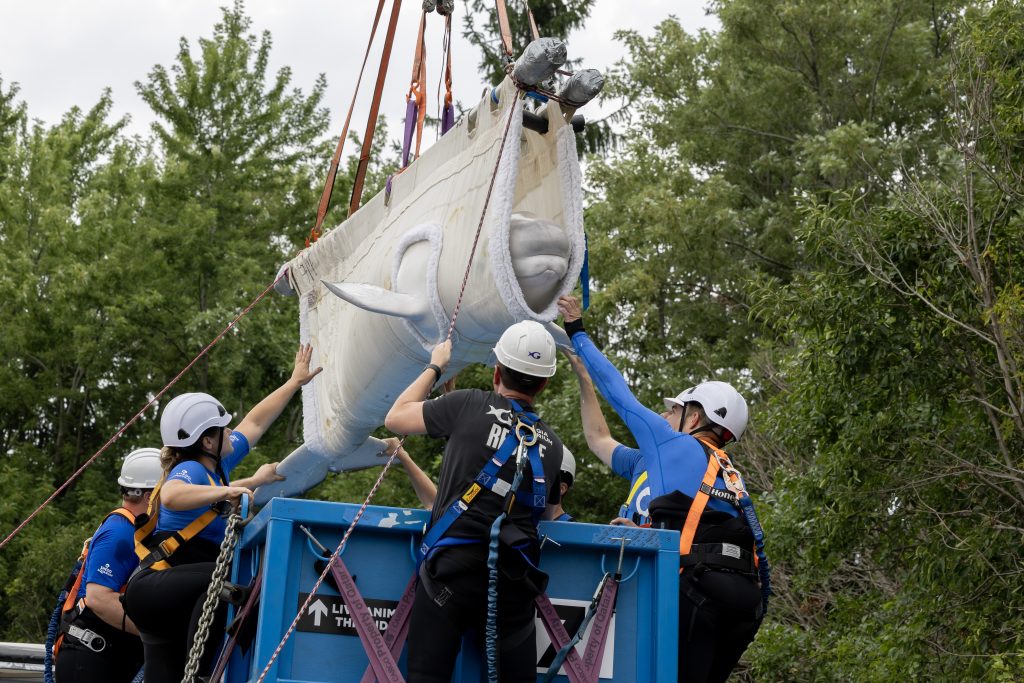 The Shedd Aquarium received four additional beluga whales last month as part of an unprecedented international rescue effort. Credit: Brenna Hernandez/Shedd Aquarium
“He was part of the fabric of Shedd’s mission to spark compassion, curiosity and conservation and was a familiar presence to millions of guests who encountered the beluga pod over the years,” the aquarium said in a statement.
Rain had been at the Shedd for several weeks. She arrived in August as part of the second group of belugas rescued from Marineland.
Shedd said its teams had been getting to know Rain’s personality and her relationships with the other belugas while providing supportive care as she acclimated to her surroundings.
“Rain was only beginning her story here,” Shedd officials said.
Shedd received its first four rescued belugas in July and four more in August. The whales are part of an international effort to relocate 30 belugas from Marineland, which closed in 2024.
The rescued whales have remained out of public view as they settle into their new surroundings. Shedd has been monitoring them around the clock, observing their behavior, eating habits, breathing and interactions with one another and adjusting their care based on the animal’s needs.
“Bringing the rescued belugas safely to their new surroundings was an extraordinary milestone, but it was never the end of the rescue,” the Shedd said in a statement. “Helping the whales settle in and providing ongoing care was also a part of the challenge and commitment.”
“From the beginning, we understood that every rescued whale would come with an individual history, health profile and set of needs, and that acclimation would look different for each animal. That remains true today,” the statement continued. “What is also true is that Beethoven and Rain were two individual animals, each known and cared for in their own way. Each tremendously missed.”
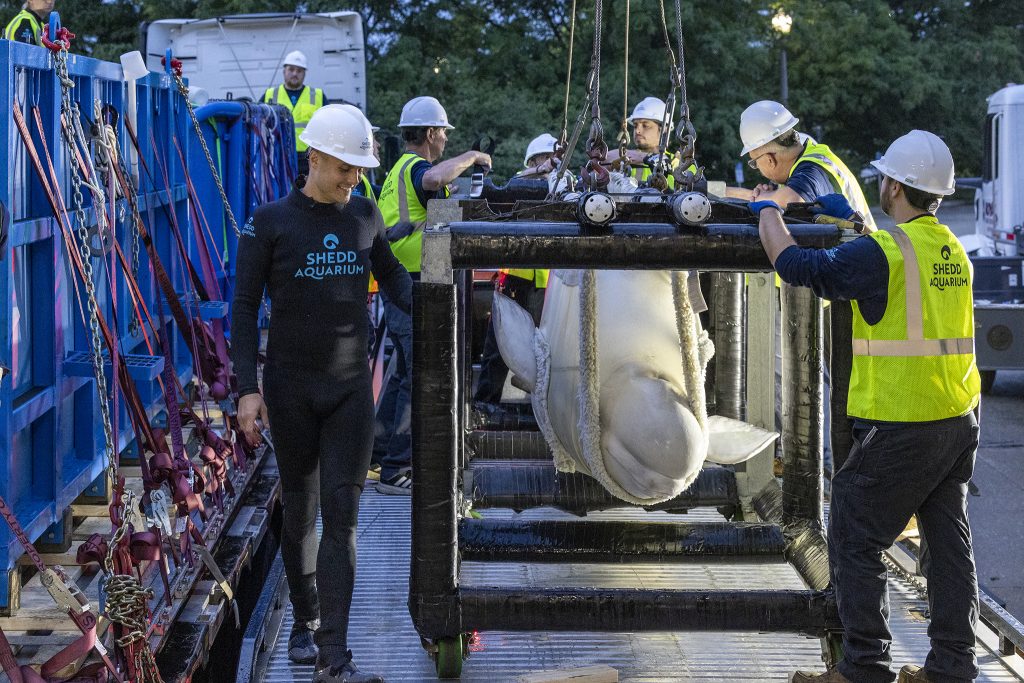 The first four of 10 rescued belugas arrive at the Shedd Aquarium. Credit: Shedd Aquarium
Advocates: Deaths Warrant More Scrutiny of Beluga Transfer
Animal-welfare advocates say the deaths warrant greater scrutiny of the transfer and the whales’ health.
Lori Marino, a neuroscientist and founder of the Canadian-based Whale Sanctuary Project, said there has been insufficient public information about the whales’ health before they left Marineland.
“They just sort of moved them all out and no one knows what condition they were in when they moved,” Marino said. “If they were sick when they moved, the stress of that is just going to add to that.”
Marino said Beethoven’s death is particularly concerning because “he was fine” as an existing Shedd resident.
“It’s scary to think about the possibility that it could’ve been a pathogen transferred to the tank, it could be the stress of accommodating these new whales,” Marino said, while noting the cause of Beethoven’s death is not yet known.
Marino also expressed concern about the rapid expansion of Shedd’s beluga population, which went from eight whales to 16 in a matter of weeks.
Shedd officials did not immediately respond to questions about Beethoven’s death Thursday afternoon.
The Whale Sanctuary Project has advocated for moving captive whales to seaside sanctuaries rather than conventional aquariums. Marino said her organization had contacted Marineland about moving some of its belugas to a sanctuary they are developing with more than 100 acres of ocean. She said Marineland was not interested.
Marineland did not respond to a request for comment.
“We would’ve liked to work with Marineland to find a better solution for the future of these whales, some of them coming to sanctuaries,” Marino said.
World Animal Protection also called for greater transparency following the deaths.
“This latest tragedy points to the need for a different future,” Melissa Matlow, World Animal Protection’s campaign director, said in a statement. “Seaside sanctuaries can provide whales who cannot be released into the wild with lifelong professional care in a more natural environment, without breeding, performances or exploitation for entertainment.”
The organization said officials should disclose what independent veterinary and health assessments found about each whale before transport, who determined the whales were healthy enough to travel and whether the welfare of each individual animal was the overriding consideration.
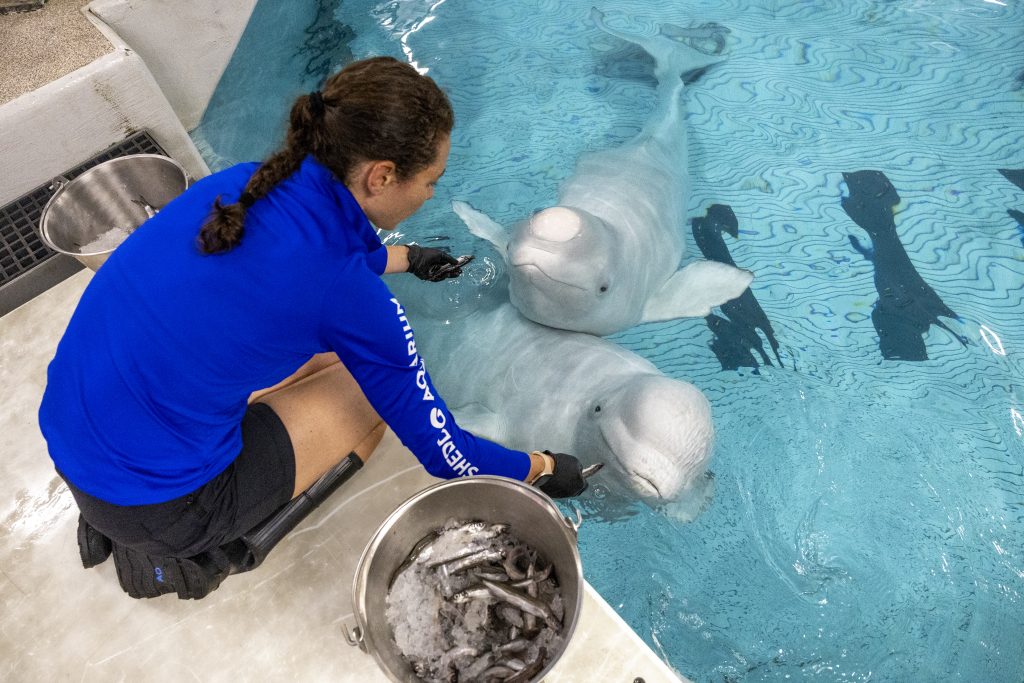 Beluga whales are fed at the Shedd. Credit: Shedd Aquarium Heidi Zeiger
Previous Whale Deaths At Shedd Caused Controversy
The deaths are not the first time Shedd has faced losses among its belugas.
At least nine belugas have died at Shedd before the most recent deaths, according to records compiled by Ceta-Base, a database tracking captive cetaceans. The historical list includes adult whales as well as calves and stillborn animals.
Among the more notable incidents occurred in September 1992, when two beluga whales died within minutes of each other being given anti-parasite medication. The whales had arrived at Shedd weeks earlier.
“These whales died to serve a tourist attraction,” a spokesman for the International Wildlife Coalition said at the time, the Sun-Times reported. “It’s horrific.”
More recently, a 41-year-old beluga named Mauyak died in 2022 after more than three decades in human care. Shedd said at the time that she was the matriarch of its beluga pod.
In April 2025, Shedd euthanized Kayavak, a 25-year-old beluga born at the aquarium, after veterinary teams determined she would not recover from a serious medical condition.
______________________________________________________________________
Support Local News!
Subscribe to Block Club Chicago, an independent, 501(c)(3), journalist-run newsroom. Every dime we make funds reporting from Chicago’s neighborhoods. Already subscribe? Click here to gift a subscription, or you can support Block Club with a tax-deductible donation.
Listen to the Block Club Chicago podcast: