
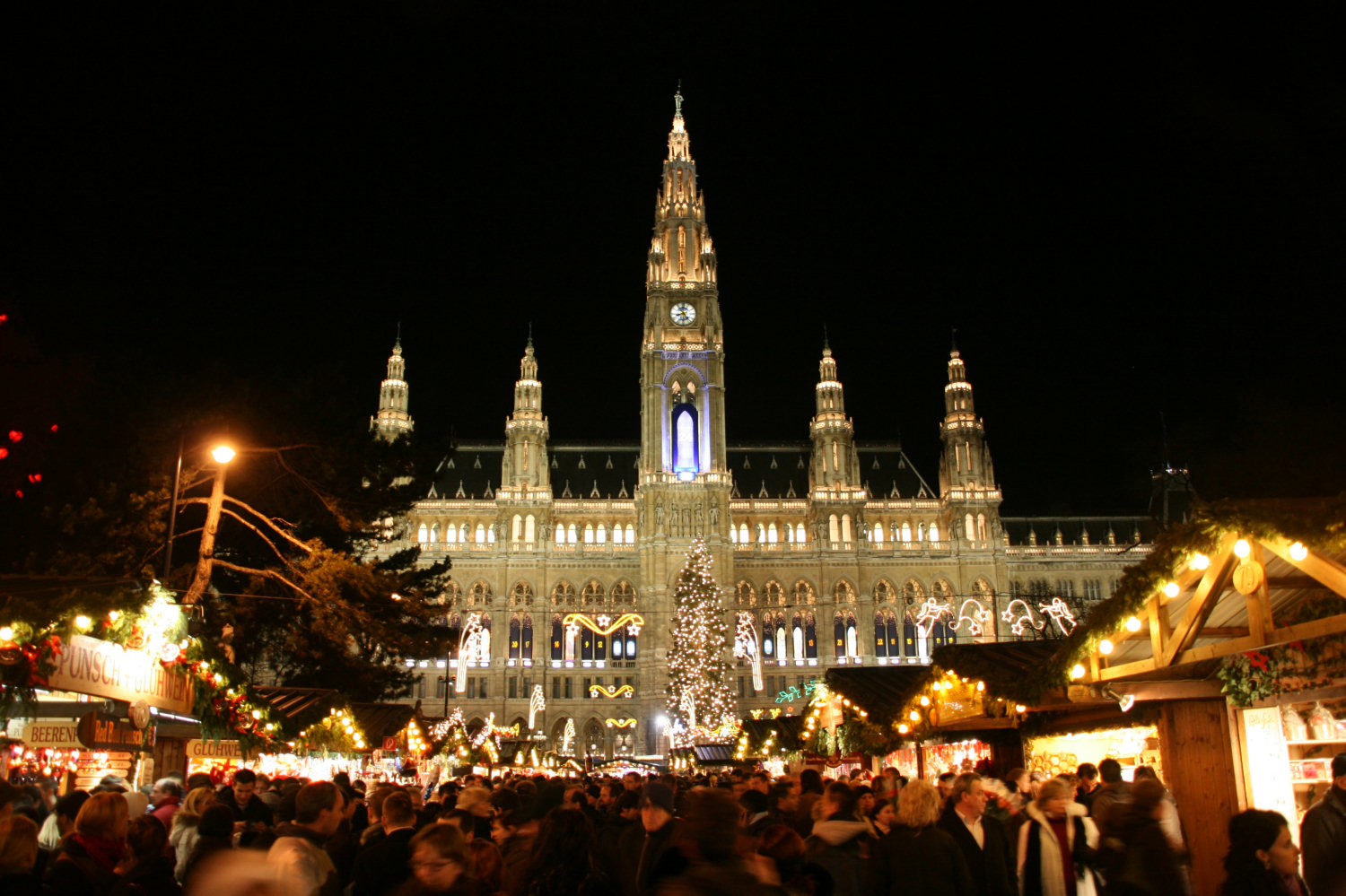
After several weeks of bidding process, culminating in a duel between two cities, Vienna earned the right to host Eurovision 2026, by beating its competitor Innsbruck. It marks the return of a capital city host for the Contest, after several years of “medium-large” non-capital cities hosting the event. The Grand Final will take place on May 16, as expected.
The announcement was made by the director-general of the host broadcaster, Austria’s ORF, during the morning program of the pubic radio Hitradio Ö3, at 08:15 CEST, and by the EBU on Youtube at the same time.
This article will be updated as more details become available.
Hosting hat-trick for Vienna
Vienna will host the Contest for the third time, joining Malmö and Copenhagen in this privileged club. It will also be the second time in the Wiener Stadthalle, as the arena also hosted the 2015 Contest, after Conchita Wurst’s victory in Copenhagen.
Built in the 1950’s, it is a multi-hall complex, with Hall D boasting a capacity of more than 10,000 and welcoming the Contest again. It remains to this day the largest arena in the country.
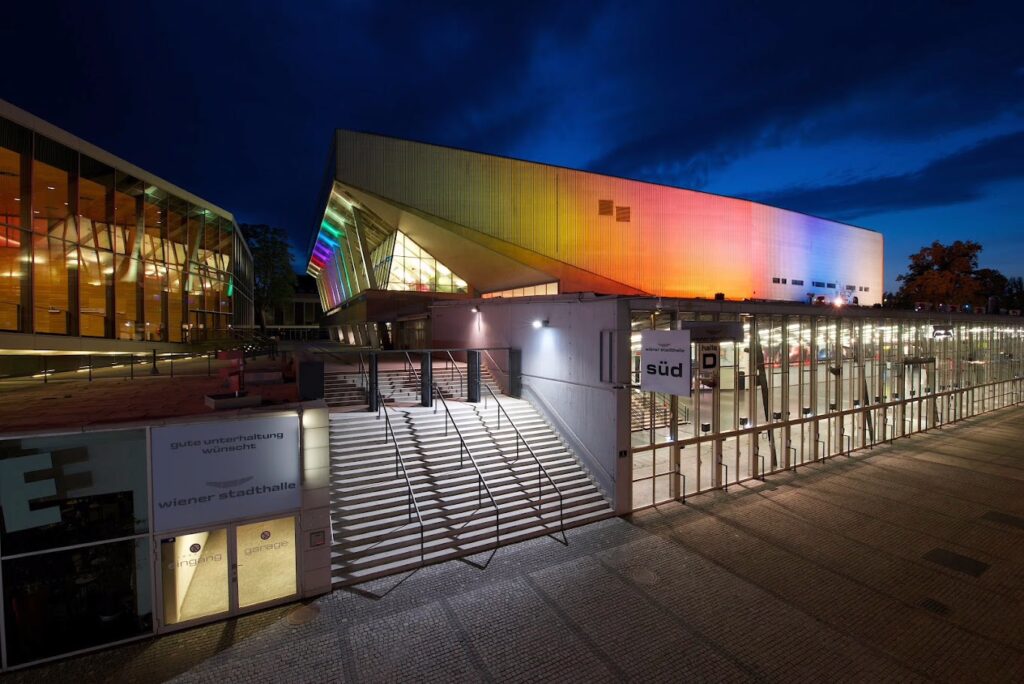 The Wiener Stadthalle at night
The shows will take place on the week of May 11, with the first semi-final on May 12, the second one on May 14 and the Grand Final on May 16.
The EBU is thrilled that Vienna has been selected as the Host City for the Eurovision Song Contest 2026.
‘
Vienna’s reputation as one of the most musical cities in the world, and its location in the heart of Europe, makes it the perfect Host City for the 70th Eurovision Song Contest.
The city’s exceptional Stadthalle was a great venue for the 60th Contest in 2015 and we’re very much looking forward to welcoming delegations, artists and fans alike back there next May as the world’s largest live music event celebrates 70 glorious years of being United by Music.
Together with Host Broadcaster ORF and the city of Vienna we will create a spectacular celebration of music that will reverberate across the world.
Martin Green, Eurovision Director “Europe, shall we dance?” — Eurovision back in a large city
Vienna is the capital city of Austria, and is its own federated state in the country. The Contest will thus return to a large, capital city for the first time since 2018 (or 2019, depending on who you ask), after several years of host cities getting smaller with every edition. While the canton of Base-Stadt has about 200,000 inhabitants, Vienna boasts ten times this number, with 2 million.
The Viennese bid went with a special slogan, “Europe, shall we dance?”, calling back to the traditions of the Viennese Balls, most of which happen during an traditional winter “season” between November 11th and Shrove Tuesday. The imagery was already used back in 2015, with dancers and figurants dressed in formal attire in the arena during the introduction of the first semi-final, for example.
A “unanimous” choice for an accessible city
According to the EBU’s press release, the Director General of ORF stated that Vienna was unanimously assessed as the most practical and economical choice to host Eurovision 2026.
After thorough examination and based on a unanimous jury assessment, ORF concluded that Vienna’s offer is not only the most attractive in terms of infrastructure and logistics but also economically. The Contest is a celebration for all of Austria, which we will all be proud of.
Roland Weißmann, ORF Director General
Austria is served by two international airports (Vienna’s and Bratislava’s), and directly connected by train to most of Europe, as we observed in our “bid analysis” article.
Announcements on the rest of “side” Eurovision events are expected soon, but the mayor of Vienna has confirmed that the bid offered several ESC events free of charge, in public spaces. In 2015, for example, the City Hal square was used as the Eurovision Village.
In Vienna, we can be proud that our city has been selected by the EBU and ORF as the most suitable Host City for one of the world’s largest events.
We submitted a convincing overall package with enormous accommodation capacities, excellent infrastructure, and a lot of experience in hosting international events. Additionally, we placed great emphasis on offering numerous Eurovision Song Contest events in public spaces that can be visited free of charge.
As the Mayor of Vienna, it is very important to me that cultural events are accessible to everyone, regardless of the size of their wallet. As the Mayor of Vienna, I am, of course, pleased that Vienna was able to prevail and that Austria can represent itself again next year. We will have a great May together; I am convinced of that.
Michael Ludwig, Mayor of Vienna Third time hosting for Austria, on an anniversary date
Just like Switzerland this year, this will mark the third Austrian hosting of the contest, once again on an anniversary. After winning for the first time in 1966 (with Udo Jürgens), on the 10th anniversary of the competition, Austria hosted in 1967 in Vienna. Decades later, after Conchita Wurst’s victory in Copenhagen, Vienna hosted the Contest a second time, in 2015, for the 60th edition.
With the cancellation of the 2020 edition, 2026 will mark both the 70th edition of the Contest and its 70th anniversary. For the occasion, a new logo was unveiled earlier this week.
How do you feel about this choice? Did you expect it? Will you try to go to Vienna for the Contest? Tell us more in the comments below or on social media at @escxtra!
Copy URL URL Copied