
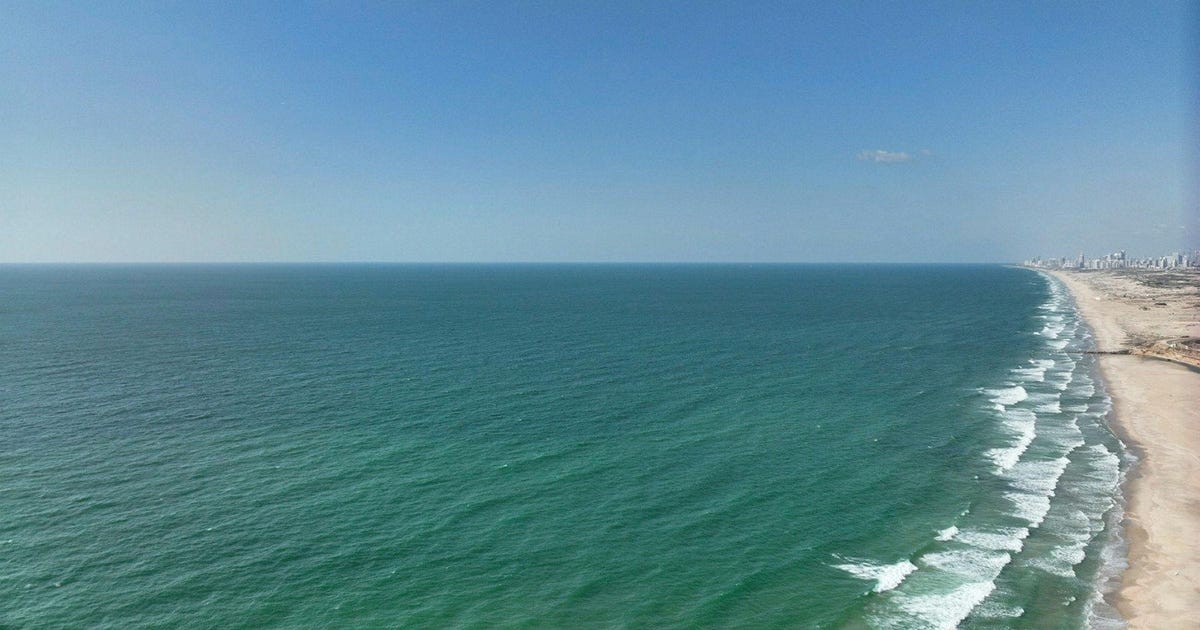
Israel’s water supply has returned to normal after a week of disruptions caused by a massive algae bloom that temporarily shut down most of the country’s desalination plants, the Water Authority said Friday.
The authority said water is now being supplied normally to households and agriculture through the controlled operation of some desalination facilities, increased flows from the Sea of Galilee and hundreds of groundwater wells. Over the weekend, when private consumption is due to decrease, Mekorot will fill reservoirs to ensure regular supply next week as well.
At least one desalination plant is being operated despite high levels of turbidity in the seawater, with authorities opting to risk damage to its membranes rather than further disrupt the water supply.
The Water Authority did not provide an estimate for when the algae crisis would end.
 Close
Close
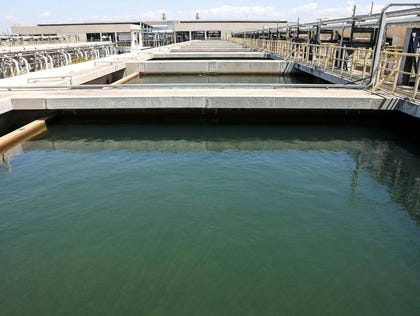
The Sorek desalination plant in Rishon Letzion, April. Credit: Ofer Vaknin
The Sorek desalination plant in Rishon Letzion, April. Credit: Ofer Vaknin
//
Earlier this week, Israel’s Water and Sewage Authority sprayed a large quantity of pesticides off the coast of the southern city of Ashkelon without notifying the public, in an attempt to curb the massive algae bloom.
Several sources familiar with the matter told Haaretz that the substances involved could cause environmental damage. The Energy and Infrastructure Ministry stated that the decision was coordinated with the Environmental Protection and Health Ministries and approved by an interministerial committee for issuing permits to dump substances into the sea, headed by the Environmental Protection Ministry.
Israel’s Water Authority said that the chemical sprayed into the Mediterranean belongs to the self-described environmental startup BlueGreen Technologies and is intended to decrease the algae population in the water. BlueGreen develops technologies for cleaning water sources, including algae treatment. The substance was dispersed over several flights, and its effects are now being analyzed, with results expected within 48 hours.
The Health Ministry, however, believed there was some degree of risk in using the substance and therefore recommended a ban on fishing in the area where the chemical was applied. It recommended that fishing resume only after monitoring results show that there are no abnormalities in fish or biodiversity and no indication of a risk to public health. The recommendation was also accepted by the Agriculture Ministry, which is responsible for regulating fishing activities by law. On Thursday evening, the ministry issued a notice prohibiting fishing in the area.
According to the latest report from the Hydrological Service at the Water Authority for the month of August, the desalination plant crisis comes at a very complex time for Israel’s water security. Lake Kinneret’s level is below the red line of 213 meters below sea level. The last two years have been recorded as the driest in the lake’s drainage basin in the past 100 years.
Related Articles
In one of the main groundwater reservoirs, the coastal aquifer, the level in the northern area is above the red line, but most of it cannot be utilized for supply due to engineering reasons. Conversely, more water can be tapped in the southern part of the aquifer, but the level there is near the red lines. A continuation of the algae crisis for several weeks could thus pose a risk to Lake Kinneret and groundwater reservoirs.
Five of Israel’s six desalination plants were shut down Tuesday for the second time in days after unusually high water turbidity along the Mediterranean coast made the water unsuitable for desalination, cutting off about 80 percent of the country’s desalinated water supply. Two of them were partially reopened later in the week.
 Close
Close
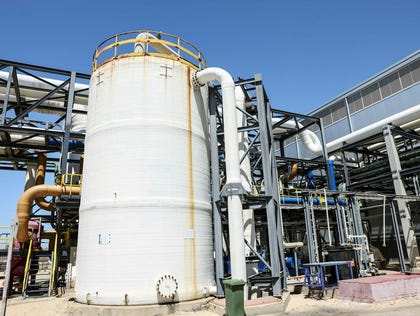
The Sorek desalination plant in Rishon Letzion, April. Credit: Ofer Vaknin
The Sorek desalination plant in Rishon Letzion, April. Credit: Ofer Vaknin
The Water Authority and Energy Ministry assess that the turbidity was caused by unusually high concentrations of microscopic algae, apparently linked to conditions created by a storm in the eastern Mediterranean over the weekend. Scientists do not know the exact reasons for the unusual algal bloom, which undoubtedly began in the Nile Delta before moving northward to Israel’s Mediterranean coast. It is likely that it intensified due to the large amounts of raw sewage being discharged into the Mediterranean from Gaza, the result of the Israeli military’s destruction of sewage treatment plants and sewage pipes in the Strip during the war.
Desalination plants provide nearly one-third of Israel’s total annual water consumption, which also includes water from natural sources and treated wastewater.