
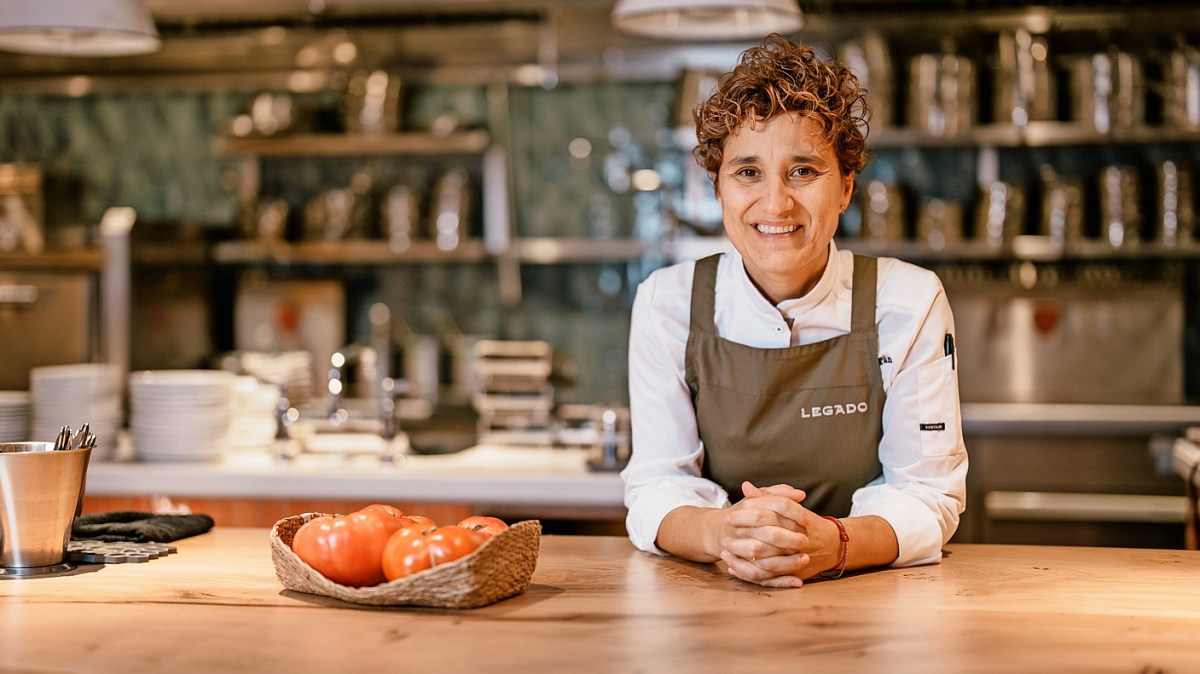
A new concept from chef Nieves Barragán Mohacho is coming to east London at the end of August — and it promises to invoke as much duende in customers as an Andalusian flamenco performance.
Barragán Mohacho is the supremely skilled chef from Bilbao who ditched Simply Nico and French haute cuisine in general to join as sous chef at the legendary Fino. She went on to take Barrafina on Frith Street to its first Michelin star in 2013, before opening her own restaurant, Sabor, in 2018, which won its own Michelin star after just eight months. Seven years later, Legado, which means legacy in Spanish, will open in Shoreditch.
“It’s called Legado because it’s a legacy of my travels, my knowledge, my childhood,” she tells me over the phone from the site, where the hustle to get the restaurant open on time is in full swing. She pauses. “I mean, it’s beautiful.”
• Your guide to life in London: what’s new in culture, food and property
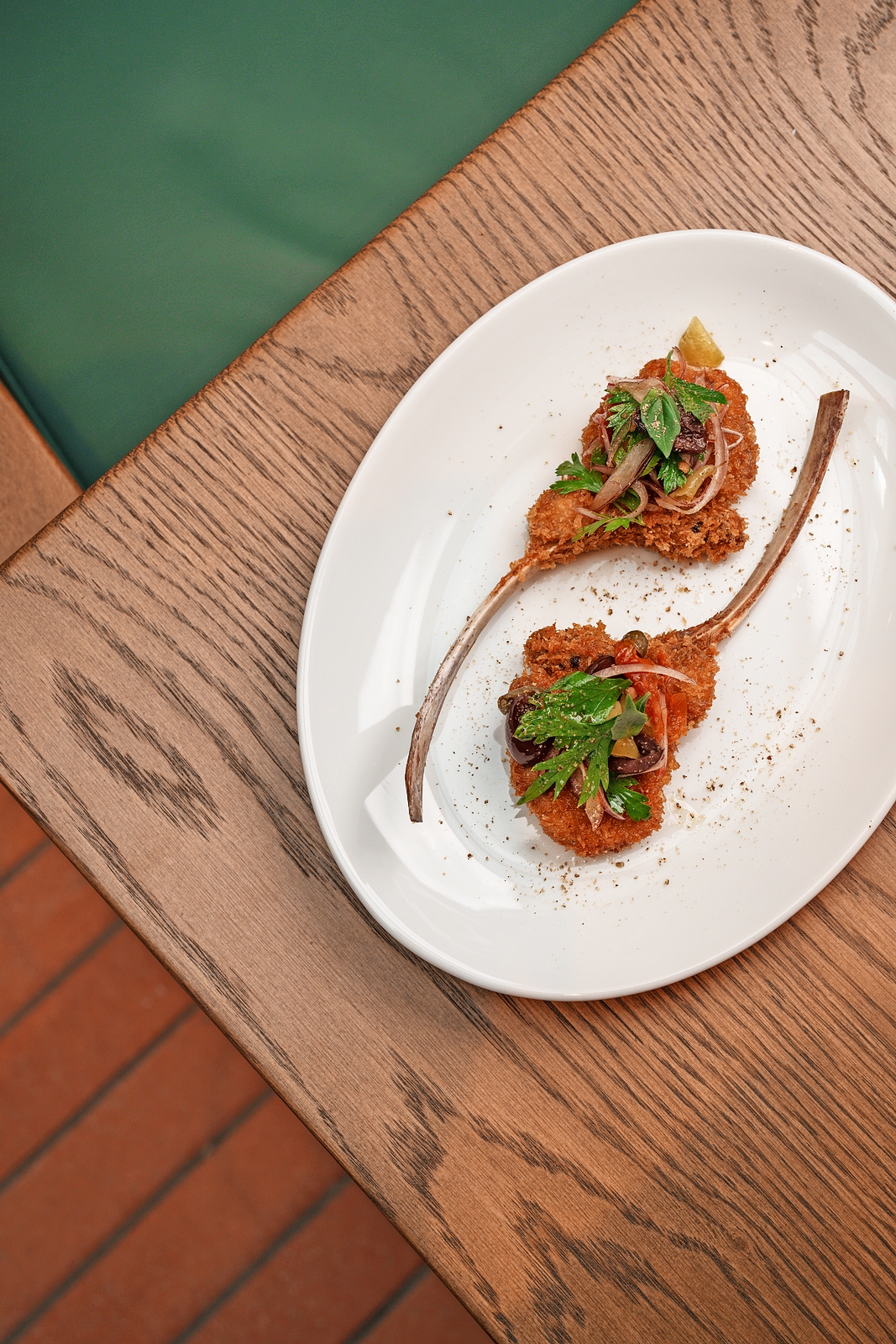
The restaurant features a striking, contemporary design in green, plaster pink, and terracotta tones, set within a dramatic double-height dining room with exposed brickwork, a wine wall, and an open kitchen framed by a 16-seat wooden counter around two custom-built ovens from specialist craftsmen in Madrid. “When I went inside on Monday, my body [felt] this emotion of happiness. It was powerful,” she says.
Like Sabor, the multipurpose space will cater to different needs. “It’s a restaurant that’s for everyone, at any time, any feeling,” Barragán Mohacho says. When customers enter the space, they’ll first encounter “a real buzzy taverna” that’s “elegant and rustic”, to make them feel like they’re in Segovia, where intricate tiles adorn the façades of houses. At the taverna, the focus will be on chomping down pintxos while sipping on vermouth or one of the seasonally changing three-sip drinks presented in bespoke ceramic cups representing different regions of Spain. In the 64-seat main dining room, guests will be flooded with natural light.
The fare takes inspiration from her hometown of Bilbao in the Basque country, but isn’t restricted to the area. Barragán Mohacho will present comforting, nostalgic dishes from the southern tip of Andalusia to the dramatic northern coastline of Galicia, all deeply rooted in tradition and often reflective of the country’s nose-to-tail ethos. “It’s the diversity of the gastronomy that we have in Spain,” she says. But it also reflects the diversity of her diet growing up, where her mother’s daily trips to the butchers might mean lamb brain one day, lamb sweetbreads the next and rabbit after that.
• Read more restaurant reviews and recipes from our food experts
At Legado, this will mean dishes like braised lamb neck empanada, and a Koffmann-esque pig’s trotter dish which will involve braising, removing their insides, stuffing them with prawns, before frying, rolling and cutting, and serving with a Basque viscaina sauce — an earthy, sweet red concoction made from dried choricero peppers.
As important as using the whole animal is the sourcing of the meat. Prized for its quality, lamb from Zamora in Castile and Leon will appear on the menu in dishes that span the Basque country to Mallorca; suckling pig from Tabladillo in Segovia will be one of the few products making the move over from Sabor; and Iberico ham from acorn-fed pigs that roam the dehesa (oak savanna) of Señorio de Montanera in Extremadura.
As for sea creatures, fin-to-gill will be no less important, with whole fish brought in and butchered, and dishes to include cheeks, heads and other lesser-known cuts following the kind of Basque approach that brought the world the wonder of kokotxas al pil-pil. The catch of the day will depend on the highest quality of fish available and it will be served as a half with an ajada sauce from Galicia, with guests invited to choose from either the gelatinous-rich head end or the leaner tail end.
And what to drink with such dishes? There will be a large sherry offering, “because I think sherry is underrated,” she says and a bigger space offers more room for wine — the 150-bin list showcases Spain’s finest, from modern classics and minimal-intervention artisans to small growers reviving indigenous grapes, island wines, gastronomic rosados, and a broad range from the iconic López de Heredia.
There may be serious cooking and a savouring of heritage at the heart of this new venture but, for Barragán Mohacho, the goal is simple: “I just want to create a restaurant that is fun.” Whether guests spend £20 on pintxos in the taverna or indulge in a siesta-inducing feast in the dining room, she wants to build the kind of place “you can visit two or three times — even in the same week.”