
Your support helps us to tell the story
From reproductive rights to climate change to Big Tech, The Independent is on the ground when the story is developing. Whether it’s investigating the financials of Elon Musk’s pro-Trump PAC or producing our latest documentary, ‘The A Word’, which shines a light on the American women fighting for reproductive rights, we know how important it is to parse out the facts from the messaging.
At such a critical moment in US history, we need reporters on the ground. Your donation allows us to keep sending journalists to speak to both sides of the story.
The Independent is trusted by Americans across the entire political spectrum. And unlike many other quality news outlets, we choose not to lock Americans out of our reporting and analysis with paywalls. We believe quality journalism should be available to everyone, paid for by those who can afford it.
Your support makes all the difference.Read more
A campaign group has launched legal action seeking to ban civil servants from wearing rainbow lanyards, endorsing Pride events and using preferred pronouns in public-facing email signatures.
The Christian Institute has claimed that civil service “endorsement” of LGBT Pride “breaches rules on impartiality” and is “clearly political”.
In a letter sent to the government before launching its action, the charity said it is seeking judicial review of staff participation in Pride events.
The action has prompted criticism from LGBT+ campaigners who said, if successful, efforts to roll back rights will take the UK “back decades”.
Deputy director of The Christian Institute, Simon Calvert, said it was “inappropriate for civil servants to be officially endorsing Pride”.
He added that he had been “shocked” by civil servants wearing rainbow lanyards in meetings, which he feels “gives the impression that their minds are closed” on alternative views.
He said: “It certainly does not communicate the kind of neutrality that taxpayers expect of civil servants.”

open image in gallery
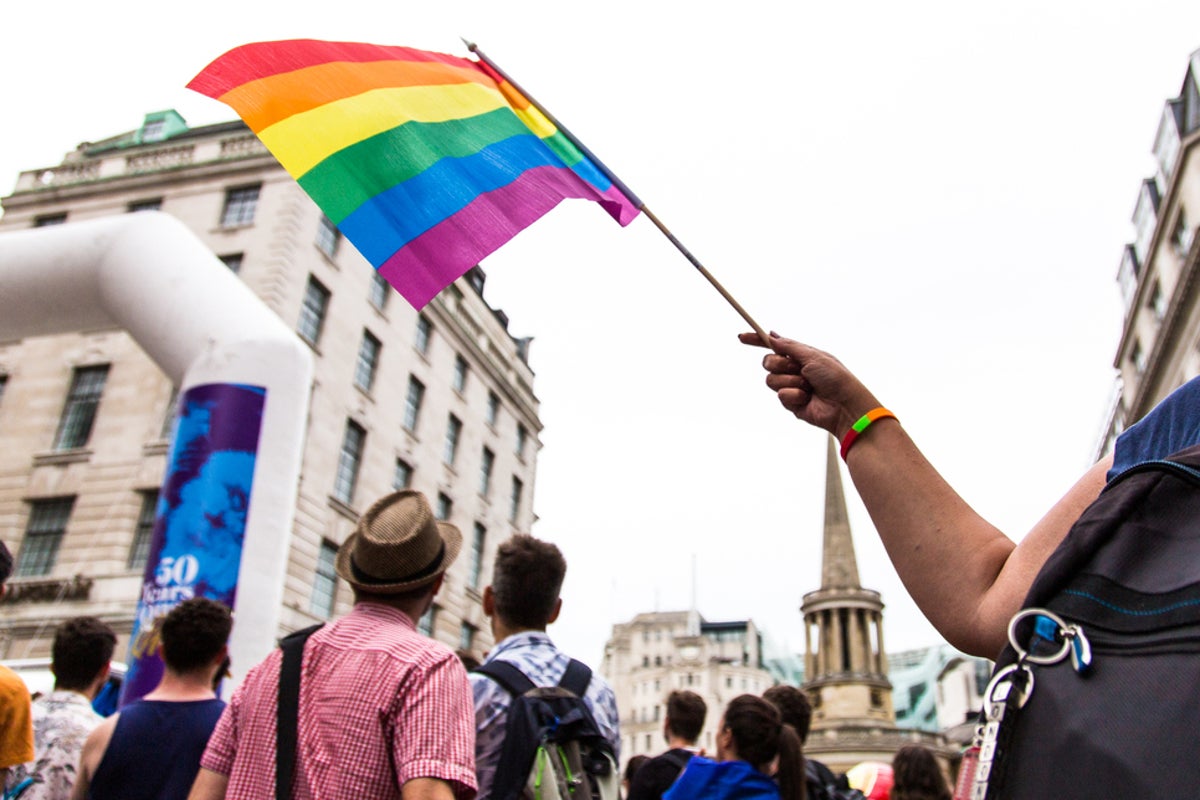
A campaign group has launched legal action seeking to prevent civil servants from wearing rainbow lanyards (Getty/iStock)
The Civil Service Code states that all employees are expected to carry out their roles with “integrity, honesty, objectivity and impartiality”.
The action has concerned LGBT campaigners, who described them as “nothing less than a fundamental attack on inclusion, freedom of speech, and democracy”.
Jess O’Thomson, Good Law Project’s community outreach lead: “We are seeing a concerted effort to rollback LGBTQ+ rights in this country. If these efforts succeed they will take us back decades.
“It’s nothing less than a fundamental attack on inclusion, freedom of speech, and democracy. We must not accept it.”
A government spokesperson said: “The civil service is committed to an inclusive environment for all staff, boosting productivity and opening up opportunities across the country.”
The charity’s action comes after a High Court judgement effectively banned uniformed police from taking part in Pride parades.
The judgment, handed down last month, ruled that officers were wrong to have taken part in Newcastle’s Pride parade last year.
The case was brought by Linzi Smith, who describes herself in court documents as a “lesbian who is ‘gender critical’,” who “believes that a person’s sex is an immutable characteristic”.

open image in gallery
The charity’s action comes after a High Court judgement effectively banned uniformed police from taking part in Pride parades (Getty/iStock)
She argued that police breached their impartiality obligations by taking part in the event and appearing under a banner supporting transgender people’s rights.
The judge, Mr Justice Linden, agreed with her and ruled that the Chief Constable of Northumbria Police, Vanessa Jardine, acted unlawfully when she allowed uniformed officers to take part in the event last year.
Reaching his decision, the judge said the chief constable’s participation was likely to be seen as “expressing the support of the head of the force for the views and the cause which the march sought to promote” and “therefore as indicating the position or perspective of the force as an organisation”.
The Independent has contacted the government for a comment.