
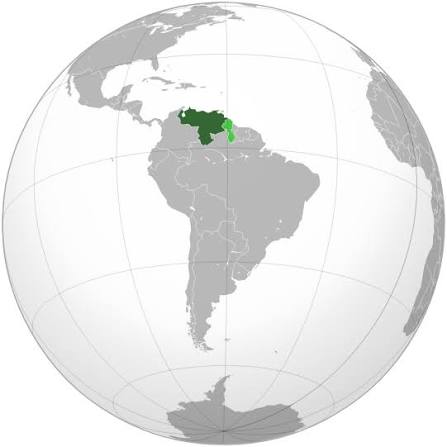
Venezuela and Israel agreed to resume consular relations on Tuesday for the first time in 17 years, signaling a major shift in Latin American diplomacy following Israeli disaster relief efforts in the country. The agreement comes after Israel dispatched humanitarian aid to civilians affected by the twin earthquakes in Venezuela, which tragically killed thousands. This pivot follows broader changes under interim President Delcy Rodríguez, who assumed leadership after the January capture of former President Nicolás Maduro by the United States. Since then, Venezuela has also re-established ties with the U.S. and reopened the U.S. Embassy in Caracas after a seven-year closure. According to Venezuelan officials, an Israeli humanitarian team visited the country following the June earthquakes, leading to direct talks between high-level representatives from both nations.
According to a post made on X by Venezuela’s Minister of Foreign Relations Félix Plasencia González, “The Governments of the Bolivarian Republic of Venezuela and the State of Israel report that they have agreed to continue bilateral technical cooperation derived from the emergency and recovery efforts following the double earthquake, as well as to establish a coordination mechanism for the provision of consular services to their respective citizens residing in both countries.” The Israeli government’s Spanish-language account on X echoed his appreciation for the cooperation in a separate post, stating that “both governments recognise the importance of the bond between the State of Israel and the Jewish community residing in Venezuela, which constitutes an important historical bridge of friendship between the two countries.”
To many, the warming of consular relations between Venezuela and Israel came as a surprise after ties seemed to be cut indefinitely in 2009, when former Venezuelan President Hugo Chávez strongly condemned Israel for its attacks on Gaza. Chávez called for the Israeli Prime Minister and American President to be tried at the International Criminal Court for their “flagrant violations of International Law,” and expelled the Israeli ambassador and his staff from Venezuela, resulting in former Israeli Prime Minister Ehud Olmert retaliating and expelling Venezuelan diplomats from Israel.
However, recent events have marked a turning point in the relations between all three countries following the United States’ intervention in Venezuela and the appointment of Delcy Rodríguez as interim President. On March 5th earlier this year, Venezuelan authorities and the U.S. State Department agreed to resume consular and diplomatic relations. A few months later, on August 11th, Israel’s Foreign Ministry and Venezuela’s Minister of Foreign Relations declared the continuation of consular relations between both countries, with Israel’s aid to Venezuela during their June earthquakes playing a large part in their decision to reignite cooperation. This rapid sequence of agreements signals a stark change in Venezuela’s foreign policy under Rodríguez.
By actively rebuilding diplomatic bridges with countries that past leaders like Chávez and Maduro firmly opposed, the interim government is reshaping Venezuela’s diplomatic relations with the world and turning away from the foreign relations doctrines embraced during the Chávez-Maduro regimes. It continues to align itself with U.S. allies despite its anti-U.S. past. While restoring these consular ties with Israel may provide travelers and citizens with immediate support, it is not a substitute for fully functional diplomatic ties. As such, if these renewed channels are to build real security, both nations will need to move beyond emergency crisis response and focus on long-term political engagement.