
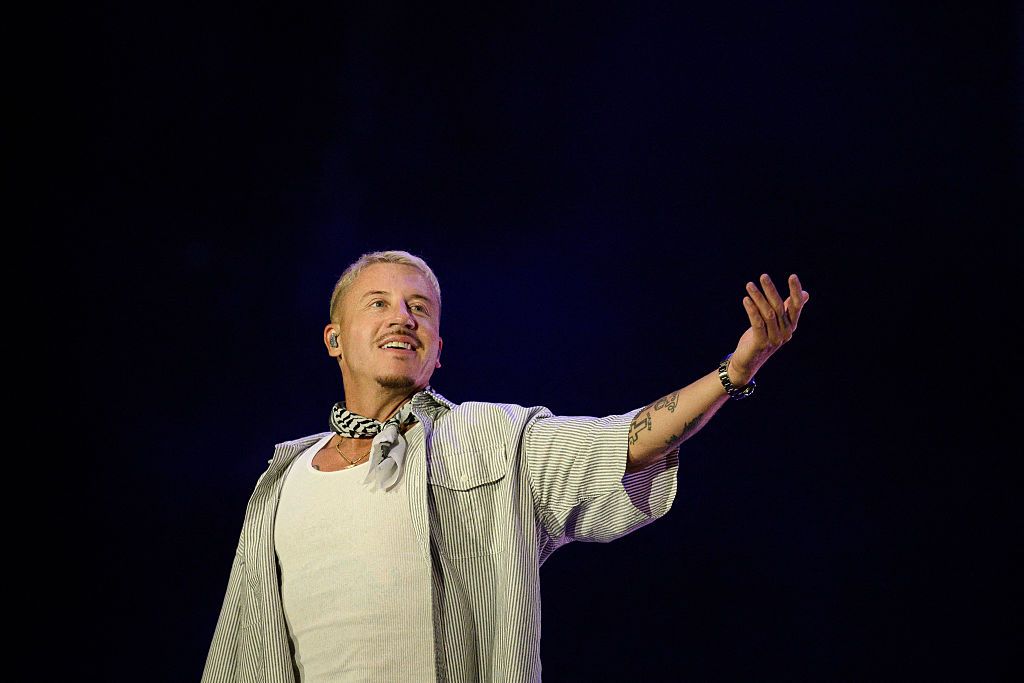
Macklemore ignited a political firestorm after declaring “Free Palestine” onstage during Ed Sheeran’s New Jersey shows and performing his protest track “Hind’s Hall” with Gaza imagery projected across MetLife Stadium.
The moment has triggered pushback from pro‑Israel groups, celebrity amplification from P!nk, and renewed scrutiny of how artists engage with the Israel‑Gaza war nearly three years after October 7.
Some fans are now pressuring Ed Sheeran to remove Macklemore from the remaining U.S. dates, raising questions about artistic speech, audience expectations, and how cultural figures navigate a deeply polarized conflict.
Read More on News
The Israeli‑American Council (IAC), representing more than 150,000 Israeli‑Americans, launched a petition calling Macklemore’s performance “a one‑sided political agenda” and demanding Sheeran clarify whether the political content was approved.
P!nk reposted criticism from StopAntisemitism, adding celebrity weight to the backlash.
Newsweek has reached out to the teams of Ed Sheeran and Macklemore for comment.
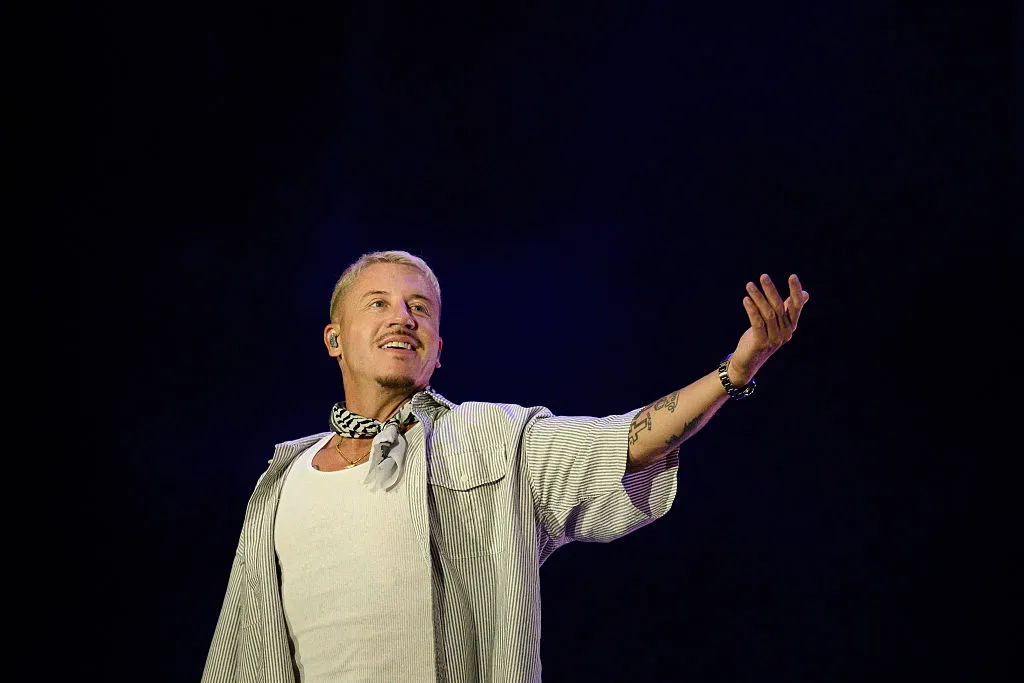
Macklemore’s comments came during his opening set on September 4 and 5 at MetLife Stadium, where he told the crowd that speaking about Palestine was one of the reasons he joined Sheeran’s tour. He then performed “Hind’s Hall,” his 2024 protest song inspired by pro‑Palestinian student encampments at Columbia University.
His remarks were delivered as images related to Gaza appeared on stadium screens, a choice critics say turned a pop concert into a political rally.
Supporters argue Macklemore has long been outspoken on Gaza and was exercising artistic conscience.
Macklemore said before his performance: “I’ve been trying to figure out a way to say this all day. One of the reasons why I wanted to come on this tour was because I wanted to stand up here on stages and stadiums across America and say two words that are very near and dear to my heart: Free Palestine.
“I said, Free Palestine.
“I want those words to be loud and clear, so the people from Gaza, all the way to the occupied West Bank, know that we have not forgotten them.
“And this next song was inspired by the bravery of Columbia University students who led an encampment movement that mobilized the entire world; open up hearts, myself included, so thank you to those students that risked their diplomas, that risked their tuition, that risked their scholarships, that stood up and said, no. CUAD students, Students for Justice in Palestine, and Jewish Voices for Peace. Thank you, guys.
“To all of my Jewish brothers and sisters: criticism of Israel, criticism of apartheid, being against genocide in no way is a criticism of you. My message is for peace; love for all human beings to be treated with dignity, respect, and equality.
“So I say Free Palestine, I say Free Lebanon, I say Free Cuba, I say Free Congo, Free Sudan, I say Free all people in America living in fear of this terrorist organization, ICE. None of us will be free until we are all free.”
What to Know About the Public’s Response
The IAC’s petition argues that Macklemore’s set subjected fans to political messaging “without context or complexity.”
The group wants Sheeran’s team to clarify whether the speech and visuals were approved and to establish boundaries for political content on the tour.
P!nk’s repost added fuel to the controversy, boosting StopAntisemitism’s criticism without offering her own explanation. The advocacy group accused Macklemore of spreading “anti‑Israel propaganda” and said Jewish fans were “owed apologies” and refunds.
Supporters counter that Macklemore has long been outspoken about Gaza and framed his remarks as a universal call for human rights.
They note that he explicitly separated criticism of Israel from criticism of Jewish people and emphasized dignity, equality, and peace.
What Has Been the Toll of This War?
The war that frames Macklemore’s remarks began on October 7, 2023, when Hamas carried out a coordinated attack in southern Israel that killed almost 1,200 people and left more than 5,400 injured, according to humanitarian agencies.
More than 200 hostages were taken into Gaza. Israeli authorities and humanitarian organizations have since documented additional Israeli deaths in the ensuing conflict, bringing the total number of Israelis killed in the Gaza war and related hostilities to more than 2,000, a figure that includes civilians, soldiers, police personnel, and security officials.
Gaza’s Health Ministry and international humanitarian agencies report that over 74,000 Palestinians have been killed since October 2023, with the broader casualty count rising to at least 76,621 people across the region when including deaths in Israel, Lebanon, Syria, Yemen, and Iran.
A study by the Office of the High Commissioner for Human Rights found that 70 percent of Palestinians killed in residential buildings were women and children, underscoring the disproportionate impact on civilians.
The humanitarian toll is even larger when accounting for indirect deaths. Analyses published in 2025 and 2026 estimate that Gaza’s true death count — including trauma‑related fatalities, starvation, and lack of medical care — may exceed 100,000, representing roughly 4–5 percent of Gaza’s pre‑war population.
The crisis has been compounded by famine conditions. By early 2024, 2.2 million people in Gaza were experiencing emergency‑level food insecurity. By mid‑2025, the Integrated Food Security Phase Classification reported that the entire population faced acute food insecurity, with famine formally declared in the Gaza Governorate in August 2025.
The West Bank has also seen escalating violence. More than 1,000 Palestinians have been killed there since October 2023, including over 200 children, and more than 6,000 have been injured.
A ceasefire agreement brokered in October 2025 brought temporary relief, allowing for increased aid deliveries and some hostage releases. But both sides have accused each other of violating the terms, and fighting has continued intermittently in Gaza, the West Bank, and southern Lebanon.
What Happens Next for Sheeran’s Tour
The IAC petition demands that Sheeran’s team clarify whether Macklemore’s political speech and Gaza imagery were approved and establish boundaries for future messaging.
Sheeran has not commented, and Macklemore remains on the lineup.
The tour resumes September 19 in Philadelphia.
Contact Newsweek editors on this story: Jason Lemon and Gray R. Thomas