
This story is part of Peak, The Athletic’s desk covering the mental side of sports. Sign up for Peak’s newsletter here.
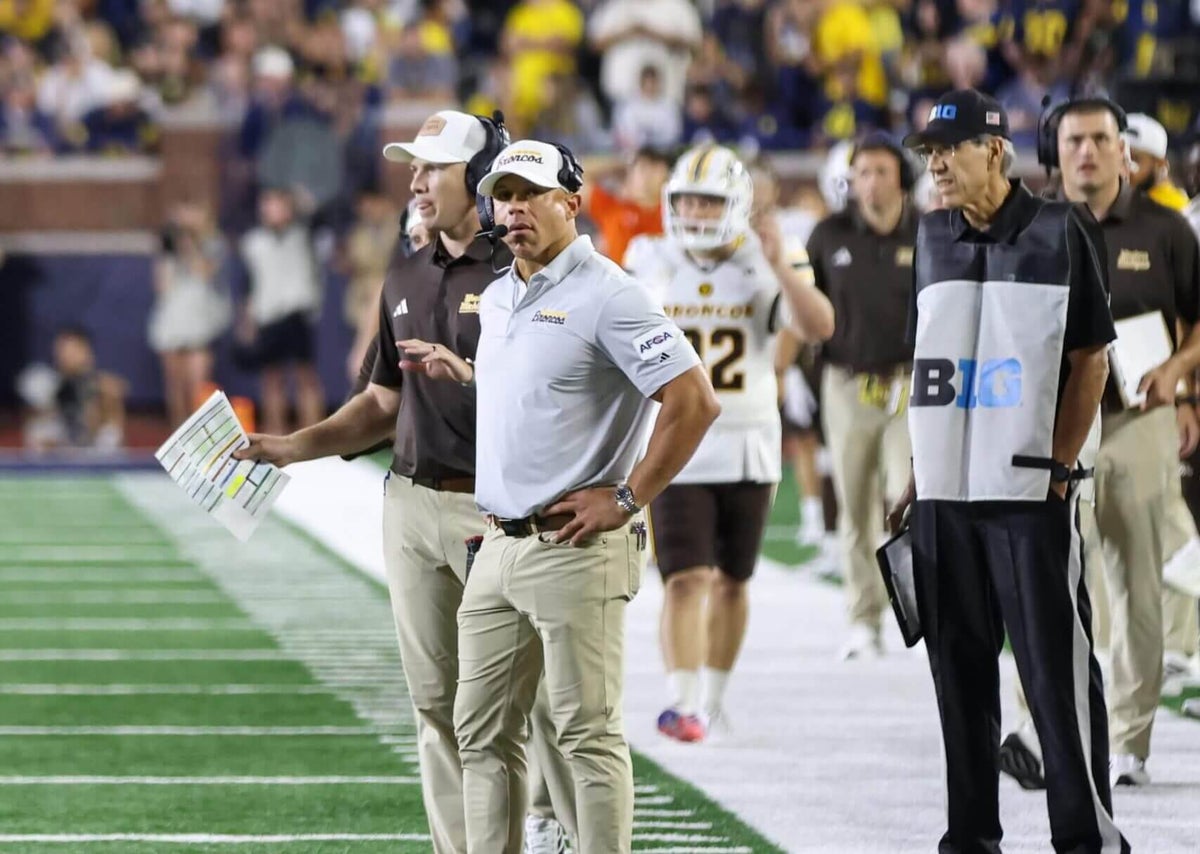
Western Michigan coach Lance Taylor had to gather his emotions because the hardest part of Saturday’s last-second loss to Michigan was still to come.
He could stomach the referees putting one second back on the clock moments after it appeared as if Taylor and his players had pulled off the biggest win in school history. And he could handle the shock as Michigan receiver JJ Buchanan hauled in a miracle Hail Mary that turned his team’s euphoric upset into a devastating (and controversial) loss.
But then came the hardest part for Taylor: He had to walk into the visitors’ locker room and face his players, many of whom were in tears.
Taylor, in that moment, had a choice.
He could join the growing number of people who thought Western Michigan had been cheated out of a defining win. The Big Ten’s decision to put one second on the clock after the NBC broadcast showed there was no time left became an online firestorm.
Or he could rally his team and show them that sometimes life isn’t fair, but how they respond can be the difference.
“When you’ve gone through some real adversity and you failed with the whole world watching and it hurts,” Taylor said. “I mean, it truly hurts you to your core, and you know that the other men in the locker room are hurting because they sacrificed so much, they laid it all on the line and you’re kind of heartbroken for them.
“I think that’s where leadership and the true character of a man and a team is really shown.”
Two mental tricks to reset your brain, from a clinical psychology professor
Elise Devlin
Taylor told his players that he loved them and was proud of them. Western Michigan went into Saturday’s game expecting to win, so Taylor didn’t want to paint the loss as a moral victory.
His team could have still finished the game, he said, but before he left the locker room he embraced each player and emphasized that they’d be better for that experience.
Then Taylor walked into a room where numerous reporters had questions about the controversial final seconds.
Knowing what he said would spread not only across the country, but to his players and Western Michigan fans, Taylor again had a decision: argue, like some may have wanted him to, or echo the same thoughts he made to his team.
After sitting down, he adjusted his hat, took a deep breath and said his first words: “I’m really excited and proud of our team tonight.”
He was complimentary of the officiating in the game and, despite being asked about the final seconds, refrained from passing blame and steered the conversation back to how proud he was of his team, while also pointing out where the Broncos could have been better.
“We talk a lot about respond, regardless of what the circumstances are,” Taylor said. “We can’t control whether there’s a second left on the clock or not.”
Dr. Lillian Feder, professor of sports communications at Purdue, said Taylor’s refusal to make excuses when most others would should be the legacy of his response.
“I think this is a masterclass on staying focused on the right things,” Feder said. “It would be really easy for him to blame the referees or say this was a missed call or get distracted by easier-to-reach narratives that are so tempting to feed into at times like this.”
Feder also said the poised response was emblematic of the type of modeled behavior coaches often give lip service to, but rarely follow through on.
“Coaches think all the time about how they can empower (players) through workouts and practices, or whatever else they’re doing in meetings, to build that kind of resilience and mentality, so they can do that when it’s hard,” Feder said.
“One of the hardest things a coach can do — but is also the most beneficial — is to model that. And that’s what coach Taylor did in his presser.”
The postgame delivery by Taylor also showcased what University of Washington professor Dr. Jennifer Hoffman described as the perfect example of the transformational leadership model, which prioritizes accountability and motivation.
“You never know when that moment of crisis is going to happen,” Hoffman said. “One of the vulnerabilities of transformational leadership is when these moments come — especially when there’s deep exhaustion and there’s so much attention — it is a time when it can fracture. It really relies on the leader to pull everyone back into that mode of what’s our purpose and our set of values.”
Taylor, 45, is viewed as a rising star in coaching. But before his name graced lists of top coaches, Taylor was a first-time head coach trying to build a program while at the same time trying to find his voice.
Western Michigan reached a bowl game in Taylor’s second season in 2024, but an 0-3 start last year changed both the program and Taylor. In the fourth game, the Broncos fell behind 13-0 and appeared on the verge of 0-4.
But they rallied to win that game by one point and then won nine of their final 10 games, winning the MAC title and the Myrtle Beach Bowl along the way.
“When you go through adversity that tests your character and resolve, I think it binds you together more tightly knit as a unit,” Taylor said. “That bond is really what showed throughout the course of the rest of our season, and really it’s carried over even to the offseason.”
And it carried over to Saturday after the devastating loss to Michigan.
It’s why Taylor doubled down on his messaging on Sunday. He knew there was nothing to be gained from complaining. He has the rest of the season to prepare for, and if he dwelled, his team would, too.
“When you complain about what’s happened to you, or a call, you take your focus off of the solution,” Taylor said the day after the game. “How could we have been better? What are the things that we need to get better at? And ultimately, what are the things that we can control and things that we don’t control?
“I think for young people and for all people, it’s important to identify the differences in both.”
— Christopher Kamrani contributed to this story.