

This article was produced by the Investigative Project on Race and Equity and co-published with Block Club Chicago. Sign up for IPRE’s newsletter here.
BRIGHTON PARK — Supermercado El Ranchito is a neighborhood staple in Brighton Park, a predominantly Latino and immigrant community on Chicago’s Southwest Side. In its 30 years operating, it has grown from a corner market to a full-fledged grocery store with a taqueria that serves guisados, a type of meat and vegetable stew.
But since the Trump Administration launched Operation Midway Blitz last year, aisles and restaurant tables are empty most days. When the restaurant is slow, store manager Yadira Rojo checks her phone and often sees on social media that U.S. Immigration and Customs Enforcement agents were spotted nearby. The increased immigration enforcement in President Donald Trump’s second term has led to a significant financial strain for the store.
“I have heard from family and close ones born here that say they do not feel safe because they think that because of your appearance you can be detained,” Rojo said in Spanish. “You run the risk that because you have a Hispanic last name you could be detained.”
It’s a sentiment the Investigative Project and Block Club heard from more than a dozen business owners, workers and residents in the weeks leading up to the one year anniversary of Midway Blitz. This broad community feeling, that Cook County’s economy has been disrupted by ICE, is also validated by a new report released by the Great Cities Institute at the University of Illinois Chicago.
The report’s findings are huge: UIC estimates that Cook County retail and restaurant businesses have lost roughly $1.26 billion in commercial activity and about $107 million in tax revenue since ICE enforcement increased last year. This lost spending was not redirected elsewhere so the losses reflect foregone commerce. This is due to a massive reduction in routine shopping trips that once served as a cornerstone of the local economy.
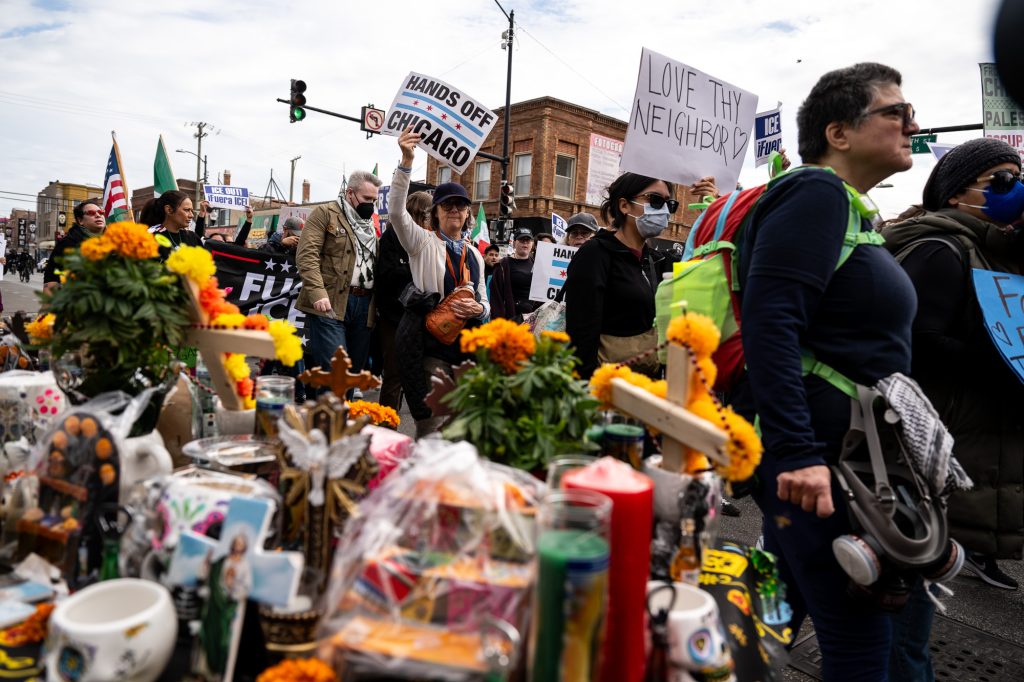 Hundreds of protesters march through the Little Village neighborhood to oppose federal immigration enforcement in Chicago on Oct. 25, 2025. Credit: Christopher Dilts/Block Club Chicago
Researchers used anonymized consumer cellphone data to measure foot-traffic and Census spending records to translate the decline in foot-traffic into dollars. They found that residents from neighborhoods with higher numbers of Latin America-born residents have conducted roughly 25 million fewer shopping and dining trips to non-Latino communities since enforcement increased. Researchers said the hardest hit businesses were in suburban retail shops and restaurants.
“The biggest change we see is in the connections between high Latin America–born neighborhoods and the wider Cook County economy,” said Matt Wilson, a senior associate director at the Great Cities Institute who co-authored the report. “Residents made substantially fewer trips to businesses elsewhere in the county, and that sustained decline meant fewer customers for businesses and less commercial activity across Cook County.”
Fred Tsao, an attorney with the immigration advocacy group Illinois Coalition for Immigrant and Refugee Rights, said the financial toll on local businesses shows why the Trump administration’s immigration crackdown should end.
“The focus should be on policies and programs that are welcoming of immigrants and enable them to work and thrive in this country,” Tsao wrote in a statement.
Reporters shared the report’s findings with the U.S. Department of Homeland Security. The agency did not answer the Investigative Project’s questions and instead emailed the same statement it has sent to multiple news publications this year. The statement refutes a correlation between “illegal immigration and a good economy.” While Homeland Security officials said Midway Blitz removed “the worst of the worst criminal illegal aliens” from Chicago, data shows most of the 2,500 immigrants who were deported last year had no criminal record, according to the Chicago Tribune.
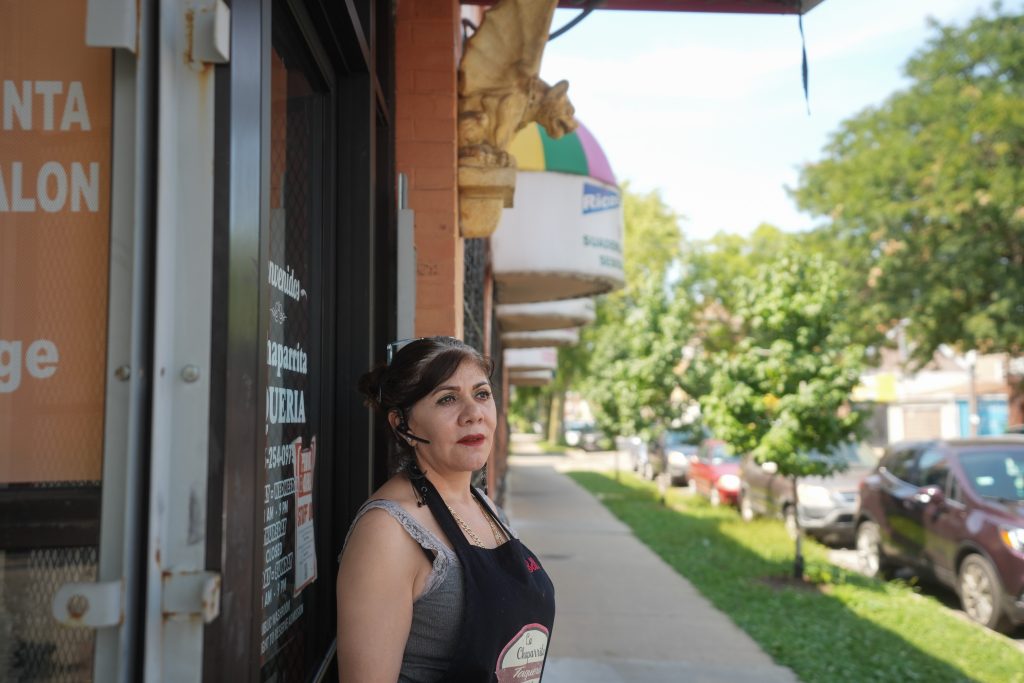 Angelina Mendez, the owner of La Chaparrita Grocery, stands outside of her store in Little Village. She says she hardly sees the store’s regulars due to fears of ICE agents. Sept. 2, 2026. Credit: Alex Garcia/Investigative Project on Race and Equity
Angelina Mendez says she’s seen her Latino clientele in Little Village decline by more than half. Mendez owns La Chaparrita Grocery and says she was used to seeing the same regulars for decades — but that’s changed due to ICE.
“There are customers that do not come anymore and those that do come, come less frequently. The customers are scared,” Mendez said in Spanish. “At this moment, this is the new normal.”
Fear over immigration enforcement has significantly reduced the distance traveled and number of shopping trips residents from Latino neighborhoods are making outside of the communities they live in. Instead, the report suggests people are staying put and shopping within their own neighborhoods. Researchers describe this as a “hunkering down” effect, where intensified immigration enforcement has led to a fear of being in spaces far from home. Researchers say this has altered people’s mobility and purchasing behavior. As a result, the report says, residents largely chose to stay and shop locally.
One of those shoppers is Brighton Park resident Daniela Martinez. Martinez said she’s changed how she shops due to the heightened enforcement — which she says resulted in her partner being detained and deported earlier this year. She said she now mostly shops within her community in the evening.
Martinez says she recently planned to leave her apartment to go shopping but changed her mind after seeing ICE agents outside.
“I’m scared to come out because since my partner was detained, I feel like I’m next,” Martinez said.
Though the report does not capture the decline in foot-traffic for cash and home-based businesses, street vendors say they are also experiencing a reduction in sales and clientele.
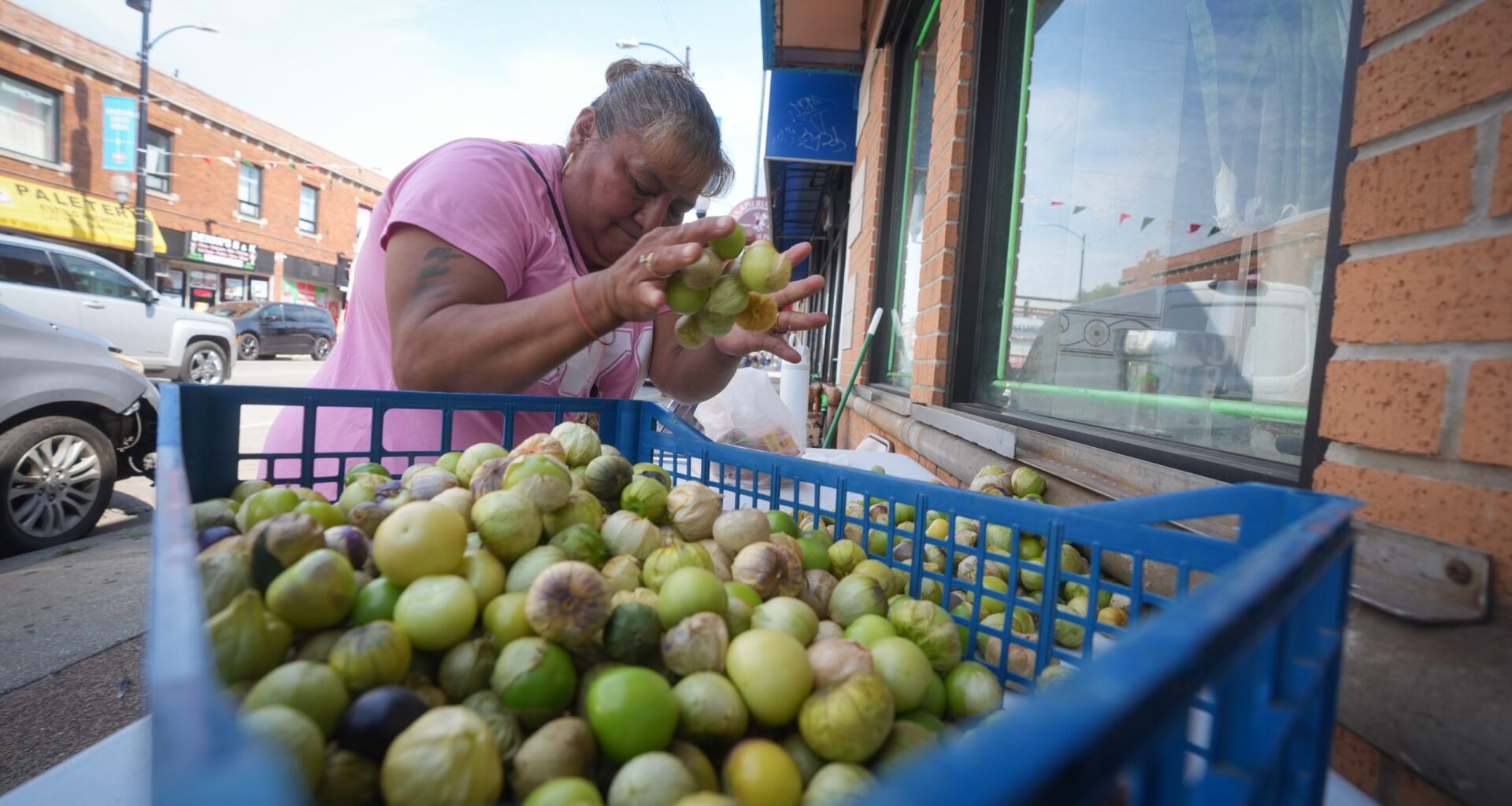
One such vendor is Noemi, a street vendor in Little Village who struggles to sell fruits and vegetables. She says the enforcement is bad for business. Noemi did not want to use her full name fearing retaliation from immigration authorities.
“People from outside the neighborhood are no longer shopping. People are not coming to eat at restaurants. Businesses are empty,” she said in Spanish.
In an effort to support street vendors that are navigating challenging economic times, the Street Vendors Association of Chicago (SVAC) said it raised $700,000 in funds to help vendors offset expenses.
Juana Morales is another street vendor, in Brighton Park, who has received funds from SVAC. She’s operated a fruit and vegetable stand four days-a-week in her neighborhood for nearly two decades.
Before enforcement operations targeted Cook County, Morales said she would sell up to six boxes of tomatoes a day at her stand. She says she has now cut orders in half because ICE raids have caused people to stay home and no longer buy produce like they once did.
“We would like for this to end,” Morales said in Spanish. “Because not only do they affect business but they are also destroying families.”
José Abonce is a reporter-apprentice with the Investigative Project on Race and Equity. Reach him at jose@raceandequityproject.org.
______________________________________________________________________
Support Local News!
Subscribe to Block Club Chicago, an independent, 501(c)(3), journalist-run newsroom. Every dime we make funds reporting from Chicago’s neighborhoods. Already subscribe? Click here to gift a subscription, or you can support Block Club with a tax-deductible donation.
Listen to the Block Club Chicago podcast: