
Good Tuesday morning and welcome to Tangle. I’m Executive Editor Isaac Saul, currently packing up warm clothes and hiking shoes for our Tangle company retreat in Maine this week. Our team is spread out across the country, so I’m thrilled when we can get together as a group, especially in such a beautiful part of the country.
In today’s edition, we’re diving into the Army secretary’s resignation, and I’m focusing on Secretary of Defense Pete Hegseth. Plus, we answer a reader question about artificial intelligence affecting constituent letters and discuss an election headline in Germany. It’s a 14-minute read.
Should billionaires exist?
In Friday’s members-only post, Isaac explored the question of whether billionaires should exist — and dove into generalizations about them all being evil. The piece has already garnered over 600 comments, a strong indication that you have your own opinions. You can read it (and join the conversation) here.
Quick hits.Five people were killed and five others hospitalized when an Amazon cargo plane crashed at Miami International Airport after it appeared to overrun the airport’s runway. The Federal Aviation Administration is investigating the crash. (The crash)A man allegedly assaulted multiple people at a fair in Ohio while attempting to move toward Democratic gubernatorial candidate Amy Acton. Law enforcement stopped the man, who was carrying a taser and two pistols, before he reached Acton. (The incident) The Supreme Court temporarily paused a lower-court ruling that restricted preferential rates in political advertising to candidates, allowing political parties and joint fundraising committees to also receive favorable rates. Justice Ketanji Brown Jackson dissented. (The ruling)Russia and North Korea opened the first road bridge across their border, which will allow up to 300 vehicles to cross between the countries per day. Russia said the connection highlights its deepening economic and cultural alliance with North Korea. (The bridge) Separately, Ukrainian President Volodymyr Zelensky said that U.S. negotiators are exploring a plan to de-escalate Ukraine’s and Russia’s military operations this winter as a step toward peace. (The plan)An Immigration and Customs Enforcement officer turned himself in to federal authorities; the officer was charged with lying to investigators about the shooting of a Venezuelan man in Minneapolis, Minnesota, in January. (The update)
The Truth Is Usually More Complicated…
Isaac here! Today’s newsletter is brought to you by Snopes, the internet’s oldest and most trusted fact-checking platform. We’re partnering with them because we share a common goal: uncovering the real story when both sides push partisan agendas.
Did Democrats actually shut down the government to fund health care for “illegal aliens”? Did Trump really cut down dozens of cherry trees for golf course renovations?
These are a couple examples of rumors Snopes investigated to give the full story with the context and sources. NewsGuard awarded Snopes a 100/100 reliability rating for their rigorous editorial standards.
Don’t be duped by political spin, the clickbait headlines, or the flat-out lies and misinformation spreading online.
Sign up for free Snopes newsletter
Today’s topic.
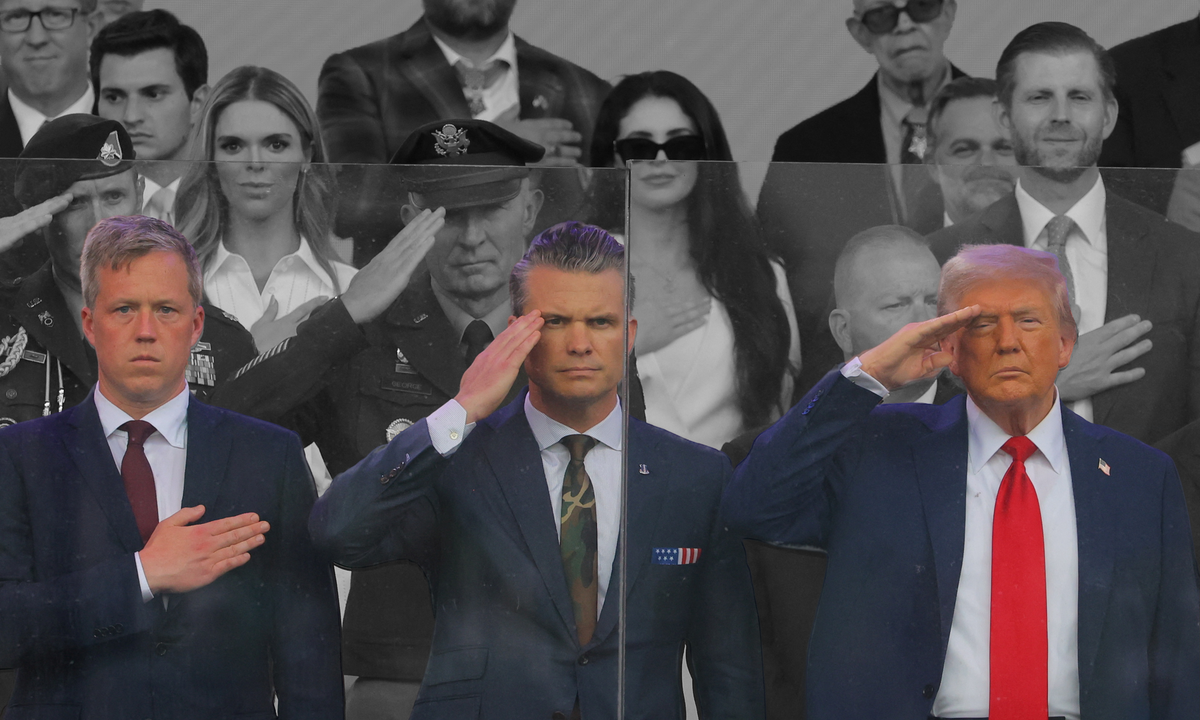
Dan Driscoll’s resignation. On Monday, August 31, The Wall Street Journal reported that Army Secretary Dan Driscoll had resigned amid protracted disagreements with Defense Secretary Pete Hegseth; Driscoll’s last workday was September 2. Several other military leaders have been fired or resigned under Hegseth, who has sought to reduce the size of military leadership. President Donald Trump appointed Assistant Secretary of the Army for Civil Works Adam Telle to serve as acting secretary and did not give a timeline for nominating a replacement.
Back up: Driscoll served in the Army and deployed to Iraq in 2009 then attended Yale Law School, where he met Vice President JD Vance. Before his confirmation as Army secretary, Driscoll served as a senior adviser to Vance and worked as an investment banker. He led modernization initiatives for the Army during his 18-month tenure, including its drone development program.
In April, The Hill reported on clashes between Hegseth and Driscoll after President Trump tapped the latter to lead negotiations with Ukrainian officials over a peace plan to end the Russia–Ukraine war. Driscoll and Hegseth also reportedly disagreed on Hegseth’s efforts to block a list of Army officers from being promoted to one-star generals.
Several military and civilian leaders have departed their roles or were fired under Secretary Hegseth, and with Driscoll’s resignation, both the Army and Navy’s top civilian leaders have resigned in the past five months. Additionally, the Army does not have a top Senate-confirmed civilian or military leader.
Driscoll gave no official reason for his departure, but he reportedly spoke with President Trump about the state of the Army before submitting his resignation. In a post on X on September 1, Driscoll said, “It has been the honor of a lifetime to serve as the Secretary of the Army under President Trump and Secretary Hegseth,” adding, “We could not have made the progress we did without the support of Secretary Hegseth.”
Some Republicans and Democrats praised Driscoll’s performance as Army secretary. Rep. Steve Womack (R-AR) wrote, “Dan Driscoll is a transformative leader who brought common sense and discipline to the Department of the Army,” and Rep. Jason Crow (D-CO) said, “It was actually nice, I will say, having somebody who was smart, that knew the policy, that wanted to do the work, that had a background in these issues.” Others, including Sen. Thom Tillis (R-NC) and Sen. Jack Reed (D-RI), criticized Hegseth for purportedly forcing Driscoll out.
Today, we’ll share views from the right and left on Driscoll’s resignation, Hegseth and the latest at the Pentagon, followed by Executive Editor Isaac Saul’s take.
What the right is saying.
Many on the right express concern about Driscoll’s departure, calling him a competent and valuable military leader.Some suggest the coming months could make or break Hegseth.Others say Hegseth is undermining key facets of military leadership.
In The Free Press, Eli Lake wrote “the Army needs good leaders. Why is Hegseth firing them?”
“Driscoll was perceived by many in Congress and the White House as a quiet check on the erratic moves of the secretary of defense. And at a moment when the U.S. is relaunching strikes against Iran, Driscoll’s role was as important as ever,” Lake said. “In recent months, Hegseth has conducted a purge of sorts. The highest-profile example was Hegseth’s sudden termination in April of General Randy George, the Army chief of staff. That same month, John Phelan, the secretary of the Navy, was pushed out of his post by Hegseth.”
“As for the purges, they have been defended by Hegseth and his supporters as a necessary corrective to the woke radicalization of the military… In practice, however, this has meant that the traditional nonpolitical, merit-based process for evaluating promotions of senior officers has been overturned,” Lake wrote. “Driscoll’s departure and George’s firing [have] left the Army without a civilian and military leader at a time when the Army is doing the bulk of the fighting against Iran. Hegseth may wish to defend these moves as part of his strategy to drive wokeness out of the military, or to remove disloyal leakers from the Pentagon’s senior ranks. But these are just excuses.”
In The Spectator, Sarah Beth Spraggins asked “is Pete Hegseth running for president? Or getting fired?”
“Hegseth sought a serious restructuring of the US military. His allies praised his eagerness to cut ‘dead wood,’ but inside the American war apparatus, opinions of him differ. Younger GIs tend to like him because he’s plainspoken — a guy you’d talk to at a bar. Officers are less sure of Hegseth because of his casual approach to military operations and his sloganeering. Some believe he undermines military professionalism,” Spraggins said. “The top brass worry about Hegseth interfering in military discipline, for partisan or personal reasons. Or just because he wants to show off.”
“When Trump proposed attacking Iran, many members of his cabinet cautioned against it, including former director of national intelligence Tulsi Gabbard. Hegseth did not. Deus Vult, after all,” Spraggins wrote. “There are rumors that Hegseth wants to get on board with Vance if he runs, but given Driscoll’s friendship with the Vice President and Vance’s views of the Iran war, it’s hard to imagine he would have much influence. Some sources suggest that Trump is planning to fire Hegseth. That seems unlikely at the moment, but the President may need a loyal scapegoat if Iran is seen as the cause of Republican failure in the midterms.”
In The New York Times, David French called Hegseth “a wrecking ball.”
“Our military is still highly capable, and we have watched it successfully execute some extraordinarily difficult missions during Trump’s second term. The capture of President Nicolás Maduro of Venezuela and the rescue of two downed American airmen from the heart of Iran were remarkable feats of skill and courage… It’s comforting — I guess — to know that Hegseth can’t undo the effects of a generations-long commitment to excellence in just 20 months,” French said. “That’s the end of the good news. From the top down, Trump is replacing the highly imperfect meritocracy of American public service with an idiocracy, and his corrupt idiocrats are creating profound short-, medium- and long-term harms to American national security.”
“Trump’s critics aren’t the only ones alarmed, I’d refer you to the recent resignation of Army Secretary Dan Driscoll… Driscoll was reportedly worried that Hegseth’s purges were hampering the ability of the Army to transform itself. And this is just as the conflicts in Ukraine and the Middle East are demonstrating that the world is in the midst of another revolution in military affairs, and we are not prepared,” French wrote. “The combination of corruption, stupidity and sycophancy… that pervades the Trump administration is now infecting the Pentagon at the moment that our most powerful enemies are becoming more aggressive.”
The left is also concerned by Driscoll’s resignation, and many believe Hegseth forced him out. Some say the military’s leadership gaps are becoming dangerous. Others suggest Hegseth could soon be fired.
In MS NOW, Jeff McCausland said Driscoll is “the first ‘Washington casualty’ of the Iran war.”
“Driscoll was highly respected by the Army’s uniformed leadership. He established strong working relationships with senior officers, and he was one of the few Trump Cabinet officials who showed himself to be willing to work with congressional leaders from both parties. But in his 18 months in the role, he repeatedly clashed with Defense Secretary Pete Hegseth, and leaked reports indicate he, along with a number of senior officers, had cautioned against extending the Iran conflict,” McCausland wrote. “The war with Iran that Hegseth strongly advocated for looks more and more like a strategic disaster, and Driscoll’s departure is more evidence that the defense secretary is seeking to surround himself with loyalists.”
“Trump frequently referred to Driscoll as his ‘drone guy’ because of his advocacy for the military to rapidly embrace emerging battlefield technologies. Many of these initiatives, however, were rebuffed by Hegseth,” McCausland said. “It’s telling that late last year, Trump sent Driscoll, not the defense secretary, to be his primary envoy for bilateral negotiations with the Russians and subsequent talks with the Ukrainians. Hegseth, at that time, was in Washington, negotiating an end to the Pentagon’s relationship with the Boy Scouts. That contrast between Driscoll and Hegseth, and the news that it’s Driscoll who’s gone, should give every American concern.”
In Bloomberg, James Stavridis argued “Hegseth has turned the Army into a rudderless ship.”
“Driscoll was widely admired and supported by the top Army leadership. He had taken a leading role in efforts to modernize the service using the lessons learned on the battlefields of Ukraine. He is a decorated combat veteran who led a cavalry platoon in Iraq and is also a graduate of Yale Law School,” Stavridis wrote. “Service secretaries are critical links in the basic functioning of the Pentagon. They are political appointees at the heart of the big decisions on personnel, budgets, new technology, training and the warfighting ethos. These are not simply ceremonial jobs.”
“Hegseth may have individual reasons for the departures of so many senior leaders across the services… And he has sapped morale by denying the advancements of younger officers who had been selected for promotion to one-star admiral or general. But this latest damage to a major department in the middle of combat operations is stunning,” Stavridis said. “Clearly, Hegseth needs to nominate a stable team of new Army leaders, get them confirmed by Congress and give them steady support. He simply cannot try to run the massive department himself — that is too heavy a lift for a secretary of defense even in peacetime.”
In CNN, Aaron Blake suggested “Hegseth’s problems are getting harder to ignore.”
“It increasingly seems that Hegseth could be a political problem for the Trump administration… Sen. Thom Tillis of North Carolina, who was a crucial vote to confirm the defense secretary last year, said he had ‘never witnessed more inept management of the brave men and women who serve our country,’” Blake wrote. “Other Republicans didn’t call for Hegseth’s exit but did raise concerns about what’s happening at the Pentagon.”
“Those concerns have often come from high places, including chairmen of both the Senate and House Armed Services Committees and other committees, the former chairman of the House Intelligence Committee and several senators who voted to confirm Hegseth,” Blake said. “That’s a lot. And it doesn’t even include Hegseth’s sharing of highly sensitive information about impending military strikes on the unclassified app, Signal… Amid a series of controversies and an unpopular Iran war that doesn’t look like it’s ending anytime soon, Hegseth is certainly trending toward embattled status.”
My take.
Isaac Saul
Executive Editor

Hegseth’s record as Secretary of Defense speaks for itself.In addition to Hegseth’s constant controversies, our military is now struggling with an ongoing conflict in Iran.With Driscoll gone, how long will it be before Hegseth is shown the door?
Reminder: This is where we share a personal opinion. If you have feedback, criticism or compliments, leave a comment or reply to this email.
Dan Driscoll’s resignation is the latest in a long, winding series of concerning stories coming out of the Pentagon.
And they all come back to Defense Secretary Pete Hegseth.
I’ve been candid about my feelings on Hegseth. I don’t dismiss him as merely a “Fox News host” — he served two tours of duty in Iraq and Afghanistan, has a Bronze Star, and earned a Master of Public Policy from Harvard. Instead, I’ve argued that Hegseth is simply unremarkable.
As I said during his nomination process, Hegseth represents the opposite of a meritocracy. He is only there because the president liked how he comported himself in front of cameras. Hegseth tried to play up the “dust on his boots” from serving in combat as unique, as if nearly all his predecessors weren’t also veterans (and far more experienced and decorated). His managerial record provides far more pertinent insights — after all, the DoD has 2.9 million employees and a trillion-dollar budget. That record was abysmal before, and it’s worse now.
This man was never qualified to lead a department of this size or importance. If you don’t agree, just look at what has happened since he has taken the job — all leading up to Driscoll’s resignation:
In February 2025, shortly after assuming office, Hegseth and Trump began cleaning house. The biggest early firing was Air Force General Charles “CQ” Brown Jr., the chairman of the Joint Chiefs of Staff, over what Hegseth described as Brown’s support of DEI initiatives in the armed forces. Brown had been confirmed as the nation’s highest-ranking military officer and the principal military adviser to the president in an 83–11 Senate vote just a year and a half before. Hegseth then announced he would dismiss Admiral Lisa Franchetti, chief of U.S. naval operations, and General James Slife, the Air Force’s vice chief of staff, as well as the judge advocates general (the military’s top lawyers) for the Army, Navy, and Air Force.
In March, shortly before four U.S. soldiers went missing on a training mission (all four were later found dead), the Signal controversy broke. National Security Adviser Mike Waltz had accidentally added The Atlantic’s editor-in-chief to a Signal chat where top military officials, including Hegseth, were discussing forthcoming strikes against the Houthis in Yemen. Roughly two hours later, the first strikes killed 53 people, including civilians and children.
An inspector general report later found that the Signal situation put soldiers at risk, though Hegseth insisted he hadn’t shared classified information. We’d find out even later that Hegseth was also sharing sensitive military information in a separate Signal chat that included his wife, brother, and personal attorney.
By April, three Pentagon aides — senior adviser Dan Caldwell, deputy chief of staff Darin Selnick, and Colin Carroll — had been fired amid investigations into unauthorized leaks from the department. The three issued a joint statement accusing unnamed officials of slandering them. Hegseth conceded the investigation was ongoing when they were fired and admitted it may have exonerated them. Then, John Ullyot, a diehard Trump supporter and former top aide of Hegseth, argued in a public op-ed that the president needed to fire Hegseth, writing that the Pentagon was “in disarray under Hegseth’s leadership.” This was particularly notable given that Ullyot had once insisted Hegseth was the right man for the job.
Then, Hegseth’s term hit the 100-day mark.
By June of 2025, we had started dropping bombs on Iran — our first new conflict without all the leaders Hegseth had fired or forced out. Then in September, we started striking alleged Venezuelan drug boats in the Caribbean, and since then we’ve extrajudicially killed over 200 supposed drug traffickers (a recent report from the Drug Enforcement Administration showed the supply of cocaine to the U.S. has not been impacted).
Then we had the Pentagon–Anthropic blow-up, in which a leading AI company refused to give the DoD unfettered access to its systems. In response, Trump directed every federal agency to cease their use of Anthropic products and Hegseth designated Anthropic a supply chain risk, which could have destroyed the company had a federal judge not struck it down on First Amendment grounds.
Speaking of the First Amendment, Hegseth has also imposed a series of escalating restrictions on Pentagon reporters. He’s designated the Defense Department press office as a classified space off-limits to journalists, required reporters to sign a pledge not to report unauthorized information, and threatened to revoke the credentials of those who didn’t comply. Major media outlets refused to sign the pledge, but many sycophantic news “influencers” stayed on board. The New York Times sued, and a federal judge ruled parts of the policy unconstitutional (though the Pentagon is appealing). Just recently, the Pentagon fired three journalists from the federally funded but historically independent military news outlet Stars and Stripes, after the journalists spoke out about the editorial independence of the paper being threatened.
Hegseth has reportedly allowed his wife, a former Fox News producer, to sit in on sensitive meetings with foreign military officials. His brother was hired to a senior advisory position. Meanwhile, Hegseth has taken extraordinary effort to demote or pause the promotions of dozens of service members; at least 20 generals, admirals and civilian defense leaders have left their jobs, the most recent of whom was Driscoll.
After Driscoll’s resignation, Sen. Thom Tillis (R-NC), who previously chaired the Personnel and Readiness subcommittee of the Senate Armed Services, criticized Hegseth’s management. “I have never witnessed more inept management of the brave men and women who serve our country,” Tillis said. “He is intimidated by competence and retreats to ginning up culture wars instead of soberly attending to the vital work of our national defense and the health and well-being of our fighting force.”
Tillis, by the way, voted to confirm Hegseth for the job in 2025.
The trade-off for all of this chaos was supposed to be a new era for our military: a singular focus on lethality. A fighting force that wins. We were told that by getting rid of dusty old bureaucratic leaders, military lawyers, DEI and anything “woke,” we’d unleash the full force of America’s military might. And yet, the single most consequential military engagement the Trump administration has waded into hasn’t evoked might. Maybe it’s too much to say we are losing the war in Iran, but we are certainly not winning it.
By June of this year, Trump had claimed the war with Iran was nearly over at least 37 times. 18 service members have now died since the war started. Thousands of Iranians have been killed, and American airstrikes have now hit a girls’ school and a wedding. The old Iranian regime has been replaced, but the new one isn’t much better. The Pentagon eventually articulated its core four goals of the war — destroy Iran’s missile capabilities, annihilate its navy, prevent nuclear weapons, and stop regional proxies — all of which are incomplete. Gas prices hit a Labor Day record, traffic through the Strait of Hormuz continues to be restricted, and reporting from all across the media suggests our weapons stockpiles are depleting to concerning levels — so much so that we’d have trouble confronting China or Russia in the event of a sudden conflict.
This is Hegseth’s high-testosterone, anti-woke military. And it’s the one Driscoll objected to. Driscoll, for his part, is leaving at a time that the U.S. Army is fending off some of the most serious missile attacks from Iran on its Middle East bases yet; meanwhile, both the Army and Navy are without a Senate-confirmed civilian leader, since Hegseth fired Naval Secretary John Phelan in April.
In January 2025, when considering whether Hegseth could help fix what ails the Pentagon, I said this: “I don’t see any reason to believe Hegseth — who as a leader of several smaller, less complicated organizations has been followed by allegations of poor leadership, disorganization, sexual misconduct, poor financial management, and drunkenness — is the right person to solve these issues.”
I didn’t want to be proven right, but I have been. And this isn’t an issue I only care about under Trump. During the Biden administration, I called for Defense Secretary Lloyd Austin to be fired after he underwent surgery for prostate cancer, hid the operation from the administration, and spent three days AWOL in the hospital. As I said then, this position is too important to accept deception or mediocrity.
Driscoll’s resignation is only the latest warning shot about the issues facing our military. The only question now is how long it’ll take before the commander-in-chief does something about it.
Take the survey: How do you feel about the United States’s overall military preparedness? Let us know.
Disagree? That’s okay. Our opinion is just one of many. Write in and let us know why, and we’ll consider publishing your feedback.
Your questions, answered.
I recently used AI to research prior legislation and draft a well informed letter to my MP about cage-free/enriched cage hen welfare standards. It let me sound like I actually knew the policy landscape and I received a response. But I can also see AI enabling mass-produced form letters that flood MPs’ (or members of Congress’s) inboxes with low-effort noise.
Where do you land: Does AI raise the average quality of constituent engagement and lower the bar for writing a letter, or does it just increase volume until it drowns out signal?
— Tyler from London, England
Tangle: Concern about technology obliterating a democratic process — including contacting Congressional representatives — is nothing new. In the late 90s, some senators were concerned that email would make it more difficult to connect with constituents. Sen. Phil Gramm’s (R-TX) press secretary lamented in 1998 that their office didn’t “have a mechanism for dealing with the potential volume” of email correspondence.
Those concerns proved prescient, as email would radically change Senators’ communication with constituents. In 1995, congressional staffers reported their offices received 50 million pieces of correspondence a year. By 2004, that exploded to 200 million (about 90% of which was email), and staffs adjusted by employing templates to respond to emails in bulk. AI is likely to change the way staff interact with constituents again, but that impact will likely be much smaller than the paradigm shift provided by the internet.
So far, generative AI has not measurably changed how congressional staff corresponds with constituents — either quantitatively or qualitatively. They still receive a lot of correspondence (both high- and low-quality), batch it so members of Congress can understand the breadth of concern on a topic, then choose some missives that warrant a response. Maybe you’ll be more likely to garner a response if you use AI to help you draft a thoughtful letter. But writing better and more informed letters probably won’t transform constituent correspondence much.
However, AI has already begun impacting Congress elsewhere — namely, the legislation-drafting process. As Gizmodo recently reported, the Office of Legislative Council (OLC), which helps draft legislation, received 72% more drafting requests over the first 60 days of this Congress than it had over the same period two years prior, citing AI as a driver of the increase. OLC staffers said requests were low quality and riddled with errors, making low-quality legislation drafting likely to have a larger impact on Congress than high-quality citizen lobbying.
Want to have a question answered in the newsletter? You can reply to this email (it goes straight to our inbox) or fill out this form.
Under the radar.
On Sunday, the far-right Alternative for Germany (AfD) party won 44% of the vote in the German state of Saxony-Anhalt’s elections, its highest vote share ever in a state election. AfD did not win enough parliamentary seats for a majority, but it could surpass the threshold through a coalition with another party. German politicians have widely condemned Ulrich Siegmund, AfD’s lead candidate for the state’s premiership, over his rhetoric about the Nazis and the Holocaust, while AfD as an organization has called for mass deportations and greater government control over educational and media institutions. Axios has the story.
One year ago today we covered Robert F. Kennedy Jr.’s Senate hearing.The most clicked link in our last regular newsletter was our latest episode of Suspension of the Rules.Nothing to do with politics: Draw a life at random from a pool of all the humans who have ever lived. Our last survey: 2,807 readers responded to our survey on the construction of new data centers, with 34% saying the U.S. should temporarily pause new construction. “The pause should last until we’ve created some firm guardrails for use of AI,” one respondent said. “Whether we like it or not, if we want to keep using the internet, we need more data centers,” said another.Have a nice day.
In the early 2000s, vulture populations in South Asia dropped precipitously due to a then-unknown cause. Eventually, it was discovered that the culprit was a new drug that farmers were giving their cattle, and a vulture-safe alternative was created. Due to the new drug, as well as sustained effort from India, Pakistan and Nepal, the vulture population has stabilized. Going forward, organizations like Saving Asia’s Vultures from Extinction (SAVE) hope to continue the work and allow for the recovery of vulture populations. The Royal Society for the Protection of Birds has the story.