
Abderaouf Arnaout, Ikram Kouachi
09 September 2026•Update: 09 September 2026
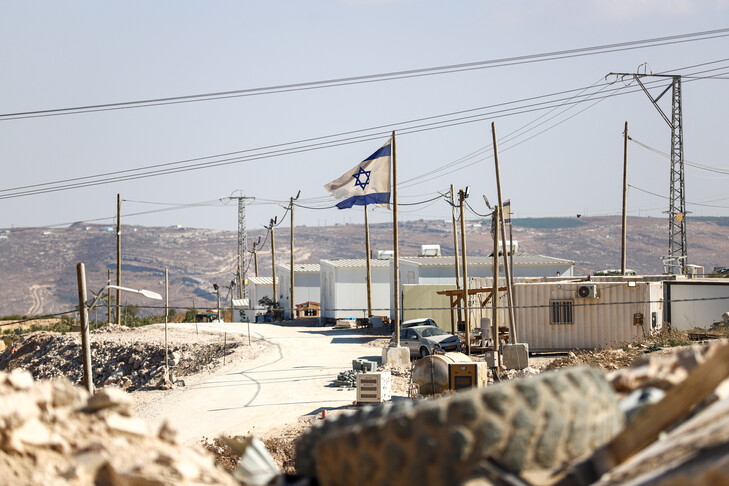
An Israeli government committee is set to consider on Wednesday plans for the construction of 747 new settlement units in the occupied West Bank, a day after 12 Western countries announced their intention to impose restrictions on goods from the illegal settlements, an Israeli rights group said.
Bimkom – Planners for Planning Rights, an Israeli left-wing organization opposed to settlement expansion, said in a statement that the Civil Administration’s settlement subcommittee was scheduled to review three settlement plans in the West Bank.
It said the meeting was taking place “less than 12 hours after the 12 Western countries announced plans to impose trade restrictions on settlement goods and called on Israel to immediately halt settlement expansion and settler violence.”
The government of Prime Minister Benjamin Netanyahu has boasted that since taking office in late 2022, it has approved the establishment of 104 new settlements and established 160 agricultural outposts in the West Bank.
According to an analysis by Bimkom, the three plans involve a total of 747 settlement units in Yitav West, Ma’oz and Adi Ad.
One of the plans calls for establishing the Yitav West settlement in the Jordan Valley, the group said.
The plan covers about 200 dunams (50 acres) and includes 281 settlement units near an area where the Palestinian community of Ras Ein al-Auja had lived.
Residents of the community had used the land covered by the plan for grazing and farming, according to the organization.
Ras Ein al-Auja was the largest Palestinian herding community in the West Bank until its residents were forced to leave the area in late January following “continuous violence and pressure” from occupiers, Bimkom said.
Around 750,000 Israeli occupiers live in 156 settlements and 360 outposts across the West Bank, including occupied East Jerusalem, according to Palestinian figures.
The international community considers Israeli settlements built on occupied Palestinian territory illegal under international law, a position rejected by Israel.