
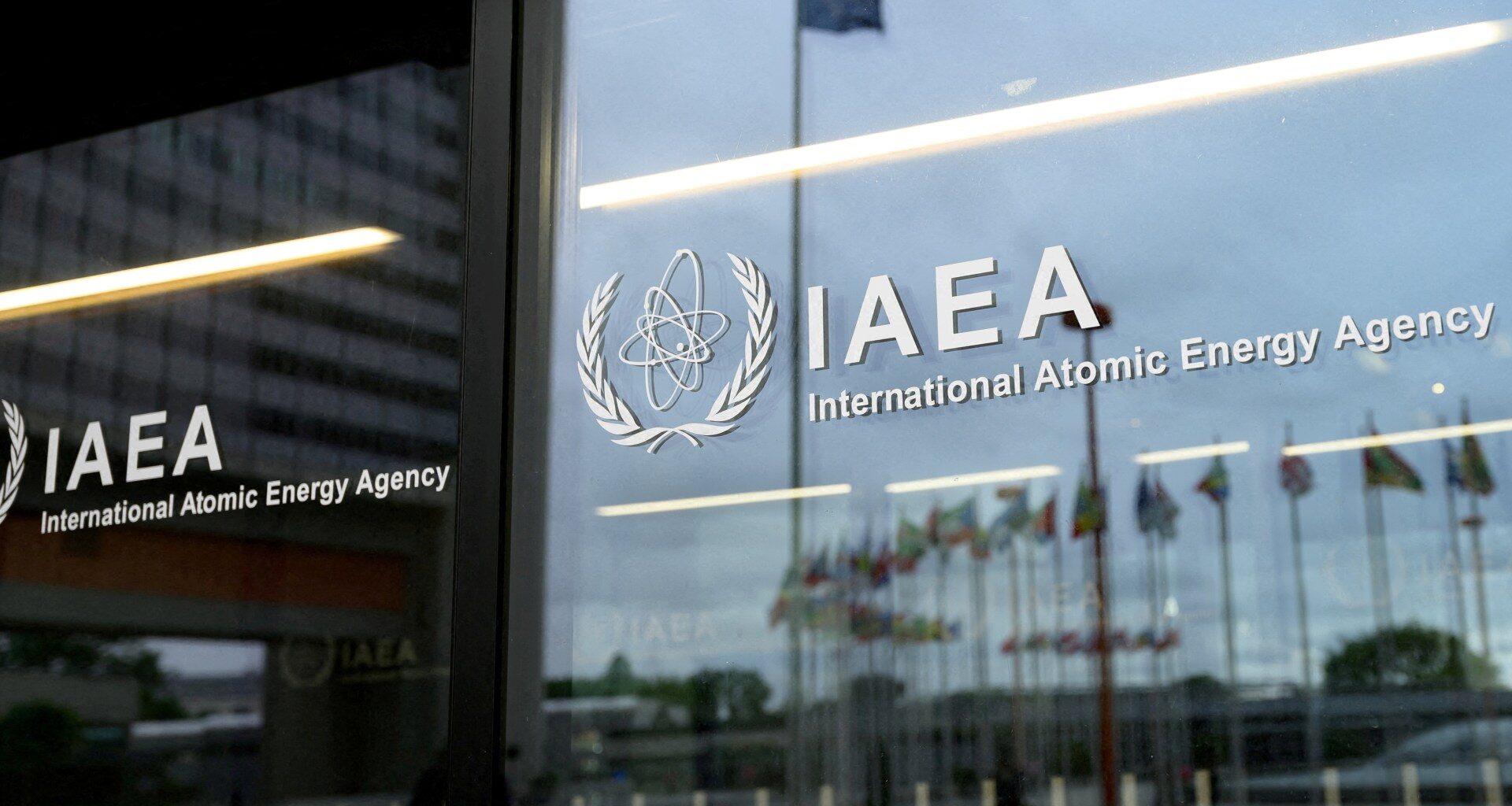
The Board of Governors of the United Nations nuclear watchdog has passed a resolution accusing Iran of failing to comply with its nuclear nonproliferation commitments and referring the matter to the UN Security Council (UNSC).
The diplomatic move – backed by the United States and its key European allies – comes more than six months into the US-Israeli war against Iran, and as tensions flare in the Strait of Hormuz, where the US and Iran have traded attacks on vessels in recent days.
Recommended Stories list of 3 itemsend of list
Here’s what’s to know about the resolution by the International Atomic Energy Agency (IAEA) and its implications during the ongoing conflict:
What has the IAEA accused Iran of?
The IAEA resolution expressed “grave concern” over Iran’s “continued noncompliance” with its obligations under the Nuclear Non-Proliferation Treaty (NPT), to which it is a signatory.
Under the NPT, Iran is forbidden from producing nuclear weapons and is required to meet IAEA safeguards to verify that any nuclear material it has is for peaceful purposes.
But the IAEA has not had access to key nuclear facilities in Iran since the US and Israel launched a 12-day war against Iran in June 2025, which included attacks on key Iranian nuclear sites, such as Fordow, Natanz and Isfahan facilities.
In its latest resolution, the IAEA board said its “lack of information about previously declared nuclear material and access to facilities to verify it” is a “proliferation concern” that needs to be urgently addressed.
It called on Tehran “to engage seriously and without preconditions in talks aimed at building international confidence in the exclusively peaceful nature of Iran’s nuclear programme”.
It is the first time in 20 years that the IAEA board has passed such a resolution.
How has Iran responded?
Iran has condemned the resolution, calling it baseless and politically motivated.
“This resolution was passed under political pressure from the US and its allies and in our view has no basis,” said Iran’s representative to the UN in Vienna, Reza Najafi.
Najafi said Iran has been unable to provide inspectors safe access to its nuclear sites due to the ongoing conflict. However, he said Iran has “neither stopped nor suspended its safeguards obligations,” adding that “performance is currently impossible under continuing military operations and persistent threats”.
Tehran “will cooperate only to the extent that circumstances and safety permit”, he added.
Iran’s Deputy Foreign Minister Kazem Gharibabadi appeared to accuse the US, which sponsored the IAEA board resolution along with the United Kingdom, France and Germany, of political posturing.
“They attack Iran’s safeguarded nuclear facilities, disrupt the normal verification process, and then use that very disruption as a pretext to pass a resolution at the IAEA Board of Governors,” said Gharibabadi in a post on X.
Tehran has repeatedly denied it is seeking nuclear weapons but insisted it has the right to pursue civilian nuclear technology.
US President Donald Trump has demanded that Tehran completely dismantle its nuclear enrichment programme. The US launched the current war, saying Iran was on the verge of making a nuclear bomb – an assertion not backed by the IAEA as well as the US’s own intelligence agency.
What is the UNSC expected to do?
It is unlikely to take any further action, as Iran’s allies Russia and China are veto-holding members.
Ali Vaez, of the International Crisis Group, told the AFP news agency that the IAEA resolution is ultimately “an exercise in futility,” with Russia and China “likely to ensure that Western pressure hits a wall at the Security Council”.
What impact could this have on the US war against Iran?
The US, which has made Iran’s nuclear programme a central point in the ongoing conflict, could cite the IAEA referral as evidence of a potential Iranian nuclear threat.
On the same day as the IAEA report, US President Donald Trump renewed threats to target Iran’s Pickaxe Mountain, which has two underground complexes near Iran’s damaged Natanz uranium enrichment facility.
Trump said the US had observed “a little activity” there and would “advise Iran not to get cute because we will have to hit them very hard”.
The US president also reiterated his claim that Iran is seeking a nuclear weapon, adding that the world would be “in deep trouble” if they secured one.
Trump’s repeated warnings about an Iranian nuclear risk and his threats to strike Iran’s nuclear sites come despite his claim last summer that US strikes had “totally obliterated” Iran’s key enrichment facilities.
What is the IAEA’s history with Iran?
The IAEA was highly critical of Iran in the early 2000s, accusing it of failing to declare nuclear material and activities. In 2006, the UNSC imposed sanctions on Iran after it failed to comply with a resolution demanding it end its uranium enrichment programme.
But after Iran agreed to the 2015 Joint Comprehensive Plan of Action (JCPOA) with six major global powers, including the US, it agreed to curtail its nuclear programme and open up nuclear sites to extensive, unprecedented IAEA inspection.
Iran remained in compliance for years, but the agreement went south after Trump withdrew the US from the deal in 2018 and reimposed US sanctions on Iran. Tehran retaliated by intensifying its nuclear programme, abandoning the restrictions imposed by the deal.
In June 2025, the IAEA’s board of governors declared Iran was not complying with its commitment to international nuclear safeguards. Tehran rejected that report and accused the IAEA of giving a pretext for US and Israeli attacks against it just days later.
IAEA Director General Rafael Grossi, however, did not back the US claims that Iran was capable of making an atomic bomb. “We did not have any proof of a systematic effort to move into a nuclear weapon,” he told CNN.
The IAEA suspects that Iran has about 400kg (882lbs) of highly enriched uranium, with which 10 nuclear weapons could potentially be manufactured if enriched further.