
So the gloves are off.
The British government has banned trade with Israeli communities in Judea and Samaria, prohibited settlement goods, and restricted related services.
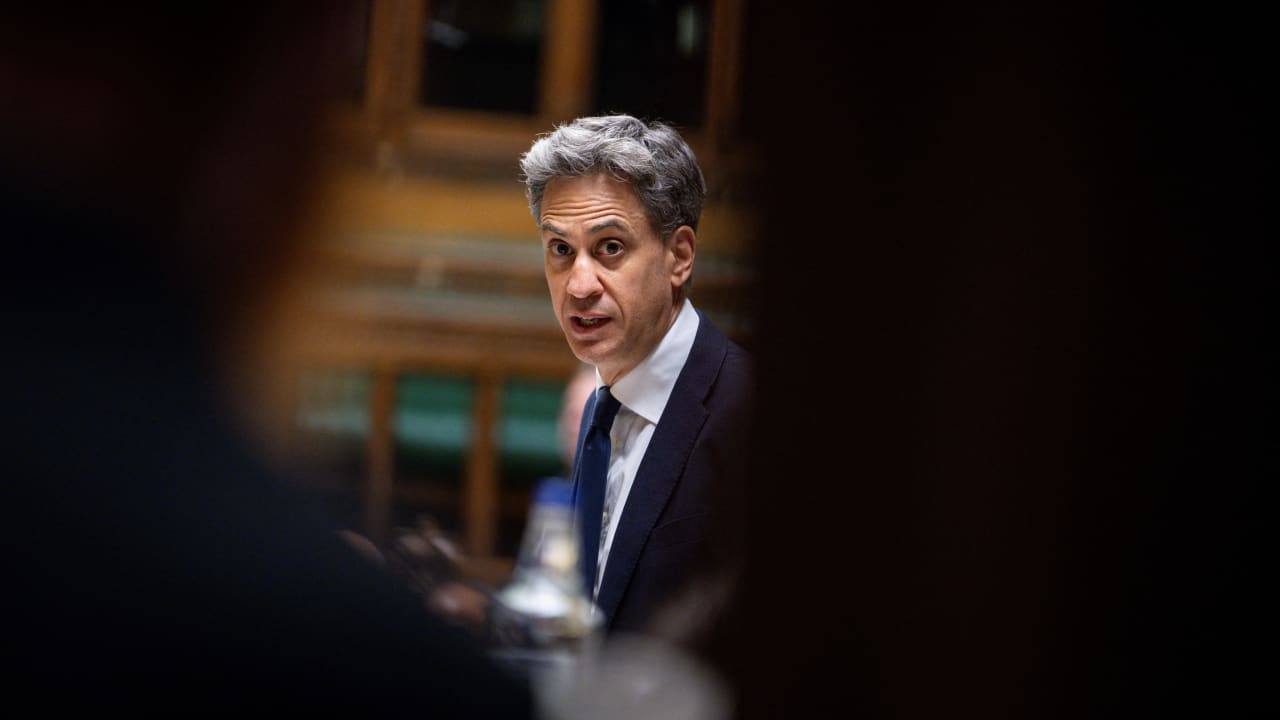
Foreign Secretary Ed Miliband went further, accusing “settler terrorists” of carrying out “ethnic cleansing.”
Chief Rabbi Ephraim Mirvis called it “a dark day for British Jews.” He is right.
The announcement came three days before Rosh Hashanah. During the High Holy Days, synagogues across Britain will be packed. Their congregants will gather behind security guards, locked doors, and barriers, conscious that simply attending Jewish worship can make them a target.
For me, this is personal. We are approaching the first anniversary of the horrific terrorist attack at Heaton Park Hebrew Congregation on Yom Kippur. Two worshipers were killed and others seriously injured, including a friend of my son. The synagogue is less than a mile from my former home.

As another Rosh Hashanah and Yom Kippur approach, I fear for family and friends who will be especially vulnerable. God forbid that there should be another attack.
The British government will insist that its policy targets settlements, not Jews. But ministers cannot ignore the atmosphere in which their words are heard.
British Jews now feel less secure
At a moment of acute anxiety, branding Israelis as perpetrators of “ethnic cleansing” and turning Israel into a pariah makes British Jews feel less, not more, secure.
The timing is deplorable for another reason. Israel is weeks away from an election. President Isaac Herzog has called the move gross interference in Israel’s democratic process.
Whatever London intended, sanctions imposed during an election campaign will inevitably influence it and may strengthen precisely the politicians Britain opposes.
Israel’s response was swift. It announced the closure of the British Consulate in east Jerusalem and barred 12 British politicians and activists from entering, including Jeremy Corbyn, Diane Abbott, John McDonnell, Zarah Sultana, and every Green Party MP.
Finance Minister Bezalel Smotrich had demanded the expulsion of the British ambassador. National Security Minister Itamar Ben-Gvir suggested that Israel recognize Argentine sovereignty over the Malvinas, known in Britain as the Falkland Islands, and sanction Britain until its own “occupation” ends.
This sounds like political theater, but it raises a fair question: When is an occupation not an occupation? Apparently, when Britain is doing the occupying.
London calls Judea and Samaria “occupied Palestinian territory.” Jewish communities beyond the 1949 armistice lines are treated as inherently illegal. Yet the Falklands, controlled by Britain since 1833 and claimed by Argentina ever since, are called a “British Overseas Territory.”
There are important differences. Falkland Islanders voted overwhelmingly to remain British, while Palestinians do not want Israeli rule. But the United Nations still recognizes a sovereignty dispute over the islands and calls for negotiations.
Britain says history, security, and the wishes of the present population matter. That is a reasonable argument. It is simply one Britain rarely permits Israel to make.
The Chagos Islands are even more uncomfortable.
Britain separated them from Mauritius, forcibly removed their inhabitants, and retained Diego Garcia for a vital British-American military base. In 2019, the International Court of Justice said Britain’s administration was wrongful and should end rapidly.
Britain did not leave. It eventually agreed to recognize Mauritian sovereignty while leasing Diego Garcia back for 99 years.
Then US President Donald Trump reversed his support, called the deal an “act of GREAT STUPIDITY,” and Britain put it on indefinite hold.
London therefore understands that international rulings do not make security needs and strategic geography disappear. When British interests are involved, there can be delay, compromise, and special arrangements. Israel is offered condemnation and sanctions.
Judea and Samaria were not the sovereign territory of a Palestinian state when Israel captured them from Jordan in 1967. The pre-1967 boundary was an armistice line, not a permanent border.
The Jewish connection to Hebron, Shiloh, and Beit El is thousands of years old.
None of that erases Palestinian rights or ends the legal argument over settlements. E1 is sensitive, and its consequences deserve serious discussion.
But this history cannot honestly be reduced to the single word “occupation,” and sanctions cannot substitute for negotiation.
Only last year, Britain recognized a Palestinian state whose final borders, capital, government, and security arrangements had not been agreed with Israel. Now it is using economic punishment to advance its preferred territorial outcome.
There is also a widespread suspicion that this is partly about British politics. The Labour party is losing support on its Left to the Green Party. The Greens immediately welcomed the sanctions and demanded more.
The measure looks less like peacemaking than political positioning designed to stem that flow of votes. The result is a policy announced before the Jewish New Year, during an Israeli election campaign, and against the warnings of British Jewish leaders. It has provoked retaliation, damaged diplomatic relations, and increased the anxiety of a community already living behind guarded doors.
Closing the British Consulate is a serious escalation, and expelling the ambassador would sacrifice a useful diplomatic channel. Israel should instead keep him in Jerusalem and ask him a simple question: Why are Britain’s territorial disputes historical, strategic, and complicated, while Israel’s can be reduced to one condemnatory word?
Britain is entitled to defend its interests. It is not entitled to deny that Israel has history, interests, and security needs of its own.
An occupation, it seems, is only not an occupation when Britain is doing the occupying.
The writer is a rabbi and physician. He writes and teaches on Jewish ethics, leadership, and resilience. His work appears on rabbidrjonathanlieberman.substack.com and youtube.com. @rabbidrjonathanlieberman