
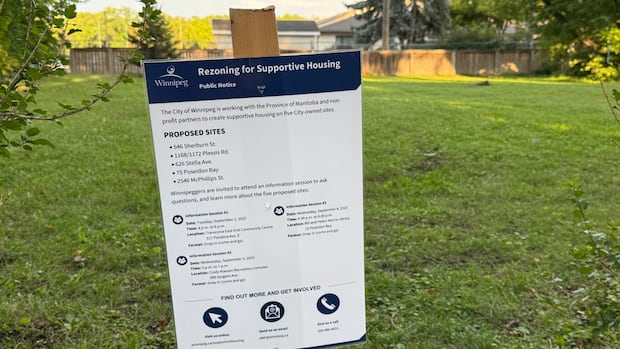
Five building sites across Winnipeg have been chosen for new supportive housing residences that will provide shelter for people facing challenges, including those who are homeless.
In a statement from the city, Mayor Scott Gillingham said the sites represent the first phase of a plan, and more locations will be announced next year.
The five sites are vacant city-owned properties. Construction is to begin next year.
The locations are:
546 Sherburn St. 1168/1172 Plessis Rd. 626 Stella Ave. 2546 McPhillips St. 75 Poseidon Bay (corner of parking lot, next to Taylor Avenue).
Supportive housing is a type of affordable housing that includes wraparound health, wellness and safety services on site.
It’s designed to help people at certain life stages or with challenges like health issues, disabilities or other barriers to housing, says a city document, which includes maps of the sites.
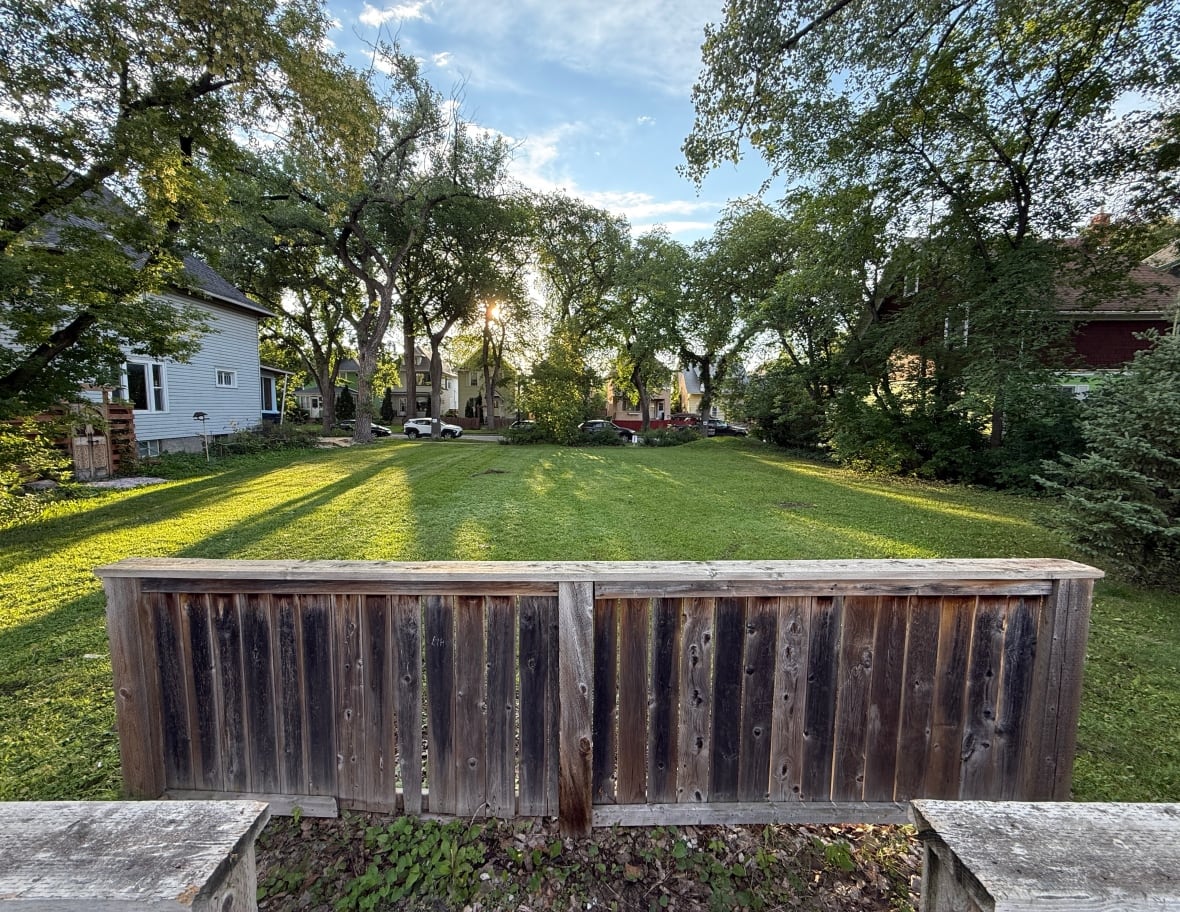 The supportive housing site on Sherburn Street is presently an empty lot. Partners to design and develop the site will be chosen at some point this fall. (Trevor Brine/CBC)
Candidates for the housing include refugees and refugee claimants, people leaving hospitals, youth exiting care, people transitioning from homeless encampments, people at risk of gender-based violence and people with mental health needs.
On-site support will be available to help people to manage health needs, build daily living skills and connect with other services in the community.
“It helps people live more stable, independent and respectful lives,” the city says on its website.
The projects are a joint initiative of the city and the Manitoba government, and they follow the direction social service agencies have been taking for several years “to have the supports right there at the doorstep,” said Coun. Evan Duncan, chair of the city’s planning, property and development committee.
“It’s not a handout; it’s a hand-up situation. Let’s try to get you back up on your feet and become a contributing member of society,” he said.
The sites were selected from May to July, with rezoning scheduled to take place in September and construction next year.
Partners to design and develop the buildings and non-profit agencies to provide services and operate the buildings will be chosen at some point this fall. The provincial government is in charge of that aspect, Duncan said.
“We cannot be a housing department and we cannot be a social services department. That is the province’s responsibility,” he said.
“They have shown over the last several months that that is their initiative, and we are here to work with them.”
The number of units each complex contains will depend on the location, but all will have a similar look and feel, Duncan said.
“The purpose of that is to get them up and built as quickly as possible, so you’re not redesigning every time,” he said.
“The sooner, the better to help relieve the stress that is currently out there on our streets and those that are fearing that they potentially could become homeless.”
The city is holding three open houses in early September to provide the public with more information on the developments and rezoning process.
Transcona East End Community Centre — Sept. 2 (4 p.m. to 6 p.m.). Cindy Klassen Recreation Complex — Sept. 3 (5 p.m. to 7 p.m.). Bill and Helen Norrie Library — Sept. 4 (4:30 p.m. to 6:30 p.m.).
The city will apply to rezone the land following the open houses. A public hearing on the rezoning is scheduled for Sept. 12.
Members of the public can submit written comments or speak in support or opposition at the public hearing.
“I would anticipate, when a proposal is for housing that potentially could bring folks that are at risk, that the community will express their concerns. My expectation of the public service with the City of Winnipeg is that they will be able to explain our role in it and what we will do to help mitigate those issues,” Duncan said.
“But at the end of the day, the province of Manitoba is going to have to have a very sturdy plan in place to ensure that whomever or whatever is taking place in any of these housing units, that it doesn’t disrupt safety in those neighbourhoods — but also that the potential tenants that are being housed there are also safe.”